People searching how long do Tesla batteries last are mixing two clocks. One clock is the traction pack over years of miles. The other is how long today’s charge lasts on a Denver January morning. The city’s normal January low sits around 18 degrees. That’s a 32-degree winter-range problem, and then some.
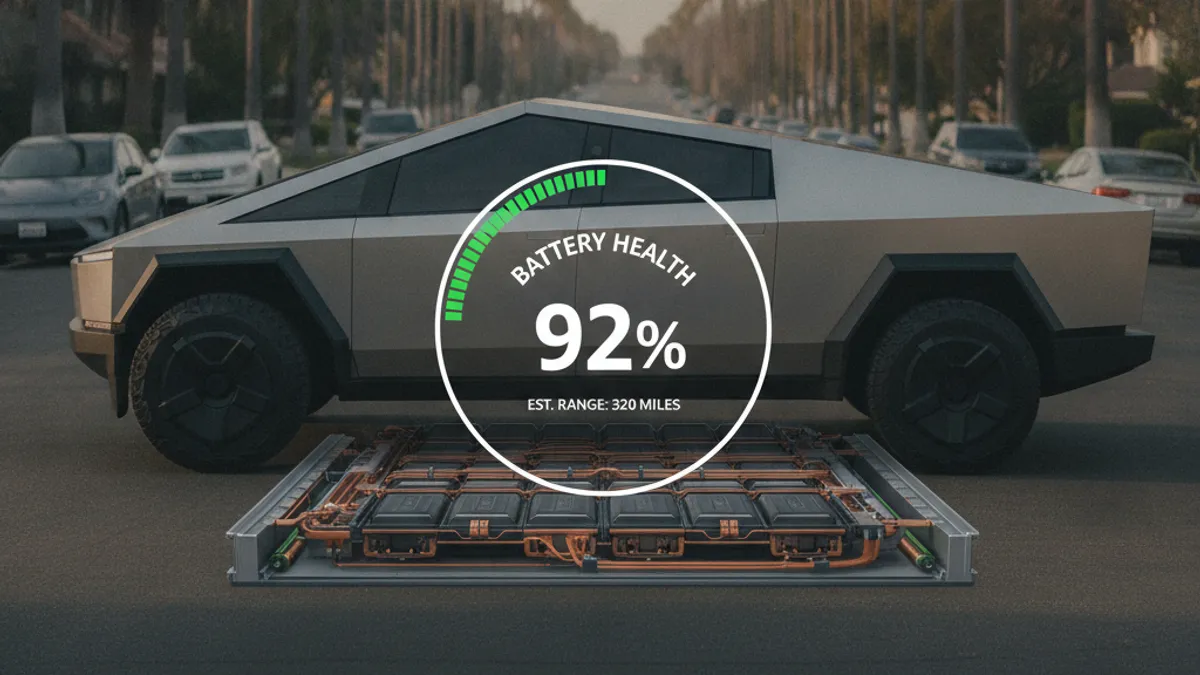
Pack years versus a winter charge
The high-voltage pack under the floor stores driving range. A separate 12-volt battery runs locks, the screen, and the contactors that wake the pack. If the car won’t unlock after a night outside, that’s almost always the 12-volt. It isn’t a worn traction pack. See our guide to Tesla 12-volt failures in the cold.
The pack is built for the life of the car. The 12-volt is a wear item you replace. Mixing those two is how a cold morning turns into pack panic.
What 32 degrees actually does
Winter range loss isn’t pack death. Cells get sluggish, and cabin heat draws energy. The miles come back as the pack warms. Recurrent Auto tracked more than 30,000 U.S. EVs in winter. Cars kept about 78 percent of max range at 32 degrees. At 20 degrees, the average fell to about 70 percent. Heat-pump models held about 10 points more at 32 degrees. A 2026 AAA dynamometer study reported about 39 percent range loss at 20 degrees.
Denver’s January normal low is around 18 degrees. That sits under Recurrent’s 32-degree mark and next to the 20-degree figure. A charge that felt easy in October can run short on a January commute. That’s the local answer to how long a Tesla battery lasts today. See how long a Tesla charge lasts on a cold Denver day.
January 2024 made the gap obvious. Denver dropped from 47 degrees to minus 19 in about 48 hours. That swing hit January 16 and 17. Traction packs didn’t all fail that week, but range estimates did. 12-volt batteries that sat outside often wouldn’t wake the car at all.
Elevation stacks on the cold
Denver’s official elevation is 5,280 feet at the State Capitol. Boulder sits around 5,430 feet, and Golden is about 5,675. Evergreen sits about 7,200 feet, and Idaho Springs is 7,526. The Eisenhower-Johnson Memorial Tunnel west portal is 11,158 feet. That’s the highest point on the U.S. Interstate system.
Climbing costs energy, and descent returns some of it through regen. A widely cited InsideEVs analysis puts recovery around two-thirds of the climb. Tests from Loveland Pass tracked regen on the way down. A Lucid Air GT used about 3 percent of its battery over 77 miles. A Hyundai Ioniq 5 used about 10 percent over 75 miles. Tesla’s public site didn’t return usable pack-life figures for this check. On ice, drivers often cut regen for traction. You then don’t get that recovery on the way down.
A winter run toward Evergreen or Idaho Springs stacks cold chemistry on a climb.
What actually ages the pack
Cold range loss is temporary, and permanent capacity loss is slower. Heat, charge habits, and calendar time move it more than one snowstorm.
Occasional Supercharging is normal ownership. Using it as your only daily charge adds more heat cycling than home Level 2. Tesla’s own daily-use guidance for most models is to skip a routine 100 percent charge. Keep a mid-range state of charge for commuting. Save a full charge for longer drives. Sitting at empty for weeks is the other hard case. A parked car left near empty ages differently than one kept in the middle.
Home charging is the quiet habit that helps the pack. The metro isn’t one utility. Xcel Energy covers Denver, Aurora, Lakewood, Golden, Boulder, and much of the core. CORE Electric Cooperative covers the south-metro Douglas corridor. That includes Highlands Ranch, Parker, Castle Rock, and Lone Tree. United Power covers much of the north and northeast, including Brighton. It also splits streets with Xcel in Thornton, Westminster, Arvada, Broomfield, and Erie. Longmont Power and Communications is Longmont’s municipal utility. Confirm the utility by address before you assume a program. CORE’s residential COREV Charge program is at capacity and closed to new applications. Read how to care for an EV battery through a Denver winter for those habits.
July’s normal high is around 88 degrees, so heat exists here. It isn’t months of triple-digit garage temps. The Front Range stress on a Tesla pack is the cold soak.
What the range number in the car means
Teslas don’t show a phone-style battery-health percentage. You compare current max range in settings to the original rated range. Use the figure for that model and year. A small gap after the first seasons is ordinary aging. A sudden, large drop is a service question. It isn’t a weather story.
A used Tesla with high miles isn’t automatically a dead pack. Ask for the current max range on the screen. Compare it to the original rating. Stay inside the original battery warranty window if you can. That coverage follows the car’s in-service date, not the day you buy it. See Tesla pack warranty vs a dead 12-volt on the road.
Full pack replacement outside a crash is uncommon. When it’s needed, it’s a shop job. A week in a cold DEN lot can kill the 12-volt, not the pack. That needs a jump or an on-site 12-volt swap. It doesn’t need a new traction pack. See Tesla 12-volt failure in Denver cold.
When today’s charge doesn’t last the trip
Colorado treats a stranded EV like any other disabled vehicle. CRS 42-4-1202 lets you stay on the shoulder if the car can’t be moved. Keep the hazards on. CDOT Safety Patrol can jump a 12-volt on covered freeway segments during published hours. It doesn’t bring a charge to a stranded EV. COtrip.org and 511 carry I-70 closures and traction-law status.
A local mobile operator can bring a 240-volt Level 2 source to the car. Typical charging time is 15 to 30 minutes. That usually adds about 10 to 20 miles of range. That’s charging time, never an arrival time. The operator quotes you before starting and bills you directly. Charge Pro DEN is a referral line. We match you with independent local operators. We don’t own trucks, and we don’t do the work.
City-level charging pages for the metro live at EV charging in the Denver metro. If the pack is empty and you need Tesla-specific rescue, start with Tesla roadside rescue.
Frequently asked questions
Do Tesla packs wear out fast in Denver winters?
No. Cold cuts the charge you have today. It doesn’t usually wipe years off the pack. Recurrent’s 32-degree figure is a range problem, not a replacement problem.
Does Supercharging ruin a Tesla battery?
Occasional Supercharging is normal ownership, not a death sentence for the pack. Daily exclusive fast charging adds more heat stress than home charging. Mix in Level 2 when you can.
Which battery dies first, the pack or the 12-volt?
The 12-volt is a small wear item, and cold parking is hard on it. The traction pack is built for the life of the car.
If your Tesla won’t wake, or you’re short of miles, call (720) 738-6950. A local operator quotes the job before any charging starts.