Your Acura ZDX sat through a Denver night near 18 degrees. It won’t start this morning. The traction pack is probably still fine. A cold soak here often kills the 12-volt, not the pack.
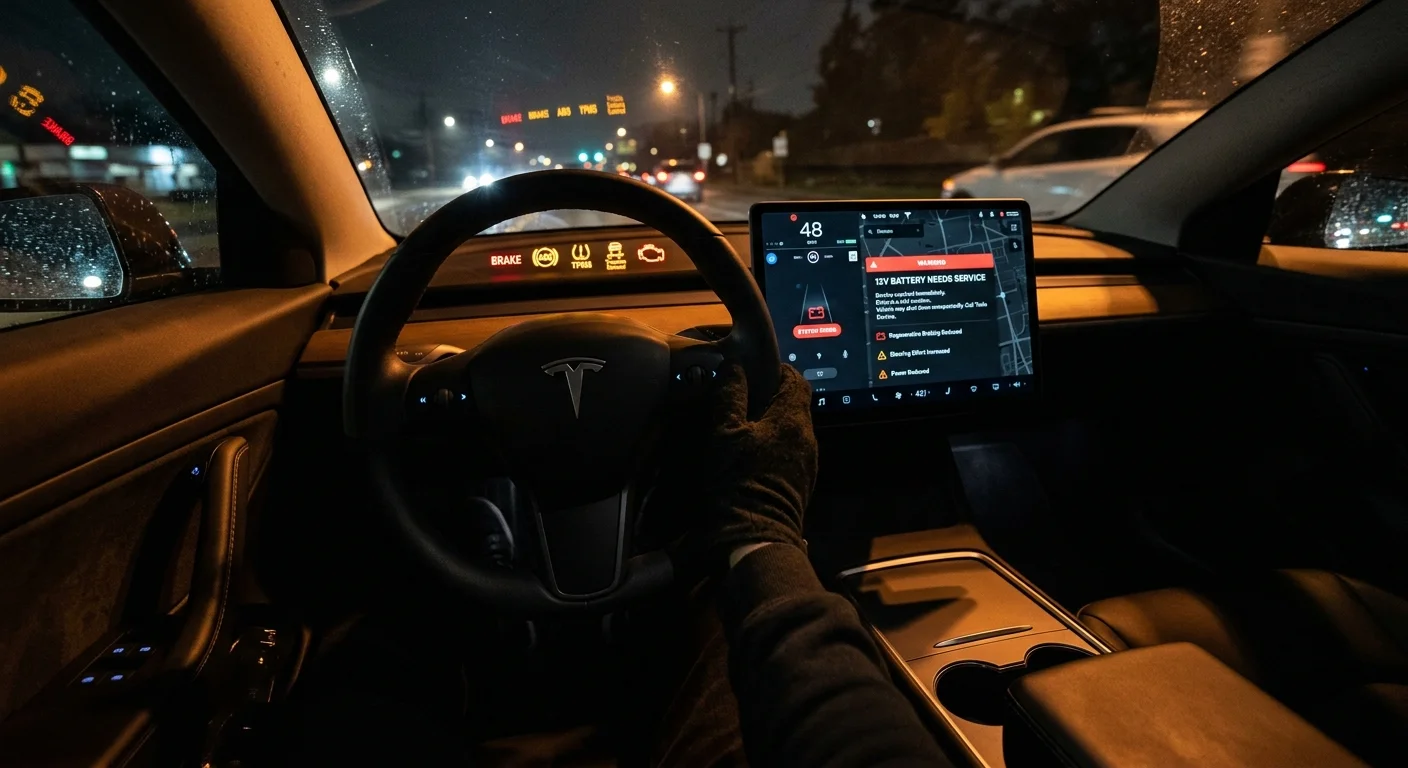
The 12-volt is the small battery that boots the car. It powers the modules that close the high-voltage contactors. When it drops too far, the ZDX goes dark. The fob stops answering. Locks can refuse to move. You can have a full Ultium pack and still look stranded.
Cold on the Front Range hits the 12-volt first
January’s normal low around Denver is about 18 degrees, per NWS Boulder. The official city elevation is 5,280 feet, marked on the west steps of the State Capitol. A small accessory battery sitting all night in that mix loses the fight.
In January 2024, Denver dropped from 47 degrees to minus 19 in about 48 hours. A ZDX left in a driveway through that swing rarely empties the pack by sunrise. The 12-volt is the one that quits.
Range loss is a different failure. Recurrent Auto found EVs keep about 78% of range at 32 degrees. They keep about 70% at 20 degrees. AAA’s 2026 dynamometer work showed about 39% range loss at 20 degrees. That’s cabin heat and pack chemistry while you drive. It doesn’t explain a cabin that’s fully dark.
Elevation stacks on top of the freeze. Golden sits near 5,675 feet. Evergreen sits near 7,200 feet. A ZDX on a foothills street has the same 12-volt job as a car by the Capitol. It just spent the night colder.
If the dash still lights and the range number is near zero, you need miles. If nothing lights, start with the 12-volt. Which EV battery matters on the roadside walks that split.
The ZDX is an Ultium car, not a Honda EV underneath
Acura built the ZDX with General Motors. It rides on GM’s Ultium BEV3 architecture. So does the Honda Prologue, which is the closest twin. The Chevy Blazer EV, Chevy Equinox EV, and Cadillac Lyriq share that family. No-start patterns on those cars usually carry over.
Every ZDX trim still needs the 12-volt to wake. Performance hardware doesn’t change the boot sequence. The high-voltage pack can’t close its own contactors. If you’ve already read the Honda Prologue cold no-start notes, you’re in the same playbook.
Read the cabin before you call a tow
Sort the failure in the lot. It changes what you ask for.
Dark cabin, silent fob, no dome light: the 12-volt is likely dead. Dim lights and a fob that only works against the door: the 12-volt is weak. Try a jump before you assume the pack is empty.
Dash boots, then dies, then boots again: try a full 12-volt recovery and a rest. If a high-voltage or charging warning stays after the dash comes up, that’s dealer diagnostic territory.
Dash comes up clean and range reads near zero: this isn’t a no-start. The pack needs a charge where you sit.
No click when you press the brake, plus a multi-day sit: think 12-volt first. A travel week in central Denver, Lakewood, or Wheat Ridge is enough.
Jump the labeled posts under the hood
The ZDX keeps its 12-volt under the hood. That’s the same neighborhood as a gas Acura. Labeled jump terminals sit nearby. Connect a lithium jump pack to those posts. Wait a minute or two. Then press start.
Never clip onto the orange high-voltage cables. Those aren’t jump points. You’re waking the accessory battery, not feeding the Ultium pack.
If the car is fully dead, the interior hood release may not move. Check your owner’s manual for the emergency hood steps on your year. Don’t force the latch.
How to jump an EV 12-volt in this cold covers the sequence. If it starts, then dies again by tonight, the battery is finished. A jump is a wake-up. It isn’t a repair. When the 12-volt dies again after a jump is the next read. The operators we connect you with can jump or replace a 12-volt on site. They quote you before they start.
Where this actually happens in the metro
The quiet driveway sit is the common one. You parked Sunday. You didn’t drive until Friday. The pack still shows plenty. The 12-volt doesn’t.
A long sit at Park Meadows in Lone Tree does the same work. Hours of cabin draw, then a cold garage, will flatten a weak 12-volt. Greenwood Village’s Denver Tech Center after a full day is the weekday version.
Airport parking is its own case. Peña Boulevard is the only road into Denver International. It’s city-maintained, not an interstate, and it runs exposed across open plains. Leave a ZDX in a DEN lot for a week. You can return to a car that won’t wake. That’s a 12-volt job, not an empty pack. Charging stall counts at the airport weren’t independently confirmed here.
Overnight at home can still strand you. If the charge session never actually started, the 12-volt keeps sipping power until morning. Confirm the utility by address before you blame the car. Xcel Energy covers the core metro and the Boulder County cities. CORE Electric Cooperative owns the Douglas County south corridor. That includes Castle Rock, Parker, Highlands Ranch, Lone Tree, and Castle Pines. United Power covers much of the north and northeast. It splits streets with Xcel inside Thornton, Westminster, Arvada, Broomfield, Northglenn, and Erie. Longmont Power and Communications is the city’s own utility. If you’re on CORE, don’t call Xcel.
If the dash is awake and the pack is truly empty, skip the jump. That’s a charge-in-place call.
On the shoulder, treat it like any disabled car
Colorado has no EV-specific breakdown statute. CRS 42-4-1202 lets you sit on the shoulder when the car truly can’t move, with hazards on. Stopping on the paved travel lanes without that excuse is a class B traffic infraction.
Abandoned-vehicle rules under CRS 42-4-1803 don’t use a published hour count. An officer decides on reasonable grounds.
CDOT Safety Patrol will jump a 12-volt on covered freeway segments. That includes parts of I-25 South from 120th Ave to Arapahoe Rd. It also covers I-70 East from Wadsworth to Airport Blvd, plus portions of US-6, C-470, and I-225. Front Range hours are 6:00 to 9:30 a.m. and 2:30 to 7:00 p.m. weekdays, and 10:00 a.m. to 7:00 p.m. weekends. CDOT’s own pages say nothing about EV charging. The patrol can jump. It doesn’t bring a charge to the pack.
On E-470, pull to the shoulder and dial *470 for that authority’s roadside help, including jump-starts. Still no pack charge.
If you need miles added where you sit, that’s a mobile Level 2 source. Charge Pro DEN is a referral line. We match stranded drivers with independent local operators. We don’t own trucks. We don’t employ technicians. We don’t set prices or promise an arrival time. The pros we connect you with bring 240-volt Level 2 charging. They use a CCS or J1772 adapter for a non-Tesla like the ZDX. They typically add about 10 to 20 miles in 15 to 30 minutes of charging. That’s charging time, never an arrival time. The operator quotes you before starting and bills you directly.
For this platform, start with non-Tesla EV rescue. Say it’s a ZDX. Say whether the cabin is dark or the dash is up with zero range.
Frequently asked questions
Why won’t my Acura ZDX start if the pack still shows charge?
The pack doesn’t boot the car by itself. The 12-volt runs the modules that close the contactors. When that battery is dead, the cabin stays dark and the fob goes quiet. A jump on the labeled posts fixes most cold-night no-starts.
Can I jump a ZDX the way I’d jump a gas Acura?
You’re jumping the 12-volt, not the Ultium pack. Use the labeled under-hood posts and a lithium jump pack. Never the orange cables. If the hood won’t release, use the manual’s emergency steps first.
What if the jump doesn’t get the ZDX to Ready?
Stop stacking jumps. The 12-volt may need replacement on site, or a module fault may need a dealer scan. Don’t call a flatbed until you’ve sorted which battery failed.
If your Acura ZDX won’t start anywhere in the Denver metro, call Charge Pro DEN at (720) 738-6950. Describe the dash so the operator we connect you with brings the right gear.