Battery-electric vehicles were 12.5% of new Denver-metro registrations through June 2026. CADA’s Q2 2026 Auto Outlook is the source. That share is down from 23.7% a year earlier. Recurrent Auto still measured real winter range loss across more than 30,000 U.S. EVs. Average cars kept about 70% of max range at 20 degrees. Denver’s January normal low sits around 18 degrees. EV range anxiety Denver drivers describe is those two facts on one cold night.
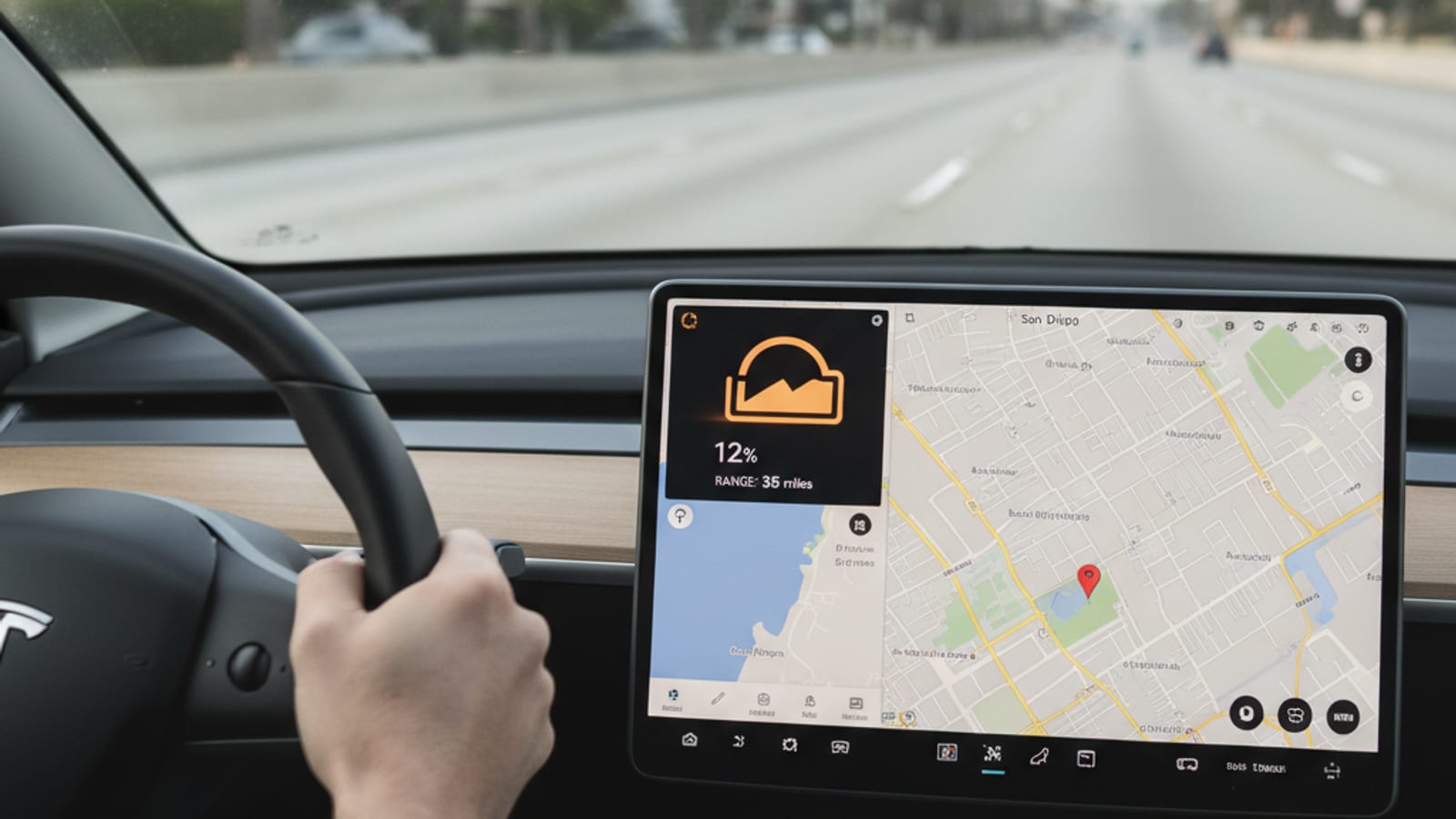
2026 sales share isn’t the old headline
The Denver metro is still Colorado’s highest-EV-share region. It isn’t a 2025 spike story anymore. Statewide BEV registrations fell 55.3% in the first half of 2026. The federal tax credit expired on September 30, 2025. In Q2 2026, BEVs were about 11.3% of new Colorado registrations. That’s roughly one in nine cars, not one in three.
Don’t recycle the old one-in-three line. It came from a single Q3 2025 quarter. Combined BEV and PHEV share hit 32.4% then. Shoppers bought ahead of the credit’s end. That quarter is over.
Colorado Energy Office data put the state past 200,000 registered EVs by October 2025. Those vehicles are still on metro streets. New-sale share fell, and the on-road fleet didn’t vanish. Range questions now sit on a bigger mix of model years. Winter still arrives on schedule.
AFDC counted 7,804 public charging ports statewide in the September 2026 pull. Tesla Superchargers are dense across the metro. You’ll find them in Denver, Thornton, Northglenn, Westminster, Arvada, Brighton, Longmont, and Boulder. Lakewood has three Supercharger sites. Centennial, Highlands Ranch, and Castle Rock have south-metro Superchargers. Lone Tree’s Park Meadows site is on that side too. Idaho Springs lists eight stalls on I-70 west. Silverthorne and Frisco have sites west of the Eisenhower-Johnson Memorial Tunnel. EVgo shows 24 Colorado locations. Electrify America adds DC fast coverage across the metro.
A port count doesn’t move a car that’s already stopped. You still have to reach a stall under your own power. A dead 12-volt won’t get you there either.
What the winter studies measured
Recurrent Auto’s winter range-loss study is the large-fleet source. EVs retained about 78% of max range at 32 degrees. They retained about 70% at 20 degrees, on average. Heat-pump vehicles held about 10 points more at 32 degrees. AAA’s 2026 dynamometer study reported about 39% range loss at 20 degrees. NWS Boulder and NCEI normals set the local floor. Denver’s January normal low is around 18 degrees. The all-time record cold is minus 29, on January 9, 1875. The January 2024 arctic blast still sits in recent memory. Denver dropped from 47 degrees to minus 19 in about 48 hours. That swing ran January 16 and 17. Cabin heat and a cold soak stack on the same morning. Tesla daily range on a cold Denver day tracks real use, not a sticker. Use the energy graph in your car.
Elevation spends energy, and descents give some back
Denver’s 5,280-foot mark is the official elevation. It’s the 13th step on the west side of the State Capitol. Evergreen is about 7,200 feet. Idaho Springs is 7,526 feet. The Eisenhower-Johnson Memorial Tunnel west portal is 11,158 feet. Loveland Pass is 11,990 feet. Regen on the way down can return a large share of the climb. Loveland Pass tests credit regen on a Lucid Air GT. A Hyundai Ioniq 5 showed the same pattern. The Air GT used about 3% over 77 miles. The Ioniq 5 used about 10% over 75 miles. Drivers often ease regen on ice, so the downhill refund shrinks. I-70 west isn’t a flat city loop. SH-74 toward Evergreen isn’t either. US-36 into Boulder climbs before campus and the Flatirons come into view. EV battery care in a Denver winter starts in the driveway. The March 2019 bomb cyclone closed DIA’s runways. It also closed I-70, I-25, and Peña Boulevard. COtrip.org and the 511 line are the live sources for closures and traction law.
Your utility isn’t the metro’s utility
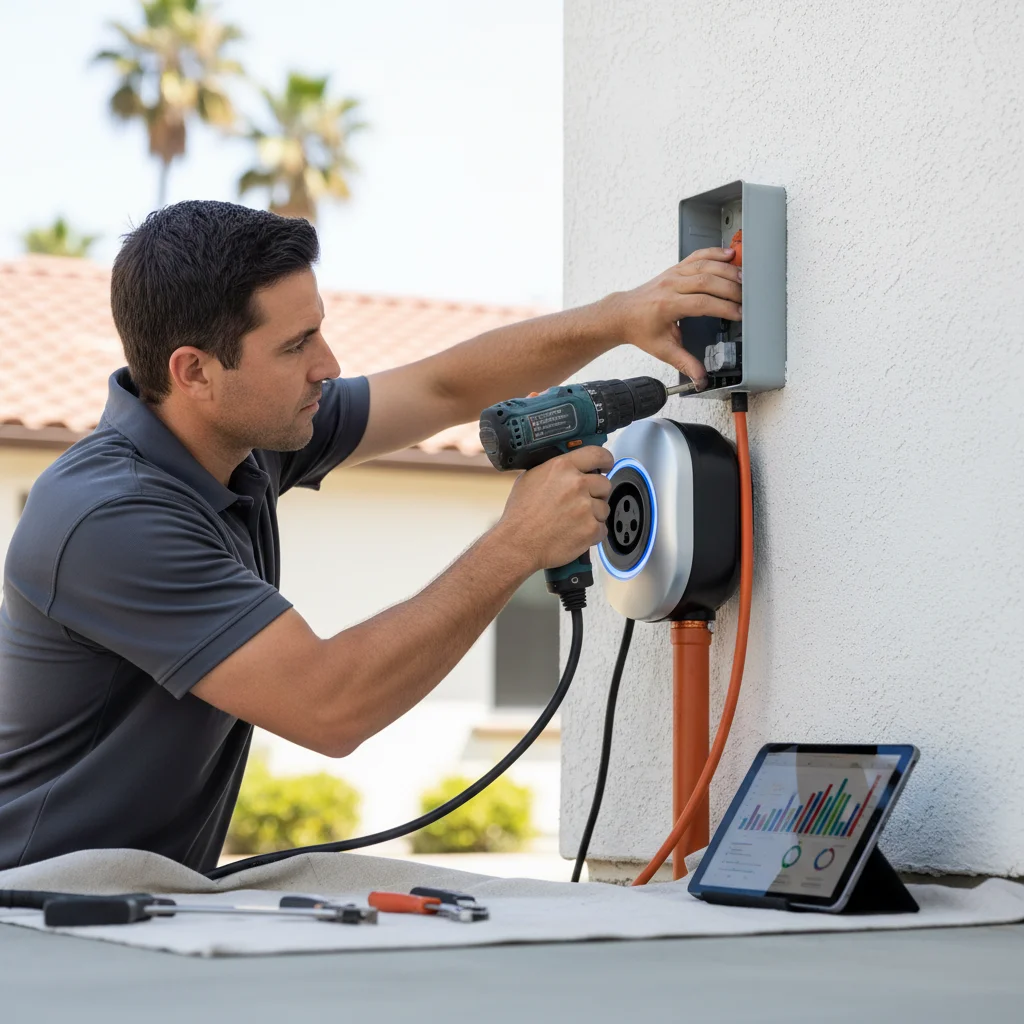
Home charging is still the cleanest way to start with a known state of charge. Who bills that plug depends on the address. Xcel Energy covers the core metro and most Boulder County cities. Denver, Aurora, Lakewood, Golden, and Boulder are on Xcel. Clear Creek towns including Idaho Springs, Georgetown, and Empire are too. Xcel publishes EV Accelerate At Home, EV Home Wiring Rebate, Optimize Your Charge, and PCAN. Check current terms with Xcel. Rebate dollar amounts aren’t verified here. CORE Electric Cooperative covers the south-metro Douglas County corridor. Centennial, Highlands Ranch, Lone Tree, Parker, Castle Rock, and Castle Pines are CORE. CORE’s own page says COREV Charge is at capacity and closed to new applications. A Castle Rock or Parker driver shouldn’t call Xcel. United Power covers the north and northeast. It splits streets with Xcel in Thornton, Northglenn, Westminster, Arvada, Broomfield, and Erie. United Power is Brighton’s electric utility, not Xcel. Xcel supplies only gas in Brighton. United Power also serves Commerce City. In a split city, confirm the utility by address. Longmont Power and Communications is municipal, so Longmont questions go to the City. The research pass didn’t confirm how many metro EV drivers lack a home plug. Charging apps before you’re stranded belong in the pre-trip, not the panic.
If you’re already on the shoulder
Colorado has no EV-only breakdown statute. A stalled EV follows the same disabled-vehicle rules as any car. CRS 42-4-1202 allows a disabled vehicle on the shoulder. That’s when it truly couldn’t keep moving, with hazards on per 42-4-230. A violation is a class B traffic infraction. CDOT Safety Patrol is free on covered freeway segments. It handles flat tires, 12-volt jump-starts, fuel, debris, and minor mechanical help. Metro coverage includes I-25 South from 120th Ave to Arapahoe Rd. It also includes I-70 East from Wadsworth to Airport Blvd. Portions of US-6, C-470, and I-225 are covered too. The I-70 Mountain Corridor is covered Morrison to Vail. Weekday hours run 6:00 to 9:30 a.m. and 2:30 to 7:00 p.m. Weekend hours run 10:00 a.m. to 7:00 p.m. Mountain hours run 6:00 a.m. to 7:00 p.m. Friday through Sunday. They’re also on during significant weather. CDOT’s Safety Patrol pages mention nothing about EV charging. The patrol can jump a 12-volt. It doesn’t bring a charge to the traction pack. E-470 drivers pull to the shoulder and dial *470 for the authority’s own help. I-25 North and US-36 Express Lanes have a minimum 8-foot outside shoulder. If the traction pack is empty, a tow to a stall is one option. A mobile Level 2 charge is another. Charge Pro DEN is a referral line. It matches stranded EV drivers with independent local operators. It holds no trade license, owns no trucks, and sets no prices. It doesn’t promise an arrival time. The operator quotes you before starting and bills you directly. The pros we connect you with bring a 240-volt Level 2 source to the car. They use a native NACS plug, with CCS or J1772 adapters for non-Tesla EVs. They typically add 10 to 20 miles of range. That takes 15 to 30 minutes of charging, never a travel time. They can also jump or replace a dead 12-volt on site. Out of charge recovery is the empty-pack path. Mobile EV charging is the same help in different words. On I-70, stay on the shoulder with hazards on if the car won’t roll. Out of charge on I-70 covers the next moves without guessing a stall distance. Peña Boulevard is city-maintained, and it’s the only road into Denver International Airport. A week in a cold DEN lot can kill the 12-volt. That’s a jump or an on-site 12-volt replacement, not an empty pack. Red Rocks Amphitheatre in Morrison is a long, cold sit after a show. The city map lives at EV charging across the Denver metro. It’s a place guide.
What this dataset won’t do
It won’t call range anxiety imaginary. Recurrent and AAA measured loss in the cold. Denver winters regularly sit at or below those test temperatures. It won’t invent a Denver ran-out-of-charge rate. No metro-specific owner survey was in the research pass. If estimated range is falling faster than the nav promised, precondition when you can. Slow down on the climb and leave cabin-heat margin. If you already hit zero, stay out of the travel lane. Keep hazards on. Ask for a charge in place, or an EV-capable tow. Don’t walk the freeway looking for a stall.
For a referral to a local operator, call (720) 738-6950. The operator still quotes before any work starts.
Frequently asked questions
Does 2026 data still show range anxiety along the Front Range?
CADA puts Denver-metro BEV share at 12.5% of new registrations through June 2026. That’s down from 23.7% a year earlier. Recurrent Auto still shows about 70% of max range at 20 degrees. Denver’s January normal low is around 18.
How much range do Front Range winters take?
Recurrent found about 22% average loss at 32 degrees. It found about 30% at 20 degrees. AAA’s 2026 dynamometer work reported about 39% range loss at 20 degrees. Your trip log still beats a blended average.
What do I do if the pack hits empty on a metro freeway?
Pull as far right as you can and turn on hazards. CDOT Safety Patrol can jump a 12-volt on covered segments and hours. It doesn’t publish EV charging. Ask for a mobile Level 2 charge, or a proper EV tow.