A Chevy Silverado EV that sat overnight on a north metro lot won’t wake. The 12-volt is usually why, not the Ultium pack. Jump that small battery before you spend the morning waiting on a flatbed.
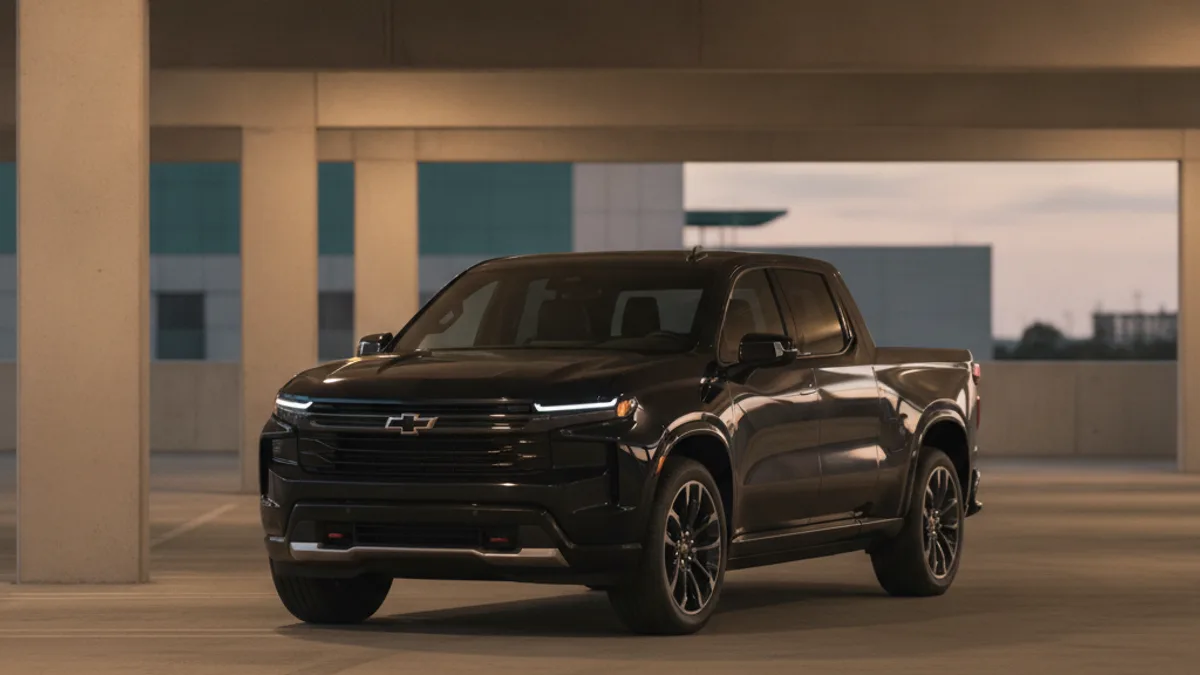
North metro cold, a work truck, and a dark cabin
Crew trucks don’t get garage pampering. A Silverado EV often sits after dark on a Thornton or Northglenn job lot. Commerce City yards see the same overnight sit. Tools, lighting, or eTrunk outlets may have been on. Then the overnight cold settles over the north metro. Denver’s January normal low is around 18 degrees. In January 2024 Denver fell from 47 to minus 19 in about 48 hours. A tired 12-volt doesn’t recover from that soak.
This isn’t an empty-pack story first. The range readout can still look healthy. The truck goes fully dark, the fob does nothing, and screens stay black. You’re late for the first pour or the first stop. A tow feels inevitable. Check the 12-volt before you flag a flatbed.
United Power covers much of this north and northeast belt. It splits streets with Xcel inside Thornton, Northglenn, Westminster, Broomfield, and Erie. Brighton gets electric from United Power, and Xcel only sells gas there. Commerce City is on United Power too. Broomfield is its own city and its own county, split off in 2001. None of that wakes a dead 12-volt. Confirm the utility later if you thought a yard charger failed. Treat the no-start as a low-voltage problem first.
Federal Heights and Westminster see the same overnight pattern. So does a truck left at a Brighton yard. Superchargers exist in Thornton, Northglenn, Westminster, and Brighton. A dark Silverado EV can’t drive there until the 12-volt comes back.
Chevy Silverado EV won’t start: the 12-volt is down
The Ultium pack moves the Silverado EV down the road. The 12-volt wakes the computers. Those computers close the contactors that connect the high-voltage pack. If the 12-volt is too low, that handshake never finishes. The cabin stays dead even with miles still showing.
A DC-DC converter steps pack voltage down while the truck sits. It holds the small battery around 12 to 14 volts. When the converter or the 12-volt itself wears out, that top-off stops. Weeks of parking make it worse. A battery near the end of its life does too. A jump can wake you. A 12-volt that can’t hold will leave you dark again within days.
Cold also cuts pack range. Recurrent Auto studied more than 30,000 U.S. EVs. They keep about 70 percent of max range at 20 degrees, on average. That’s the traction pack, not the 12-volt. A Front Range night still stacks both stresses. The pack can look fine. The little battery may not.
Colorado crossed 200,000 registered EVs by October 2025, per the Colorado Energy Office. The Denver metro still has the state’s highest EV share. Battery-electric vehicles were 12.5 percent of new Denver-metro registrations year-to-date through June 2026. A Silverado EV still lives on jobsites. The 12-volt doesn’t care about registration stats.
The mess of warnings is a clue
A no-start on this truck looks messy, not tidy. The dash never comes up, drive won’t engage, and range still reads high. The 12-volt feeds many modules at once. Voltage drop doesn’t print one clean code. It dumps a stack of unrelated warnings. That stack is a low-voltage signature. It’s not six separate failures.
Don’t keep cycling power to clear the lights. Bring the 12-volt back into range. A jump or a controlled charge does that. Don’t yank terminals to force a reset, especially after a shop visit. If you’re not sure what you’re seeing, stop. Call for a diagnosis instead of guessing under the cover.
If this truck already needed more than one jump lately, it isn’t a fluke. That’s replacement territory, not another lucky jump. Read what to do when an EV 12-volt dies again after a jump.
You can’t reach the battery until the eTrunk opens
GM parked the Silverado EV’s 12-volt in the eTrunk, under the hood. It’s on the passenger side, under a plastic cover held by tabs. That’s simple with power, and the eTrunk isn’t. It opens with the fob, a dash button, or a fascia button. All three need 12-volt power. When the small battery is dead, you can’t reach the battery that would fix it.
The Hummer EV locks out the same way. GM’s other electric truck does too. Read GMC Hummer EV won’t start for the eTrunk lockout. The GMC Sierra EV stranded guide covers the other electric truck. Same Ultium family, and the same low-voltage logic.
A Chevy Equinox EV or Blazer EV can go dark after a cold sit too. The Silverado EV just hides the battery behind an electric eTrunk.
Pull the cable, then the cover
There’s a mechanical workaround with the truck fully dead. Sit in the driver’s seat. Reach under the dash on the lower left. That’s where a gas truck’s hood lever would sit. You’ll feel a gray release cable with a loop. Pull it twice. The eTrunk unlatches by cable, not by electronics.
The cable is tucked up. The first try can take a moment. Once the lid pops, lift the passenger-side plastic cover. A flathead helps if the tabs fight you. Move slowly so you don’t crack the cover. The 12-volt and its posts are right there.
Clamp order, then wait
The negative terminal uses a 10mm bolt. The positive sits beside it. Connect a jump pack or donor positive clamp to positive first. Then connect negative to the Silverado’s negative post. You can also use a clean unpainted metal ground nearby. Wait about a minute. Then try to wake the truck.
If it stays dark, leave the jumper connected a few more minutes. A deeply flat 12-volt sometimes needs that slower rise before the handshake completes. Use the guide to jumping an EV 12-volt in Denver cold. Don’t try to jump another car off this truck’s high-voltage pack. You’re only trying to wake this Silverado’s low-voltage system.
Match the symptom to the 12-volt, not the pack
Dark dash and doors that ignore the fob point to a fully discharged 12-volt. An eTrunk that ignores the fob and the fascia button is another 12-volt sign. The electric latch doesn’t have power. A pile of unrelated warning lights is classic low voltage. Several modules get confused at once. If it won’t shift into drive with healthy range, the Ultium handshake failed. Repeat no-starts within days of a jump mean the 12-volt is done.
The Silverado EV is a work truck first. eTrunk outlets, job lighting, and a trailer plug all pull on the low-voltage side. Leave those loads on overnight in Thornton and a weak 12-volt is tomorrow’s no-start. A loaded trailer the day before does the same. Accessory draw stays high the whole drive. Then the truck soaks in the cold at the yard.
Airport parking writes the same story on a longer clock. Peña Boulevard is the only road into Denver International. It’s an 11-plus-mile city-maintained freeway across open plains, not a state highway. A week in a cold DEN lot can kill the 12-volt. The pack can still hold energy. Alarm and connectivity modules keep sipping power the whole time. That’s a jump or an on-site 12-volt swap. It’s not proof the Ultium pack is empty. DEN stall counts were not confirmed from the airport’s own pages. Whether that charging is free was not confirmed either. Don’t plan around a number you can’t verify.
Outside shoulder steps on I-25
If the truck died on north metro I-25, get out of the travel lanes. The I-25 North Express Lanes were built with a minimum 8-foot outside shoulder. Move to that right shoulder. Put the hazards on. 120th Avenue is a real north metro marker on this corridor. CDOT Safety Patrol coverage on I-25 runs from 120th Avenue down to Arapahoe Road.
CRS 42-4-1202 covers a disabled vehicle on the shoulder. Outside a business or residential district, don’t stop on the paved travel lanes. A truly disabled vehicle may sit off the roadway with hazards on. Statute 42-4-230 requires those hazard lights. A violation is a class B traffic infraction. Colorado has no separate statute for a disabled EV. The same shoulder rules apply.
Weekday Front Range patrol hours are 6:00 to 9:30 a.m. and 2:30 to 7:00 p.m. Weekend hours are 10:00 a.m. to 7:00 p.m. Patrol can jump a 12-volt and change a tire. CDOT’s Safety Patrol pages mention nothing about charging a stranded EV. If the Ultium pack is empty, they won’t bring you miles.
On E-470, the Public Highway Authority publishes free roadside help. Pull to the shoulder and dial *470 for a jump or a tire. You can also dial *CSP (*277) for State Patrol. That’s still not a mobile EV charge. For an empty pack on this corridor, see EV died on I-25 through the north metro.
Abandoned-vehicle rules sit in CRS 42-4-1803 to 1805. The statute sets no 24-hour or 72-hour clock. An officer can treat a vehicle as abandoned on reasonable grounds. Don’t assume you have a set number of hours on the shoulder.
If a private lot already called a tow, pause before you pay. Colorado’s Towing Bill of Rights (HB22-1314) requires 24-hour written notice before most private-property tows. The Public Utilities Commission regulates towing carriers. Exact drop-fee figures were not confirmed in the sources we checked. Ask the carrier and the lot owner before you pay.
Only charge in place if the pack is actually empty
A dark Silverado EV is usually the 12-volt. Prove that first. If the truck wakes and then shows a truly empty pack, that’s a different job. Operators in this network can bring a 240-volt Level 2 source to the car. They use a CCS or J1772 adapter for non-Tesla EVs. Typical charging time adds about 10 to 20 miles in 15 to 30 minutes. That’s time on the plug. It’s never an arrival window.
The operator quotes you before they start. They bill you directly. Charge Pro DEN is a referral line. It doesn’t hold a trade license, doesn’t own trucks, and doesn’t employ technicians. The pros we connect you with are licensed and insured. The non-Tesla EV rescue path is the right one for a Silverado EV. The same network handles Tesla and every major EV brand. Other work trucks fail this way in the same cold. A Ford F-150 Lightning that won’t start is often the 12-volt too.
Stop jumping a battery that won’t hold
One jump after a hard freeze can be enough. Repeated no-starts aren’t the same thing. A 12-volt that won’t hold needs to come out. Operators in this network can jump or replace a dead 12-volt on site. If a new battery still goes flat, look at the DC-DC converter. It may not be topping the battery off. That’s a shop diagnosis, not another roadside loop.
Home charging questions can wait until the truck moves. If you later find the yard plug never ran, check which utility owns the street. Don’t assume Xcel in Thornton, Northglenn, Westminster, Broomfield, or Erie. Don’t assume Xcel in Brighton or Commerce City either.
Frequently asked questions
Why won’t my Chevy Silverado EV start if the range still looks fine?
Range comes from the Ultium pack. The 12-volt is what boots the truck. If that small battery is down, the startup handshake never finishes. A 12-volt jump is the usual fix.
How do I reach the 12-volt if the eTrunk won’t open?
Use the gray loop cable under the driver’s dash, lower left. Pull it twice. The eTrunk unlatches mechanically. The battery sits on the passenger side under a plastic cover.
Should I tow a Silverado EV that won’t start in this cold?
Not as the first move. Confirm the 12-volt. A jump or on-site replacement often wakes it. Towing a dead EV in Colorado is a heavier job than a 12-volt boost.
If the Silverado EV is dark and the eTrunk won’t pop, don’t force parts under the cover. Charge Pro DEN serves the Denver metro and connects you with independent local operators. Call (720) 738-6950. The operator quotes the work before they start and bills you directly.