A home battery backup and a mobile EV charge are different products. A home battery stays at the building. A mobile EV charge rolls to the car. Arvada adds a third variable. The city splits Xcel Energy and United Power by address. Confirm your utility before any wall hardware decision. Call (720) 738-6950 for a mobile Level 2 boost or a 12V jump. The brand does not sell, install, or service home batteries, wall chargers, or solar.
Two products, two jobs
A home battery backup sits on a wall or in a garage. It stores grid power or solar power. It runs part of the house through an outage. It may also slow your bill if your utility offers a time-of-use rate and you sign up. It is fixed hardware at one address, wired in by a licensed electrician, and tied to your home electrical service and your utility account. Charge Pro DEN does not install, sell, or service these. We do not pull the permit. We do not handle the rebate. We refer stranded-EV drivers to independent operators for a mobile charge.
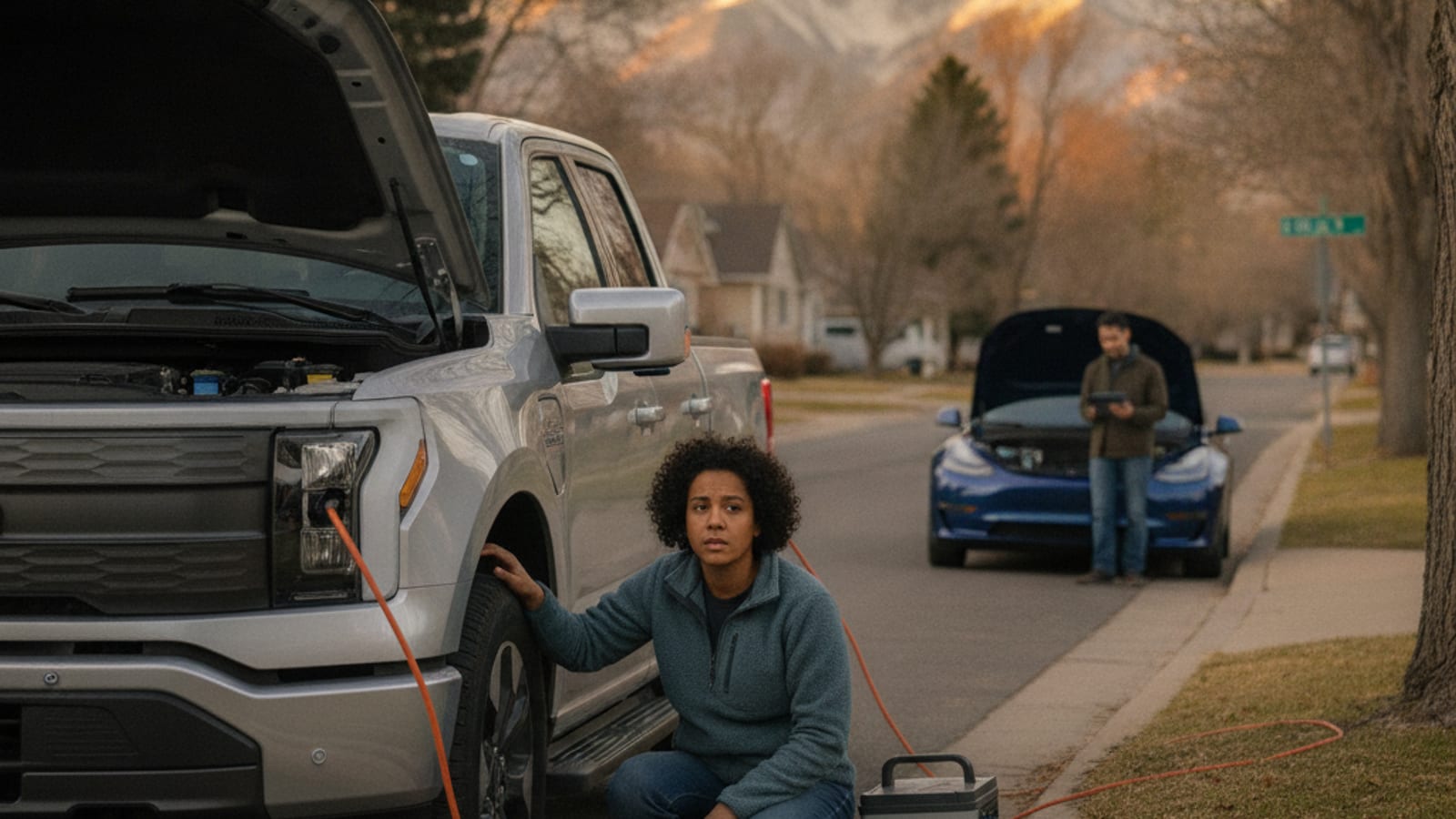
A mobile EV charging referral is a different thing. An independent operator drives to a stranded car with a 240-volt Level 2 source, plugs in, and adds range while the car sits. The hardware leaves with the operator. The car usually moves under its own power in 15 to 30 minutes of charging. That charging time is the time on the cable, not an arrival time. The operator quotes the work before any cable goes in. There is no membership with Charge Pro DEN.
If the car is in a travel lane, on a dangerous shoulder, or in any active emergency, call 911. None of this replaces emergency response.
Arvada splits utilities by address
Arvada sits in both Adams and Jefferson counties, and the electric utility does not match the city line. Xcel Energy covers most of the city. United Power covers portions inside city limits, and Arvada appears on United Power’s own list of served communities. There is no single street-by-street map that the brand can publish with full accuracy. Confirm your utility by address before you talk to anyone about a wall box or a home battery.
For Xcel residents, the published program names are EV Accelerate At Home, EV Home Wiring Rebate, Optimize Your Charge, Charging Perks, RE-TOU, Residential EV Rebate, and PCAN. For United Power residents, the published program names are United EV, EV Make-Ready Wiring Rebate, EV Home Charge Panel Upgrade Rebate, and RTD1 TOU with Simple Saver. The brand does not publish rebate dollar amounts here because those numbers live on each utility’s own pages and change. Open your utility’s site, type in your service address, and read what they actually offer your specific home before you call an installer.
This split matters for two reasons. First, the rebate and rate you qualify for come from your utility, not from Charge Pro DEN. Second, an installer needs to know which utility serves you before they quote a panel upgrade or a dedicated circuit. An electrician who files paperwork with the wrong utility can stall your install by weeks.
What a home battery actually does for an EV driver
A home battery backup does three things for an EV household, and only the first two are about the car. It can keep essential circuits alive during a grid outage, so the fridge runs and a few lights stay on. It can shift charging to off-peak hours if your utility offers a time-of-use plan and you have signed up for it. It can also act as a backup power source for the house during a blackout, which matters in Arvada when a winter storm knocks out a feeder.
It does not charge a stranded EV on the road. It does not move with the car. It does not help a driver who is already at 12 percent on the shoulder of SH-93. If your goal is to survive a power outage at home with food in the fridge and a charged car in the garage by morning, a properly sized home battery can do that, provided the car is plugged in at the house and the wall charger is on a backed-up circuit.
That is a different conversation from the one a stranded driver has at 7 a.m. on Ward Road.
What a mobile EV charge actually is
A mobile EV charge is a referral to an independent local operator who brings a 240-volt Level 2 source to the car. Tesla drivers get a native NACS plug on the lead. Other EVs get a CCS or J1772 adapter. The operator quotes you before any cable goes in, and they bill you directly for the work they do. The brand does not set the price, and the brand does not promise an arrival time. For the broader choice, read charge in place or tow in Colorado.
Typical charging time adds about 10 to 20 miles of range. That range comes in 15 to 30 minutes of charging. The clock starts when charging starts, not when the operator leaves their shop. Those miles are the goal. Enough for the driver to reach a public stall, a home charger, or a familiar route without a tow.
For an empty pack, the right referral is out-of-charge recovery. For a Tesla that will not wake in an Arvada driveway on a 12-below morning, the right referral is a Tesla 12V jump. For a non-Tesla on a public stall that failed, the right referral is non-Tesla EV rescue. Charge Pro DEN matches the call to the right service. The operator decides what tools to bring.
For the equipment explainer, see what a mobile EV charger actually brings to a stranded car.
Older southeast Arvada and newer northwest Arvada are two different stories
Arvada’s housing pattern shapes the question. Just over half of Arvada’s housing predates 1980, and that older stock concentrates in the southeast, around Olde Town and along the Wadsworth and Sheridan corridors. A lot of those homes are bungalows and small apartments with no driveway, a 100-amp panel, and a detached garage. A wall charger install in this housing usually means a panel upgrade and a long conduit run. A home battery install here is also a panel conversation, sometimes a service-entrance conversation, and it rarely makes sense as a quick project.
The newer northwest neighborhoods, Candelas and Leyden Rock among them, are master-planned with modern 200-amp service, garages wired for chargers, and the open ground tilting up toward SH-93 and the hogback. A home battery install here is much closer to a clean project, and many homes already have a wall charger. The recurring call from these neighborhoods is not a no-plug one. It is the climb home in the cold. SH-93 toward Golden climbs, and the grade plus a running heater plus a cold-soaked pack eats a margin that looked fine on the plain. For that situation, neither a home battery nor a wall charger is the answer, because the car is already on the road, not in the garage.
Recurrent Auto studied more than 30,000 U.S. EVs in winter. At 32 degrees, the average EV kept about 78 percent of its maximum range. At 20 degrees, that drops to about 70 percent. The climb up SH-93 in January is one of the local combinations that makes the meter drop faster than the driver expects.
A practical way to think about the two products
Use a home battery backup when your goal is to keep the house running during an outage, or to enroll your home in a utility time-of-use plan that pays you to charge off-peak. The car benefits only when it is plugged in at home and on a backed-up circuit. This is a fixed install, a permit, an inspection, and a utility conversation. Charge Pro DEN does none of that work.
Use a mobile EV charge when the car is stranded, the pack is empty, and you need to drive away under your own power. The hardware rolls to you. The operator quotes first. The miles you get are limited. For most Arvada drivers, a mobile charge is the bridge to a real charging session, not a substitute for one.
Some households will end up with both. A home battery and wall charger for the house, and the number of an independent mobile operator saved in the phone for the day the math goes wrong on SH-93.
For the AAA and Tesla comparison, read AAA vs mobile EV charging when the pack is dead. For the broader near-me explainer, read mobile EV charging near me in the Denver metro.
Frequently asked questions
How do I confirm which utility serves my house?
Open your utility’s website and enter your service address. Xcel Energy customers and United Power customers each have their own lookup. If you are not sure which utility to start with, your most recent electric bill lists the supplier name. Charge Pro DEN cannot tell you which utility serves a specific address, and the brand never guesses.
Can my home battery backup charge my car during an outage?
Some systems can, if the wall charger is on a backed-up circuit and the car is plugged in at home. Most home batteries do not have enough stored energy to refill a traction pack from empty. They are sized to keep essentials alive, not to refuel a vehicle. Talk to a licensed installer about your specific equipment and your specific car before you assume it works that way.
Will a mobile EV charge work in my Arvada neighborhood?
Charge Pro DEN refers operators across the metro, including both the older southeast and the newer northwest. Operators reach street parking and apartment lots the same way they reach a driveway in Candelas. Confirm by address is for utilities, not for service area. Call (720) 738-6950 and ask.
Does Charge Pro DEN install wall chargers or home batteries?
No. The brand is a referral line for stranded EVs. The brand does not install, sell, service, or quote any fixed electrical hardware. For wall chargers and home batteries, hire a licensed Colorado electrical contractor and confirm with your own utility first.
What if my car is dead on a shoulder and the cabin is freezing?
Turn your hazards on and stay visible to traffic. Stay in the car if that is the safer choice. Call (720) 738-6950 for a mobile Level 2 boost if the pack is empty, or a 12V jump if the small battery is dead. A mobile operator rolls to you, and they quote before any work starts.