A home EV charger only needs a panel upgrade when the existing panel is already full. In the Denver metro, which utility serves the house matters just as much. Xcel Energy, United Power, CORE Electric Cooperative, and Longmont Power and Communications each run different home-charger programs. Start with the utility on the bill. Then have a licensed electrician run a load calculation before you budget.
Confirm who serves the house
One Xcel rebate line is wrong for a large share of this metro. Xcel Energy covers the core cities. That list includes Denver, Aurora, Lakewood, Golden, and Wheat Ridge. It also includes Littleton, Englewood, Sheridan, Cherry Hills Village, and Greenwood Village. On the Boulder County side it covers Boulder, Louisville, Superior, and Lafayette. Along Clear Creek it covers Idaho Springs, Georgetown, and Empire.
CORE Electric Cooperative owns the south-metro Douglas County corridor. That’s Centennial, Highlands Ranch, Lone Tree, Parker, Castle Rock, and Castle Pines. It also covers Roxborough Park, The Pinery, Stonegate, Conifer, and Bennett. Those addresses are CORE, not Xcel. Our home EV charger install notes from Highlands Ranch down to Castle Rock cover that stretch.
United Power owns the north and northeast. It splits streets with Xcel inside Thornton, Northglenn, Westminster, Arvada, Broomfield, and Erie. United Power is the electric utility in Brighton. Xcel supplies only gas there. United Power also serves Commerce City. In those split cities, confirm the account by address. The city name on the sign isn’t enough.
Longmont is municipal. Longmont Power and Communications is the City of Longmont’s utility. Charger rebate questions there go to the City, not Xcel. For the billing side of a home plug, see who bills a Tesla charge in the Denver metro.
What the load calculation is weighing
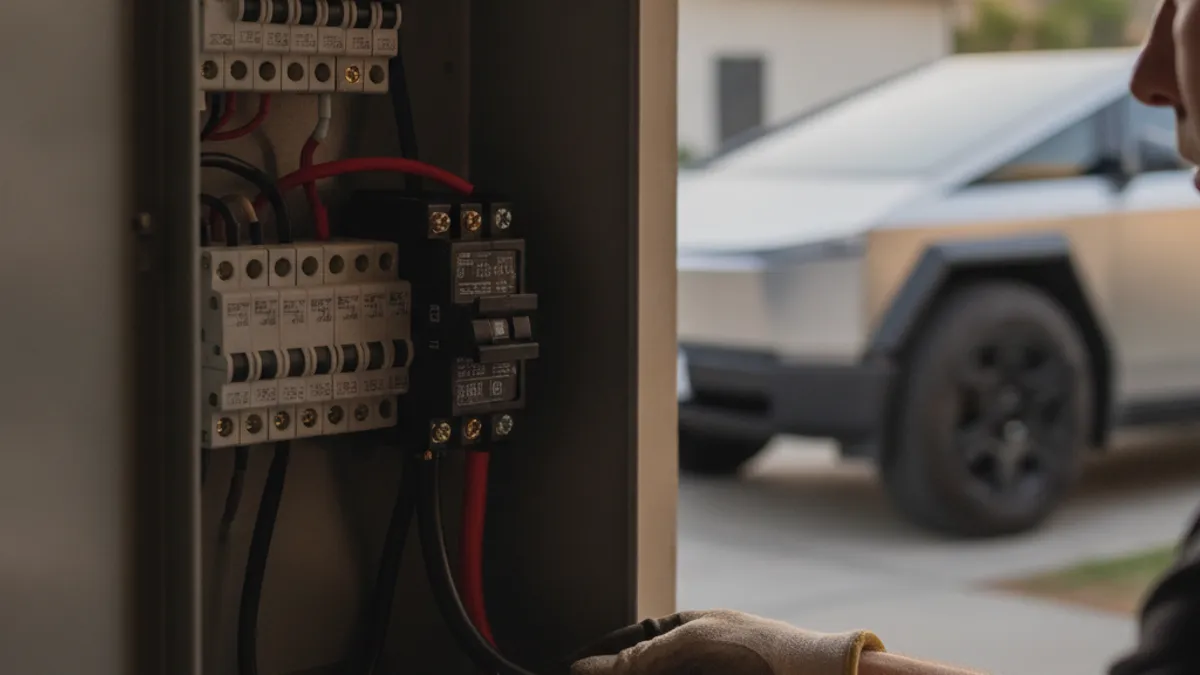
A Level 2 charger runs on a 240-volt circuit. It typically pulls about 40 to 48 amps. That’s similar to an electric dryer or oven. A licensed electrician adds up what the panel already powers. Your electrician and the local inspector decide if spare capacity remains.
We couldn’t confirm typical panel amperage by neighborhood in the sources used here. A newer-looking house can still be short. An older house can still have room. The calculation is the fact that matters. If a charger already trips a breaker, start with our note on a home EV charger that keeps tripping.
Paths when the panel is short
The electrician may not jump straight to a new panel.
A load-management device can throttle the charger when the house is already drawing hard. In some layouts that avoids an upgrade.
Some homes can share an existing high-draw circuit with the new charger circuit. That doesn’t fit every garage.
A full panel upgrade is the heavy path. It usually means a new panel, a new main breaker, and updated grounding. It can also mean utility work at the meter or service connection. We couldn’t confirm a typical Denver-metro price for that work. Ask for a written quote. Have it list the panel, the permit, and any utility coordination.
Programs by utility, in plain names
Most rebate dollar figures weren’t verified here. Use the program names. Then confirm the live rules on the utility’s own site.
Xcel Energy’s 2024-2026 Transportation Electrification Plan names several home programs. Those include EV Accelerate At Home and the EV Home Wiring Rebate. Xcel also lists Optimize Your Charge, Charging Perks, the RE-TOU time-of-use rate, the Residential EV Rebate, and the Public Charging Acceleration Network. Read which name applies to a panel or a new circuit.
United Power publishes United EV, a ChargePoint Home Flex charger on a monthly service agreement. It also publishes an EV Make-Ready Wiring Rebate, an EV Home Charge Panel Upgrade Rebate, and the RTD1 time-of-use rate with Simple Saver scheduling. If a panel upgrade is on the table in United Power territory, ask about that panel-upgrade rebate by name. Confirm whether it’s open on unitedpower.com.
CORE publishes COREV Connect, an annual bill credit for connecting an EV or charger to CORE’s platform. Confirm the current credit and enrollment status with CORE. CORE also publishes COREV Charge. CORE’s own page says that program is at capacity and closed to new applications. COREV Community Charge is a member rate at CORE public chargers, not a home-panel rebate.
Longmont Power and Communications publishes the LPC EV Charger Rebate. Confirm eligibility with the City of Longmont.
Permits and who actually does the work
A panel upgrade is licensed electrical work. Charge Pro DEN is a referral line. We match stranded EV drivers with independent mobile rescue operators. We don’t install chargers. We don’t upgrade panels. We don’t pull permits.
We couldn’t confirm a specific Colorado electrician license class in the sources used for this page. Ask the electrician which license they hold. Look it up on the state’s contractor site before you sign. Permit rules weren’t confirmed city by city here either. Ask your city or county building department what they require. A quote that skips the permit to cut the price is a warning, not a deal. Unpermitted electrical work can follow you at resale and with your insurer.
The federal credit that used to help with home charger equipment expired for installs completed after December 31, 2025. Don’t build it into a 2026 budget. Colorado’s innovative motor vehicle credit is a vehicle purchase credit. It isn’t a panel rebate.
If the house charger still isn’t live
We couldn’t confirm how long metro electricians and utilities take on a panel upgrade. Ask both for a calendar. If you’re still on a slow Level 1 outlet, winter can outrun that plug. See our note on Level 1 charging through a Denver winter.
If the driveway charger isn’t ready and the car runs short, that’s a roadside job, not an electrical one. Independent operators we refer bring a 240-volt Level 2 source to the car. They typically add 10 to 20 miles of range in 15 to 30 minutes of charging time. That’s charging time, never an arrival time. The operator quotes you before starting and bills you directly. Compare the two jobs in home 240-volt charging versus a roadside charge. For a driveway boost while you wait, see mobile EV charging in the Denver metro.
Frequently asked questions
How much does an electrical panel upgrade cost for an EV charger here?
We couldn’t confirm a typical Denver-metro price in the sources used for this page. Get a load calculation and a written quote from a licensed electrician. Ask them to include the permit and any utility coordination.
Do I always need a panel upgrade to install an EV charger?
No. Homes with spare capacity often don’t. The electrician’s load calculation decides it.
Which utility program applies to a panel upgrade?
It depends on the account. Xcel, United Power, CORE, and Longmont each publish different charger and wiring programs. United Power is the one that names a home-charge panel-upgrade rebate. CORE’s COREV Charge program is closed to new applications. Confirm yours by address, then read the live program page.
If the car is already short on range while the panel work waits, call (720) 738-6950. Charge Pro DEN refers you to an independent local operator. The operator sets the price. We don’t.