You titled an EV in Castle Rock and need a wall charger. Search results still talk like Xcel Energy serves Wilcox Street, but they don’t. CORE Electric Cooperative owns this whole south-metro Douglas County corridor. That map runs from Highlands Ranch through Castle Pines to Castle Rock. Parker and The Pinery sit on the same CORE grid. A home EV charger installation in Douglas County is a 240-volt circuit. The power behind it comes from CORE, not from a Denver-core rebate form.
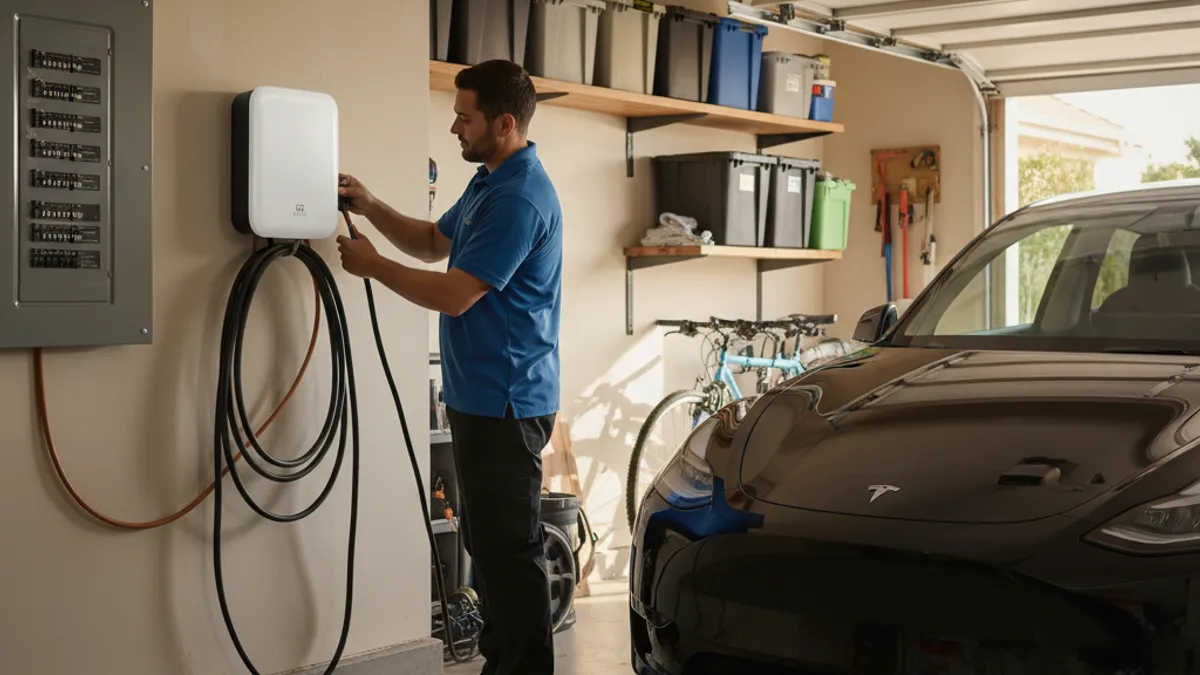
Charge Pro DEN doesn’t hang wall boxes or pull electrical permits. We connect stranded drivers with independent local mobile rescue operators. Those operators quote you before they start, and they bill you directly.
Start with CORE, not with the charger box
Xcel Energy’s EV Accelerate At Home and EV Home Wiring Rebate are real programs. They belong on Xcel bills in Denver, Aurora, and Boulder County. They don’t belong on a CORE member bill in The Meadows or Founders Village. United Power’s United EV plan is a north-metro product. Longmont Power and Communications is a city utility. Neither one belongs on your first call from Plum Creek Parkway.
CORE also serves Centennial, Lone Tree, Roxborough Park, Stonegate, Conifer, and Bennett. If your search still says call Xcel, stop. Confirm the address on CORE’s service-area page. Then read who bills a Tesla charge in this metro before you file the wrong form.
ZIP codes 80104, 80108, 80109, 80116, and 80134 all sit in this Castle Rock belt. The town name on the mailer doesn’t pick the utility. The service-area map does.
What a Level 2 install actually builds
A Level 2 home charger is a dedicated 240-volt circuit. That’s dryer voltage, not a bigger phone charger. The installer adds a breaker, runs cable, and mounts the equipment at the stall. The wall unit is the visible piece, and the panel math is the real job.
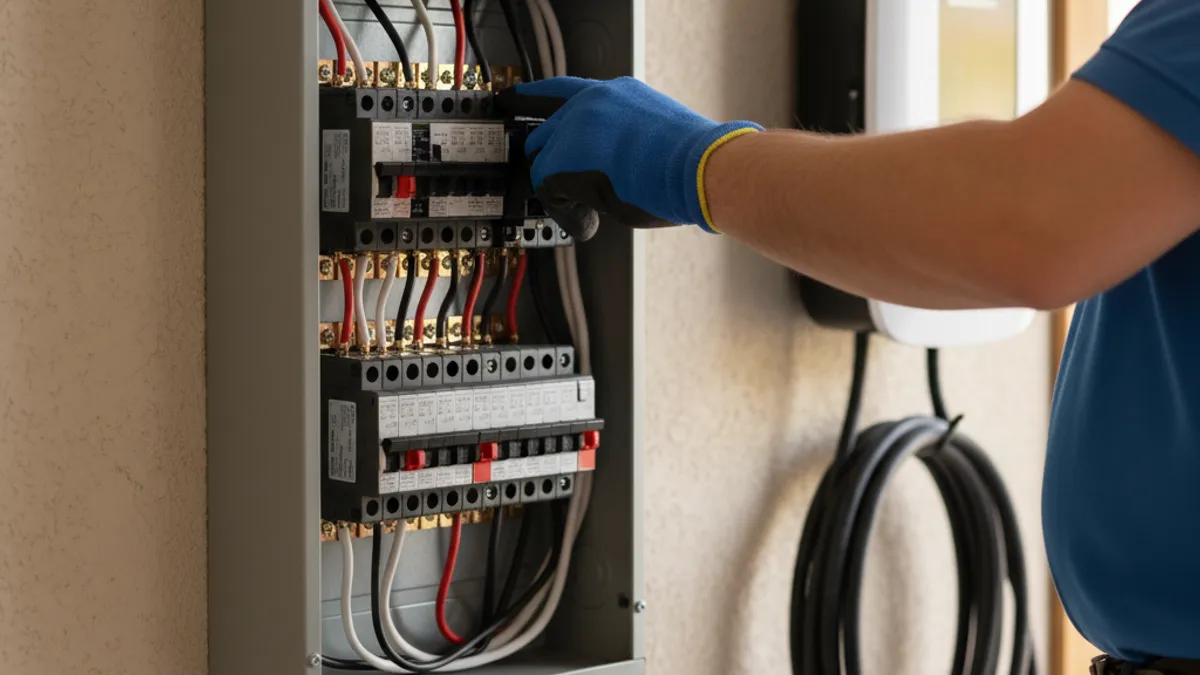
Spare capacity comes first, then cable length from panel to parking. Your town or county permit path comes after that. A load calculation should precede all three. An electrician adds up existing demand in the house. Then they test whether a 40-amp or 48-amp charger still fits.
If the math is tight, the paths split. A load-management device can throttle the charger when the house is drawing hard. That sometimes avoids a panel change. A panel upgrade is the heavier option. It can add utility coordination on CORE’s side. A shared-circuit setup works in some garages and fails in others. None of those paths is a guess you should make from the driveway. Get the load calculation in writing.
Two neighbors can still hear two different quotes. One stall sits close to a roomy panel. The other sits across a long basement run, so labor follows that cable. For how panel work differs across this metro’s utilities, see panel upgrades for a home EV charger.
A heat pump is the other big 240-volt load many homes add next. Have the electrician include the charger and the heat pump in one calc. Two separate trips through the panel waste time. We don’t name an HVAC shop here. Just plan the loads together.
Newer housing, not a free pass
Castle Rock’s stock is young by Front Range standards. Census ACS figures put pre-1980 housing at 7.2 percent. Most of this town wasn’t built around a tiny older service. Newer construction often leaves more headroom, but it doesn’t prove your panel is ready. Only the calc does.
Walk the neighborhoods with that in mind. The Meadows, Founders Village, Plum Creek, and Crystal Valley aren’t one garage type. Castlewood Ranch, Terrain, and Red Hawk aren’t either. Detached parking, a basement panel, or an HOA meter closet can stretch the run. A short attached-garage wall is a different job.
Highlands Ranch sits farther north on the same CORE belt. Castle Pines sits between that belt and Castle Rock. Parker looks toward E-470 as much as I-25. The Pinery and Stonegate are Douglas County CDPs on CORE as well. The utility is shared, but the wire path isn’t.
CORE EV programs you can actually name
CORE publishes its EV tools under its own labels. COREV Connect is a bill credit. You link an EV or a charger to CORE’s platform. CORE’s site currently describes enrollments as open. Read the live page at core.coop before you treat that credit as yours.
COREV Charge is a separate residential program. CORE’s own page states it’s at capacity and closed to new applications. Don’t budget an install around a closed list.
COREV Community Charge is the member rate at CORE public chargers. Confirm that rate on CORE’s EV pages. This research doesn’t treat a published energy rate as verified.
Xcel’s Optimize Your Charge, Charging Perks, and RE-TOU rate aren’t CORE products. Don’t copy an Xcel off-peak window onto a Castle Rock schedule. Ask CORE which residential rate you’re on, then set the charger clock to that window.
Colorado has no statewide sales-tax exemption for charging equipment. There’s no 2026 HOV or express-lane break for EVs. The old clean-vehicle lane program is gone. The state still names an innovative motor vehicle credit on DOR pages. Vehicle Exchange Colorado is a separate income-qualified program. Confirm current credit rules with those agencies. Don’t take an amount from a blog.
Colorado also bills a plug-in registration fee plus a road-usage fee. Those line items live under CRS 42-3-304. Current totals are on dmv.colorado.gov. Check the year you’re in before you plan around last year’s notice.
Permits, and what this research couldn’t confirm
Your town may require an electrical permit for a 240-volt circuit. This research didn’t confirm Castle Rock’s fee, form, or wait for a residential charger job. It also didn’t confirm Douglas County’s unincorporated timeline. The Town of Castle Rock building department sets in-town rules. Douglas County building services cover unincorporated lots. Ask the electrician who pulls the permit, then call that counter and verify.
A crew that offers to skip the permit isn’t doing you a favor. An unpermitted 240-volt circuit becomes a disclosure problem when you sell. It can also complicate an insurance file after a fire. Have the installer schedule the inspection, and keep the job card.
HOA boards show up often on this corridor. They show up more than they do in older core-city blocks. Terrain, The Meadows, and Founders Village owners should read the association docs. Colorado statute CRS 38-33.3-106.8 addresses HOA charging access. Read the current statute text. Don’t treat a summary as the rule.
Crystal Valley and Red Hawk lots can sit farther from in-town counters. Unincorporated edges toward Sedalia or Larkspur may route through the county, not the town. Confirm which desk owns your parcel before the electrician files.
A screening list before you hire anyone
Use this when you call electricians. You want answers, not a vague opening quote.
- Will you put a load calculation in writing?
- Is the panel large enough, or are we talking load management or an upgrade?
- Is the electrical permit in the quote, and who books the inspection?
- Are you piping the circuit for 40 amps or 48?
- How long is the cable run from panel to stall, and is that included?
- Can you set charging to CORE’s off-peak window, not an Xcel chart?
Someone who answers those six is easier to trust. Someone who only prices the box isn’t. The cheap quote that skips the calc turns into a change order. Charge Pro DEN doesn’t do this work. Hire a licensed electrician who knows CORE territory.
What moves the price, since no honest page can quote yours
Install cost isn’t a figure this page can publish. Panel headroom and cable distance move it. Load-management gear, a panel upgrade, and permit scope move it too. Hardware choice and season can move electrician calendars. None of that is a figure we can invent.
Mobile rescue pricing is separate. Distance, time of day, and needed range all move that quote. The operator tells you the amount before they start, and they bill you directly. If you want the home-versus-roadside picture in plain words, read home 240-volt charging versus a roadside charge.
Winter at 6,200 feet, and the I-25 south climb
Castle Rock sits near 6,200 feet on the metro’s south edge. I-25 climbs from town toward the Palmer Divide and Monument Hill. The Divide summit at Monument is 7,352 feet. This is where winter storms hit hardest between Denver and Colorado Springs. Closures are common on that climb.
Cold still taxes the pack. A Recurrent Auto winter study measured retained range near 78 percent at 32 degrees. At 20 degrees the average sat near 70 percent. Heat-pump vehicles held about 10 points more at 32 degrees. AAA’s 2026 dynamometer study reported large range and efficiency losses at 20 degrees. Overnight charging in a cold garage beats a midday session on a peak window. Confirm CORE’s actual off-peak hours on your rate.
The local stranding story isn’t a missing public stall. It’s the southbound commit onto Monument Hill. It’s also a long dwell at the Outlets at Castle Rock. E-470 and US-85 launches out of town catch people too. Founders Parkway, Wilcox Street, and Plum Creek Parkway are the in-town connectors. Larkspur sits south of town. Sedalia sits on the US-85 side. Castle Pines and Parker sit as neighbors on CORE.
NREL listed 16 Supercharger stalls in Castle Rock and 16 in Highlands Ranch. Lone Tree at Park Meadows showed 10, and Centennial showed 12. Those are real sites you can route to. They still don’t replace a finished garage circuit.
People use Philip S Miller Park and the Rock Park as meeting points. The Douglas County Fairgrounds and the namesake rock with the star are other local landmarks. They aren’t a substitute for a dedicated breaker.
How to keep the car moving before the inspection sticker
You bought the EV, and the wall box isn’t live. You still have to drive. A household 120-volt outlet trickle-charges slowly. It can cover light local trips if you leave it plugged in. It won’t rebuild a pack after a Front Range winter commute.
Public DC fast charging is one bridge. The Supercharger counts above are the sites this research can name. A mobile Level 2 charge is the other bridge. The operators we connect you with bring a 240-volt source to the car. They use a native NACS plug. A CCS or J1772 adapter covers non-Tesla EVs. Charging time is typically 15 to 30 minutes. That window usually adds about 10 to 20 miles of range. That’s dwell on the cable, never a promise of when someone arrives.
Call for that help if the install queue leaves you short. Call if you wake up empty in Crystal Valley. Call if you misjudged the I-25 climb toward Monument. Details on what a mobile charge looks like live on our mobile EV charging page.
CDOT Safety Patrol will jump a 12-volt battery on covered freeway segments. It also changes tires on those segments. Its published I-25 South coverage runs from 120th Avenue to Arapahoe Road. Castle Rock sits south of that published segment. Confirm the live map on CDOT’s Safety Patrol page. Those pages mention nothing about charging an EV. The free state program doesn’t bring a pack charge.
CRS 42-4-1202 covers a disabled vehicle on the shoulder. You may stay off the travel lanes with hazards on, when the car couldn’t be moved further. Abandoned-vehicle rules under CRS 42-4-1803 don’t use a fixed hour clock. There’s no Colorado statute just for a dead EV. The same disabled-vehicle rules apply. COtrip.org and 511 carry closure and traction-law status. Traction law activates by signage, not by a date we could verify here.
E-470’s own roadside line is *470 for a disabled driver on that toll road. It publishes jumps and tire help. It doesn’t publish an EV charge.
When the new charger fails after the sticker
Installs don’t always hold. Breakers trip, and GFCI devices pop. The car reports a charge fault a week later. If you wake up to an EV that won’t ready, that’s a mobility problem first. Sort the warranty with the electrician on your clock.
We wrote what to do when a home EV charger keeps tripping the breaker. The short version is simple. If you’re stuck, a mobile operator can add driving range. Then you deal with the wall box.
Frequently asked questions
Who is the utility for EV charger installation in Douglas County?
CORE Electric Cooperative, not Xcel Energy. CORE serves Castle Rock, Highlands Ranch, Lone Tree, Parker, and Castle Pines. It also serves Centennial and Douglas CDPs such as The Pinery, Stonegate, and Roxborough Park. Confirm your address on CORE’s service-area map. Rebate names from Xcel or United Power don’t transfer.
Did this page confirm a Castle Rock permit price or wait?
This page didn’t confirm a fee or a wait. Town of Castle Rock building staff set in-town rules. Douglas County building services set the unincorporated ones. This research found no verifiable fee or timeline. A reputable electrician pulls the permit and books the inspection. You should still call the counter.
How do I charge before the wall box is live?
A 120-volt outlet trickle-charges slowly. Named Supercharger sites in Castle Rock, Highlands Ranch, Lone Tree, and Centennial are another option. Independent operators we refer can bring a 240-volt Level 2 charge to the driveway. They quote you before they start, and they bill you directly.
CORE Electric Cooperative is the fact that makes this corridor different. Get two electrician quotes. Insist on a load calculation. Confirm the permit on the town or county side. Enroll in CORE programs that are actually open. Skip the ones CORE already closed.
While the circuit is unfinished, Charge Pro DEN can connect you with a mobile operator. The same call applies if the new charger quits. Call (720) 738-6950. Ask for a quote before anyone starts.