If your home EV charger keeps tripping the breaker, the circuit is usually at fault. Shared loads, stacked ground-fault gear, or a wet outlet can all do it. Housing built before 1980 often can’t take a new 240-volt charger circuit. A one-off trip can be a fluke. A trip every session isn’t.
Start with the trip pattern, not the charger brand
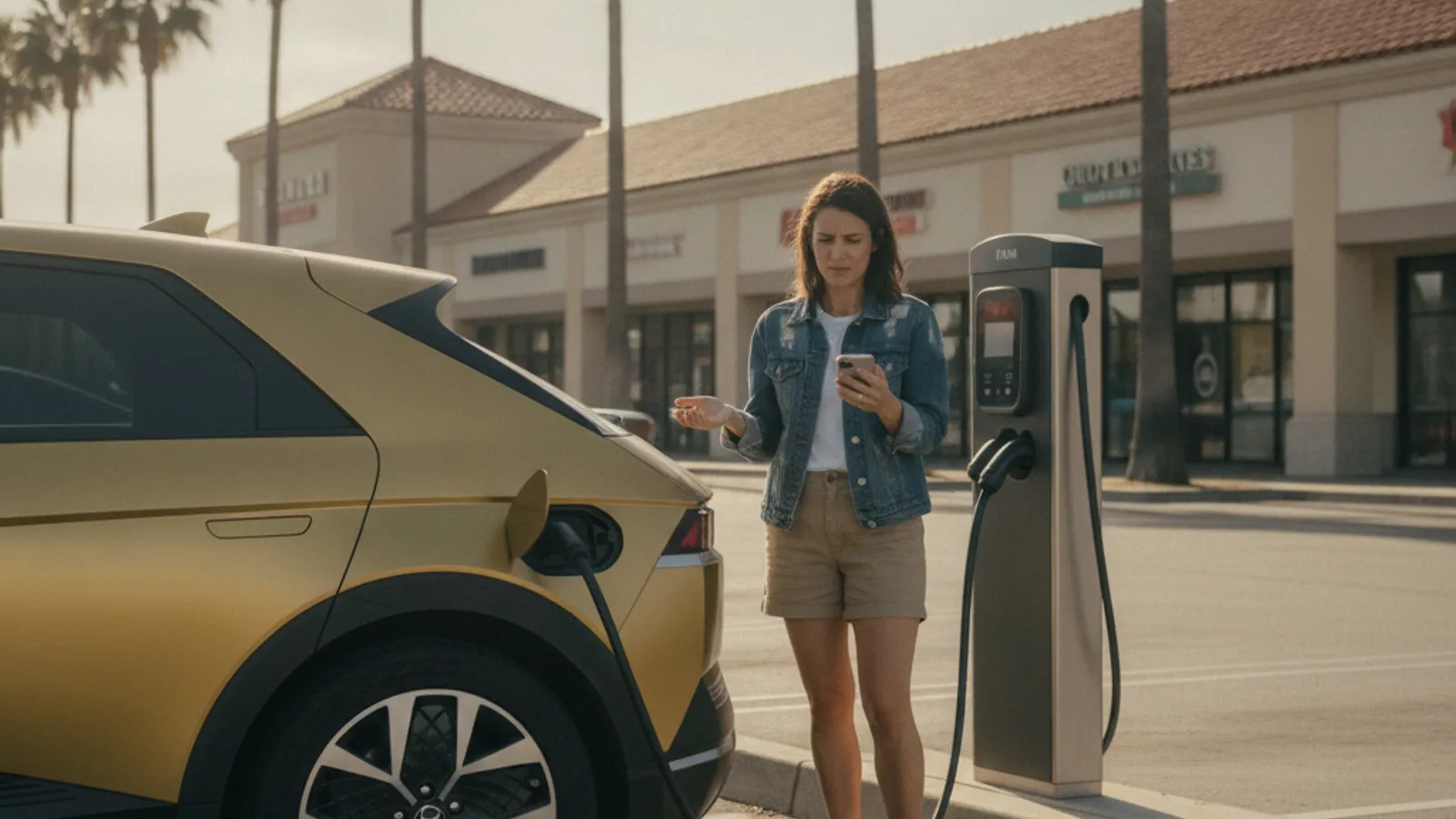
The car is rarely the first suspect. Level 2 home charging holds a heavy, steady draw for hours. A dryer or shop tool cycles on and off. Your charger doesn’t. If the breaker opens at plug-in, look at ground fault, moisture, or the EVSE. If it holds, then trips mid-session, the circuit is likely overloaded or shared. If it only trips when the dryer or heater is running, those loads are stacking. Write down what was on when it tripped. That note is what an electrician needs.
Why pre-1980 Front Range housing struggles with 240 volts
A dedicated 240-volt circuit is the usual fix. Many older houses don’t have spare capacity for one. A Denver bungalow and a Wheat Ridge split-level can share that panel limit. Those services were built for lights, a furnace, and a kitchen range. They weren’t built for overnight Level 2 charging. Lakewood, Edgewater, and Englewood infill streets hit the same ceiling. The house can look fine. The spare breaker slots still aren’t there.
South-metro streets in Highlands Ranch, Lone Tree, and Castle Rock are a different story. Newer subdivisions often have more panel room. The catch is the utility, not the decade. That corridor sits on CORE Electric Cooperative, not Xcel Energy. CORE’s residential COREV Charge program is at capacity and closed to new applications. Confirm that on CORE’s own EV page before you plan around it.
North-metro streets in Thornton, Westminster, Arvada, and Erie can split utilities by address. Xcel and United Power sometimes split the same block. Brighton’s electric service is United Power. Xcel supplies only gas there. Longmont bills through Longmont Power and Communications, the city’s municipal utility. A panel talk starts with who actually serves the meter.
Xcel publishes EV Accelerate At Home, the EV Home Wiring Rebate, and Charging Perks. United Power publishes United EV and its EV Make-Ready Wiring Rebate. It also lists an EV Home Charge Panel Upgrade Rebate. Longmont publishes the LPC EV Charger Rebate. Rebate amounts weren’t confirmed in the sources we could verify. Check the utility that prints your bill. Don’t assume a neighbor’s Xcel form applies on your street.
If you live under an HOA, Colorado has a charging-access statute. CRS 38-33.3-106.8 covers HOA charging-access rights. It doesn’t size your panel. An electrician still has to say whether the service can take the circuit.
Moisture in a Front Range garage is a real trip, not a myth
Coastal salt air isn’t the issue here. Snow melt is. January normal lows sit around 18 degrees. Annual snowfall lands in the low-to-mid 50s of inches. Melt in a wheel well or a wet cable can trip a GFCI for real. If the outlet sits outside or near irrigation, dry it before you reset. Dry the plug end too. Recurring trips after it dries still belong to an electrician.
Two ground-fault systems on one circuit
Most Level 2 EVSE units already watch for a ground fault. A NEMA 14-50 receptacle used for EV charging is also typically on GFCI protection. You then have two systems watching the same path. EVSEs send a small test current to ground to confirm an earth connection. That tiny current can trip the external GFCI even when nothing is actually wrong. Electricians often hardwire the station to get off the plug-in GFCI receptacle. That’s licensed electrical work. Charge Pro DEN doesn’t do it.
A faulty EVSE or portable cable still happens
It’s less common than an undersized circuit. It does happen. The wall unit or the car’s portable cable can develop an internal fault. That fault can trip a healthy breaker every time it delivers full power. If a different charger on the same outlet holds, the equipment is the likely culprit. If a different outlet still trips, look at the house wiring.
What’s safe to check, and what isn’t
Reset the breaker once and watch the pattern. Look at the outlet and the connector for water or corrosion. Let both dry before you try again. Note what else was running. Don’t keep resetting a breaker that won’t hold. Don’t open the panel to trace wires. The trip is protecting the circuit. Repeated resets can hide a fault that gets worse.
Charge Pro DEN is a referral line, not an electrical contractor. We match stranded EV drivers with independent local mobile rescue operators. We don’t hold a trade license. We don’t wire panels, pull permits, or install chargers. The pros we connect you with are licensed and insured for rescue work. Home wiring still belongs to a licensed electrician you hire on your own.
Keep the car moving while the house gets sorted
A dedicated circuit or a panel upgrade follows the electrician’s schedule and your utility’s process. That isn’t a mobile rescue job. If the car is already low, you still have options that skip the house. Operators we refer bring a 240-volt Level 2 source to the car. They use a native NACS plug, or a CCS or J1772 adapter. Typical charging time adds 10 to 20 miles in 15 to 30 minutes. That’s charging time, not a promise of when someone arrives. The operator quotes you before starting and bills you directly. Distance, time of day, and the range you need move that quote.
A mobile EV charging visit leaves your panel alone. Weigh the house circuit against a roadside charge. The utility split is in our panel upgrade guide. Overnight Level 1 on a 120-volt outlet is a separate limit. Level 1 through a Denver winter walks through that tradeoff. If the bill payer is unclear, read who bills a Tesla charge. No driveway plug and a dead pack is a different mess. Our Capitol Hill note covers that street-parking case.
CDOT Safety Patrol can jump a 12-volt battery on covered freeway segments. It doesn’t bring a charge to an empty pack. It also doesn’t fix a garage breaker. A dead house circuit and a dead traction pack are different calls.
Call Charge Pro DEN at (720) 738-6950 for a mobile charge referral. We connect you with a local operator. That operator quotes the visit before any charging starts.
Frequently asked questions
Is it unsafe to keep resetting a breaker that trips on the charger?
Yes. Stop after one or two resets. The breaker is opening to protect the circuit from overload, moisture, or a ground fault. Keep flipping it and you can mask a problem that gets worse. Call a licensed electrician for the circuit. Use a mobile charge for the car if you can’t wait on the house.
Can a bad EV charging cable trip a good breaker?
It can. An internal fault in the cable or EVSE can trip even a healthy breaker. Try a different charger or a different outlet if you can do that safely. If the second unit holds on the same receptacle, replace the equipment. If every unit trips, the wiring is the job.
Does Charge Pro DEN install or repair home EV chargers?
No. We refer mobile rescue and mobile charging. We don’t install chargers, size panels, or pull permits. For a breaker that won’t hold, hire a licensed electrician. If the car still needs miles, we can connect you with an operator. That operator can charge in the driveway without using the house circuit.