You’re westbound on I-70 and the reserve that looked fine in Denver is falling fast. Grade and cold are doing that, not a glitch. If your EV is running low on battery, treat the percentage as a warning, not a promise. Pick a charger now, drop speed, or park somewhere lawful and visible. Don’t wait for the car to pick the spot for you.
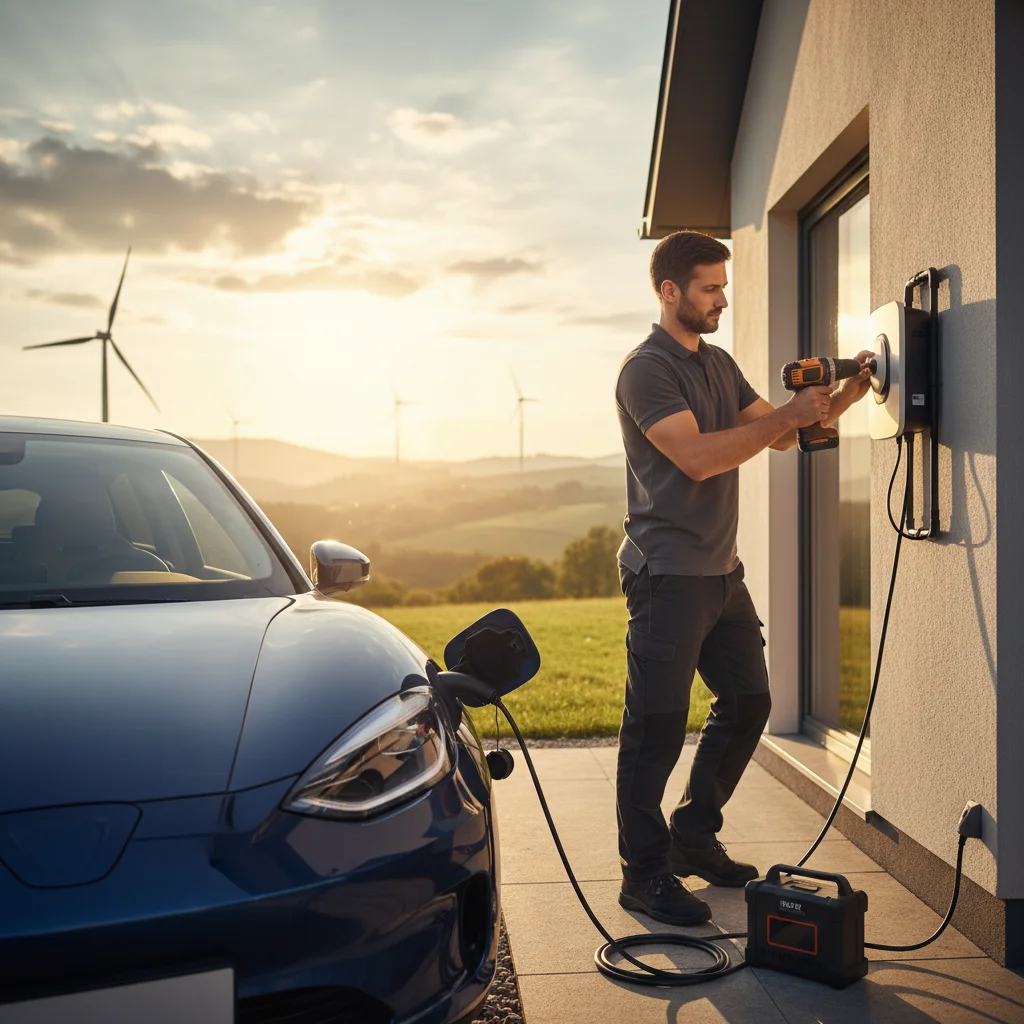
Why a Denver reserve shrinks on the climb
Denver’s official elevation is 5,280 feet, measured at the State Capitol’s west steps. Idaho Springs sits at 7,526 feet. The Eisenhower-Johnson Memorial Tunnel’s west portal is 11,158 feet. That’s the highest point on the U.S. Interstate system, and CDOT runs the tunnel. Golden sits around 5,675 feet, the last easy metro floor before the canyon really starts. A pack that felt easy leaving Wheat Ridge or Lakewood is now doing climb work.
January’s normal low sits around 18 degrees, per NWS Boulder. Recurrent Auto’s winter study covered more than 30,000 U.S. EVs. Packs keep about 78% of max range at 32 degrees. At 20 degrees they keep about 70% on average. AAA’s 2026 dynamometer study reported about 39% range loss at 20 degrees. In January 2024, Denver went from 47 degrees to minus 19 in about 48 hours. Your estimate wasn’t built for that swing.
Regen on the descent can give a large share of climb energy back. Corridor tests on the Loveland Pass descent had a Lucid Air GT using about 3% over 77 miles. A Hyundai Ioniq 5 used about 10% over 75 miles, both crediting regen. On ice, many drivers still ease regen for traction. Plan the uphill as if that energy is gone until you’re over the top.
Westbound traffic stacks at the Veterans Memorial Tunnels near Idaho Springs when storms hit. Check COtrip before you commit to the climb. The I-70 Mountain Express Lane runs about 12 miles from those tunnels to Empire Junction. Westbound has used dynamic tolling since November 25, 2024. We couldn’t confirm a current toll amount, so read the overhead signs. If you need to stop, get out of that paid lane first.
Get off the travel lane while you still choose the spot
CRS 42-4-1202 is Colorado’s disabled-vehicle-on-the-shoulder rule. Outside a business or residential district, you can’t stop on the paved main-traveled part of a highway. The exception is a vehicle so disabled it can’t keep going. You also need hazard lights, per CRS 42-4-230. A violation is a class B traffic infraction. If the car truly can’t go farther, the shoulder with hazards on is lawful. Sitting in a live lane isn’t.
Move right, hit the hazards, and get fully onto the shoulder. Leave the travel lane while the car still steers where you tell it.
Check COtrip.org or 511 for I-70 closures and traction-law status. CDOT activates the Passenger Vehicle Traction Law, or in severe storms the Passenger Vehicle Chain Law, by highway signage and COtrip posts. Recurring closures at Vail Pass and the Eisenhower Tunnel ran through the 2024-25 winter. Don’t guess from memory. Read what’s posted.
Colorado has no statute that treats a dead EV differently from any other disabled car. There’s no EV carve-out, so you follow the same shoulder rules as everyone else.
What CDOT Safety Patrol will do, and what it won’t
CDOT Safety Patrol is run by the Division of Maintenance and Operations. It gives free help on covered freeway segments: flats, jump-starts, emergency fuel, minor mechanical help, debris, and incident support. The I-70 Mountain Corridor is covered from Morrison to Vail. Metro coverage includes stretches of I-25 South, I-70 East from Wadsworth to Airport Blvd, and portions of US-6, C-470, and I-225.
Published hours are limited. Front Range metro runs 6:00 to 9:30 a.m. and 2:30 to 7:00 p.m. on weekdays. Weekends run 10:00 a.m. to 7:00 p.m. Mountain Corridor runs 6:00 a.m. to 7:00 p.m. Friday through Sunday, and during significant weather. If you’re outside those windows, the free patrol may not be on the road.
The Safety Patrol pages and CDOT’s “my car broke down” page say nothing about electric vehicles. They also say nothing about bringing a charge. That absence was confirmed on both pages on September 18, 2026. They can jump a 12-volt battery. They don’t publish a charging service for a drained traction pack. If the dash is empty and the motors won’t pull, a 12-volt jump won’t invent miles.
If the car won’t unlock or wake, that’s often the 12-volt, not the pack. See which battery actually matters when you’re stranded.
Cut the extras, then pick a charger that’s working
Every accessory you leave on is range you’re spending. Climate control is usually the big optional draw. Turn it off if you can stand it. Heated seats and the wheel go next. Dim the screens, pause the stream, and drop brightness. If your car lets you drop driver-assist cameras, do that too. We couldn’t confirm a watt figure that applies to every model. Your owner’s manual is the authority for your car.
Speed is the lever you can feel. Drag rises fast as you go faster. If traffic and the law allow a lower, steady pace in the right lane, take it. Don’t wander across lanes hunting extra miles.
Start with the car’s own nav. Tesla routing is built around Supercharger status. Ford, Hyundai, Rivian, and others pull stall data too. Then open a check-in app. PlugShare is useful when a stall has been dead all week. Our roundup of charging apps to check before you’re stranded walks through what to open before the percentage gets thin.
Named Supercharger sites on this corridor help you plan without guessing. The Idaho Springs Supercharger has 8 stalls. From the Denver side, that’s the last Supercharger before the Eisenhower-Johnson Memorial Tunnel. Silverthorne has two Supercharger sites past the tunnel, and Frisco has two as well. If Idaho Springs is queued or down, read what to do when that site is full. Don’t invent a mileage to the next pin. Open the app and read what it shows you right now.
A short DC session is often enough to stop making panic choices. You don’t need a full pack, just enough to reach a better stall or a driveway.
What the percentage on the dash actually is
The number is usable state of charge, not the physical floor of the cells. Makers keep a buffer below the displayed zero to protect the pack. How large that buffer is depends on the brand and the software. We couldn’t confirm a published mile figure that applies to every Tesla, Rivian, Ford, or Hyundai at 10%, 5%, or 1%. Your cluster and the maker’s support pages are the source for your car.
Tesla documents “very low charge” in its own support materials at tesla.com/support. The icon is a turtle, even if Tesla doesn’t use “turtle mode” as the official name. Ford describes a low-power mode on Lightning and Mach-E models. Rivian shows a turtle icon when output is limited. Hyundai trims climate and power as the pack gets thin. Don’t road-test the bottom of anyone’s buffer on the climb to the tunnel.
The U.S. Department of Energy’s AFDC notes that real-world range often runs below EPA labels in hard conditions. Cold and grade on I-70 west count as hard conditions. If the car is already in a crawl, you’ve waited too long to pick a parking lot. Get off the travel lane while you can still steer with intent.
When the math doesn’t close, stop driving
If the next working stall is farther than the car will admit, don’t keep rolling to prove a point. Find a lot, a wide shoulder with sight lines, or an exit with room to sit. Then call for a charge in place.
Charge Pro DEN is a referral line. We match stranded EV drivers with independent local mobile rescue operators. We don’t run the trucks, set the price, or promise when someone arrives. The operator quotes you before starting and bills you directly. Operators typically bring a 240-volt Level 2 source to the car. They use a native NACS plug, plus CCS or J1772 adapters for non-Tesla EVs. They usually add 10 to 20 miles of range in 15 to 30 minutes of charging. That’s charging time, not a clock on the drive to you. They can also jump or replace a dead 12-volt on site.
Price moves with where you are and how far the operator has to come. It also moves with the time of day, and how much range you need to get off the shoulder. This page doesn’t publish a rate, because the operator sets it, not us. Get the quote, then decide.
If you’re already on I-70’s mountain shoulder, our notes on running out of charge on I-70 cover the next legal and practical steps. Idaho Springs roadside help is the local page when you’re on the climb toward the tunnel. For a charge delivered to the car, see mobile EV charging and out-of-charge recovery.
We serve the Denver metro. The pros we connect you with are licensed and insured. They handle Tesla and every major EV brand.
If you’re parked, too empty to risk another mile, or already in a power-limited crawl, call (720) 738-6950. We’ll connect you with a local operator. Ask what they’ll bring, and wait for the quote before they start.