Idaho Springs is the last confirmed Tesla Supercharger on the Denver side of I-70. The Eisenhower-Johnson Memorial Tunnel sits at 11,158 feet. If the car dies in town, you need a charge or a 12-volt jump here. Don’t hope the remaining percent will clear that climb. The Supercharger in Idaho Springs has eight stalls on the current inventory. This historic mining town sits at 7,526 feet in Clear Creek County. Winter, ski traffic, and cabin heat all spend that buffer.
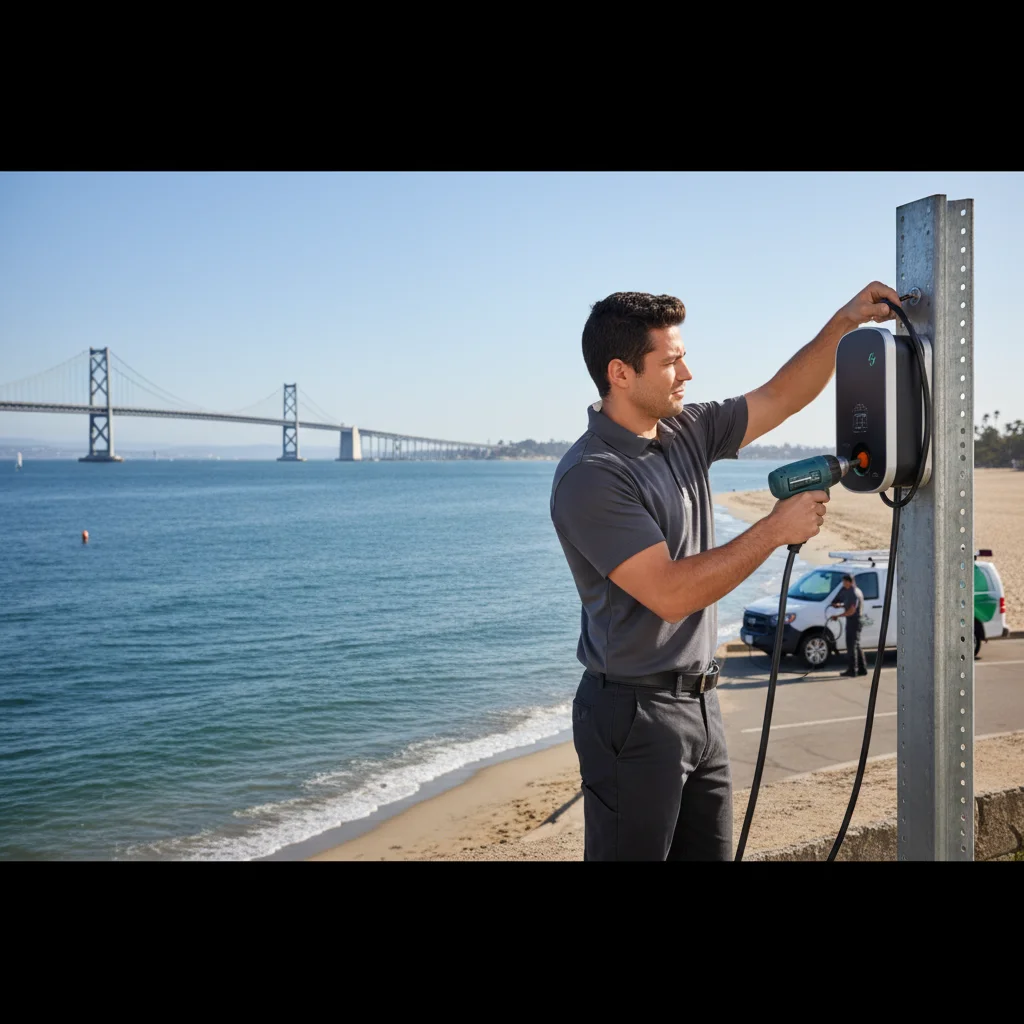
The last Supercharger before the tunnel
From Denver, this is the last Tesla Supercharger you can confirm. I-70 still has to climb toward the tunnel from here. Silverthorne and Frisco hold the first Supercharger sites west of it. Plan the westbound run around this town. That’s what the current inventory supports for Tesla Superchargers.
A thin arrival in town is a stop, not a maybe. Recurrent Auto’s winter range study is the usual cite. EVs keep about 78% of max range at 32 degrees. At 20 degrees, the average sits near 70%. Cabin heat and crawl speed stack on top of that.
CDOT can post the passenger vehicle traction law on I-70 through here in storms. Check COtrip.org or 511 before you commit west. Don’t guess from last weekend’s posted signs.
The I-70 Mountain Express Lane starts near the Veterans Memorial Tunnels. It runs about 12 miles toward Empire Junction. Westbound has used dynamic tolling since November 25, 2024. The overhead signs update on a short cycle. This page doesn’t publish a toll figure, because it changes.
Xcel Energy is the electric utility for Clear Creek County, including Idaho Springs. Confirm by address if you live on Soda Creek or down the US-6 canyon. Utility billing doesn’t charge a stranded car on I-70.
Miner Street still carries the old downtown. The Argo Mill and Tunnel sit in the same canyon. So does the Charlie Taylor Water Wheel. Locals, hotel guests, and ski traffic share those eight stalls. If the site is queued or offline, read Idaho Springs Supercharger down or full: what next.
Stalled on the mountain corridor
If the EV stops on I-70, treat it as a disabled vehicle. CRS 42-4-1202 covers a disabled vehicle on the shoulder. You can stay there when the car can’t leave the paved lanes. Put the hazards on and stay belted. Stay in the car unless you’re in immediate danger.
If you’re in a travel lane, call 911 first. Colorado State Patrol handles crashes and dispatch. Abandoned-vehicle rules sit in CRS 42-4-1803 through 42-4-1805. There’s no published hour count that turns a stall into an abandoned car. An officer uses reasonable grounds, not a set clock. Don’t wait on a rumor about hours.
CDOT Safety Patrol covers the I-70 Mountain Corridor from Morrison to Vail. Published hours on this corridor are 6:00 a.m. to 7:00 p.m. Friday through Sunday. They also roll during significant weather events. They can jump a 12-volt, change a tire, and clear debris. Their published pages don’t mention EV charging. A patrol jump isn’t a charge into the pack. Colorado has no separate statute for a stranded EV. It uses the same disabled-vehicle rules as any other car.
Once you’re on a legal shoulder, follow the order in stranded with no charge on I-70. If you can still roll, get into town. A Miner Street lot is an easier meet point. The Supercharger lot is easier than a canyon shoulder.
Charge Pro DEN is a referral line. An independent operator quotes you before they start. They bill you directly for the work. We don’t own trucks and we don’t run the charge.
Pack empty, or the 12-volt is dead
A dark car on Miner Street isn’t always out of miles. The 12-volt battery wakes the computers, unlocks the doors, and opens the charge port. Cold at 7,526 feet knocks that small battery out. The pack can still hold plenty of range. Black screens and a locked car usually point there first. A port that won’t release does too.
The operators we connect you with can jump a dead 12-volt on site. They can replace that battery on site too. They also bring a 240-volt Level 2 source. Teslas take a native NACS plug from the operator. Other EVs use a CCS or J1772 adapter. Typical charging time adds about 10 to 20 miles. That’s 15 to 30 minutes on the plug. That’s charging time, not an arrival time.
A 12-volt jump won’t carry an empty pack to the tunnel. You still need range in the traction pack. See Tesla 12-volt battery jump when the car won’t wake. Use out-of-charge recovery when the car is awake and just empty.
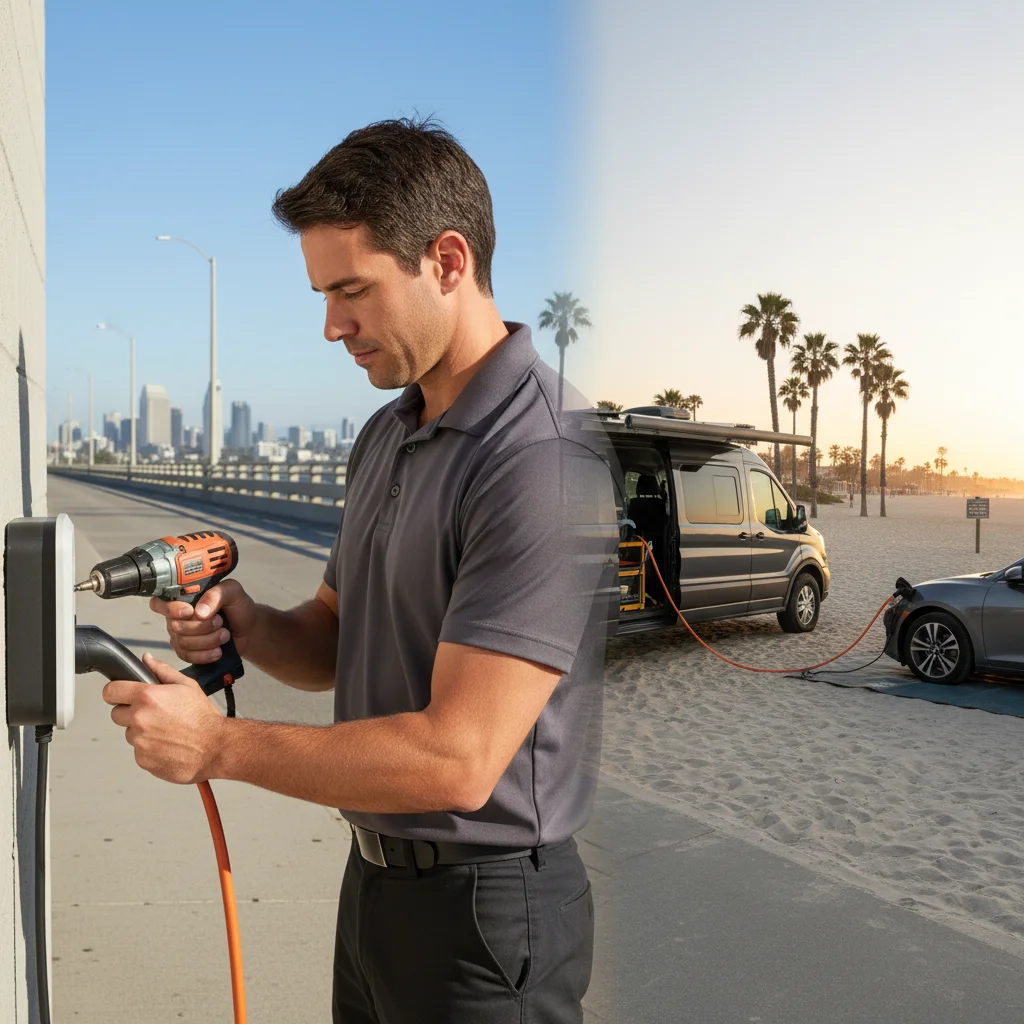
Charge in place versus a mountain tow
A tow from Idaho Springs is a mountain tow. The flatbed still has to work the canyon. Traction-law posts can stop that run in a storm. Westbound tows still have to clear the tunnel. HB22-1314, the Colorado Towing Bill of Rights, covers most nonconsensual tows. The Public Utilities Commission regulates towing carriers. Exact fees aren’t verified on this page. Ask the carrier for a quote before the hook goes on.
If the car will take a charge, staying put is usually the cleaner rescue. You wait with the vehicle while it takes electrons. The operator names a price for the miles you need. Distance, time of day, and how much range you want all move that quote. Weekend crawl on I-70 moves it too. Charge Pro DEN doesn’t set the number.
If the car refuses a charge, a shop tow is the honest path. Same if it throws a fault or looks like hardware. Rescue isn’t repair, and we won’t pretend it is. Charge in place or tow is the map for that call.
Regen on the eastbound descent recovers a large share of the climb. Drivers still ease regen on ice. Don’t spend the westbound climb on the downhill recovery.
US-6, SH-103, and the rest of town
I-70 is the main problem, not the only one. US-6 drops through Clear Creek Canyon toward Golden. SH-103 is Mount Blue Sky Road out of town. It climbs toward Echo Lake and the scenic byway. Evergreen sits over Squaw Pass from here. Empire and Georgetown sit farther up the interstate.
Those grades are slow, steep, and cold. A buffer that looked fine on the interstate can vanish on SH-103. Canyon homes off US-6 still need the operator at the car. Downtown Idaho Springs is the same story after a long sit on Miner Street.
The Idaho Springs EV charging page is the local hub. Check it before you leave the metro, not after you hit zero. PlugShare and the Tesla app help too. A stall that looked open at lunch can be a line at dusk.
Who actually helps
Call Charge Pro DEN when a civilian car in Idaho Springs needs a mobile charge. Call for a 12-volt jump too. That covers downtown, Soda Creek, and the US-6 canyon homes. It also covers a legal shoulder stop if you can’t roll farther. We match you with a local independent operator. We don’t hold a trade license or employ technicians. We don’t publish an arrival window for the operator.
Tesla roadside, your insurer, and CDOT Safety Patrol are separate. Tesla often sends a contractor under its own policy. That may be a jump or a tow. It isn’t the same as a Level 2 charge into an empty pack. CDOT Safety Patrol won’t charge the pack. Most insurer roadside plans follow jump and tow. Confirm with the company you already pay.
The number to call is (720) 738-6950. Give the operator your spot, the make, and whether the car will wake. They quote you before they start. They bill you directly, not through us.