Your EV stalled on US-36 because the climb used the last miles. Get onto the outside shoulder, hit the hazards, and stay belted in. Then ask for a charge in place, not a guess at the next stall. The Boulder Turnpike is one of the metro’s highest-EV commutes. It rises toward Boulder over Davidson Mesa.
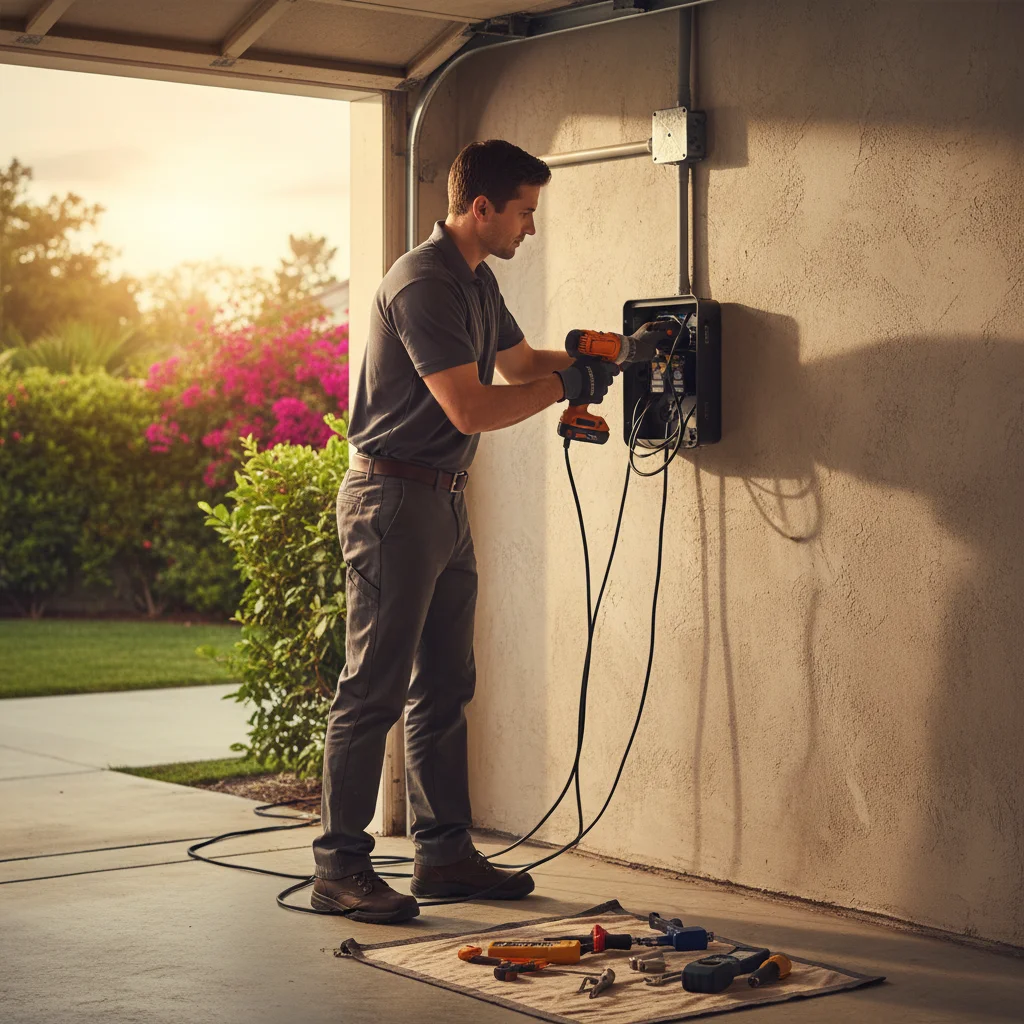
Why the Turnpike eats range on the way home
Denver’s official elevation is 5,280 feet. Boulder sits around 5,430 feet at the foot of the Flatirons. That gap looks small on a phone map. On US-36 it’s a real grade. People who work in Denver come home over Davidson Mesa. The express lanes carry that same run both ways. A pack that looked fine leaving downtown can sag on the hill.
Cold tightens the same commute. Recurrent Auto’s winter study of more than 30,000 U.S. EVs found about 78% of max range left at 32 degrees, and about 70% at 20. They still explain why a January run toward Boulder feels tighter than July.
This corridor is an out-and-back work run, not a scenic loop. Boulder is one of the highest EV-adoption cities in Colorado. The University of Colorado Boulder sits inside that mix. Home-charging households sit next to students and renters with no driveway plug. The calls split. One pattern is the US-36 commute. Another is campus and apartment streets around University Hill and Table Mesa. A third is a long dwell at Chautauqua Park or a trailhead. Boulder Canyon and SH-93 toward Golden are separate climbs after you leave the Turnpike.
The Denver metro is still Colorado’s highest-EV-share region. BEVs were 12.5% of new Denver-metro registrations through June 2026, about one in nine. The US-36 towns still skew electric. That’s why an empty pack on this freeway is a commute story.
Louisville and Superior rebuilt after the December 30, 2021 Marshall Fire. That fire was Colorado’s most destructive on record. New housing there is well insulated and charger-ready. Superior has among the newest stock in the metro. Under 5% of it predates 1980. Home charging is the default. Strandings tend to be road strandings. They happen on US-36, McCaslin Boulevard, and office dwells. Lafayette is mixed. Old Town on US-287 is older. Newer edges charge at home. Drivers still join the Turnpike for Denver.
Xcel Energy serves Boulder, Louisville, Superior, and Lafayette. Boulder voters approved a 20-year Xcel franchise in 2020. That ended the city’s municipalization effort. Longmont is a different utility world. Longmont Power and Communications is the city’s own utility. Rebate questions there go to the City, not Xcel. Erie splits Xcel and United Power. Confirm by address if you live on that line.
Colorado gives EVs no express-lane break in 2026. The state clean-vehicle lane program ended May 31, 2020. The federal Clean Air Vehicle decal expired September 30, 2025. You pay the US-36 express lane like every other car. The toll doesn’t add range on the mesa.
Where drivers actually stop on this freeway
Westbound toward Boulder is where the grade shows up. Eastbound into Denver gets regen on the descent. Published tests show regen can return a large share of climb energy, often around two-thirds. Drivers still dial regen down on ice for traction. Regen after the hill doesn’t help if you die going up.
Westminster and Broomfield sit on the metro side of the grade. Broomfield is its own city and county, carved out in 2001. Range can still look healthy there. Then the road lifts. Cabin heat, a headwind, and a low state of charge stack. If you’re already in the express lanes, move to the right, outside shoulder. CDOT’s Colorado Transportation Investment Office runs those lanes. They were built with a minimum 8-foot outside shoulder. Added courtesy-patrol presence was part of the design. “There’s no shoulder” is the wrong story for US-36.
Louisville’s pressure points are the Turnpike itself, SH-42, and McCaslin by the Colorado Tech Center. Historic Downtown Louisville and the Coal Creek Trail are dwell spots. For that city’s commute pattern, see EV roadside assistance in Louisville. Superior’s pressure points are McCaslin, Marshall Road, and SH-128 toward Flatirons Crossing. SH-128 is also Coalton Road. Rock Creek, Original Town, and Sagamore rebuilt after the fire. Superior Marketplace is a long errand sit. Then the Turnpike is waiting with less in the pack than you thought. The Superior-side hill is covered in EV roadside assistance in Superior.
Lafayette joins from US-287, SH-7, and South Boulder Road. Old Town Lafayette on Public Road has older housing. Niwot sits on SH-119, the Diagonal, between Boulder and Longmont. Those drivers still hit US-36 when they turn south. On the Boulder end, Gunbarrel, Newlands, and Table Mesa feed the same freeway. Tesla stall on this climb: EV roadside assistance in Boulder when a Tesla dies on US-36.
Tesla Superchargers appear in the 2026 NREL pull at two Boulder sites and in Longmont. Use a listed stall if the car can still roll. An open pin on a map isn’t a reserved stall. If the car won’t move, the shoulder is the job.
What Colorado expects once you’re stopped
Hazards go on the moment the car starts to fade. CRS 42-4-230 is the lighting rule. CRS 42-4-1202 is the disabled-vehicle statute. Outside a business or residential district you may not stop on the paved travel lanes. The exception is a vehicle so disabled it can’t be moved off the roadway, with hazards on. A violation is a class B traffic infraction. Plain language: the shoulder is lawful if the EV truly couldn’t go farther.
Stay in the car with the belt on while traffic is moving. Standing beside the Turnpike puts you next to express-lane speeds. Colorado State Patrol handles enforcement, crash response, and dispatch. Abandoned vehicles on public property fall under CRS 42-4-1803 to 1805. The statute sets no 24-hour or 72-hour clock. An officer uses reasonable grounds to believe the car is abandoned. After a tow, notice and sale timelines follow. Don’t assume you have a set number of hours. Have a plan when a trooper asks how the car will move.
CDOT Safety Patrol is free on listed metro segments. Published coverage includes I-25 South from 120th Avenue to Arapahoe Road. It also includes I-70 East from Wadsworth to Airport Boulevard, plus portions of US-6, C-470, and I-225. US-36 isn’t on that list. Front Range patrol hours are weekdays 6:00 to 9:30 a.m. and 2:30 to 7:00 p.m., and weekends 10:00 a.m. to 7:00 p.m. That schedule still doesn’t put them on this freeway. The Safety Patrol pages and CDOT’s “my car broke down” page mention nothing about electric vehicles or a charging service. Where the patrol runs, it can jump a 12-volt and change a tire. It doesn’t bring a charge to an empty pack. COtrip.org and the 511 line are the live sources for closures and traction-law status. Traction law turns on by highway signage. Don’t memorize a season the agency didn’t confirm here.
There’s no Colorado statute for a disabled EV. Shoulder law is the same as any car. HOA charging-access rules and charging-space parking tickets aren’t breakdown law.
Mobile charge versus a flatbed from the mesa
A wheels-down tow can damage an EV drive unit. A flatbed is the method most makers want. You still leave the shoulder for a charger, then wait there. On US-36 that can mean a hook, a drop, and a second wait. All of that is for a few missing miles.
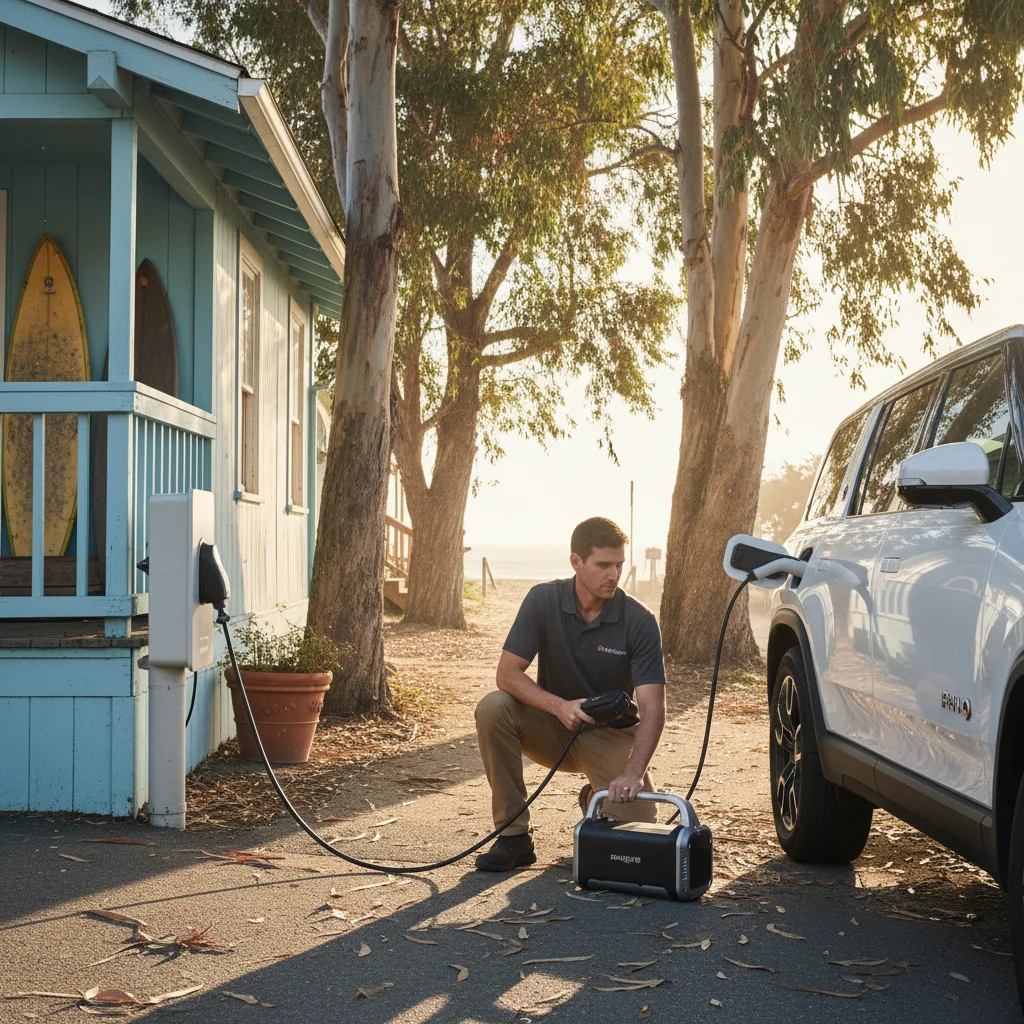
A mobile out-of-charge recovery keeps the car where it stopped. Charge Pro DEN is a referral line. It matches you with independent local operators. The pros we connect you with are licensed and insured. They bring a 240-volt Level 2 source to the bumper. Tesla cars use a native NACS plug. CCS and J1772 cars use an adapter. Typical plug time adds 10 to 20 miles of range in 15 to 30 minutes. That number is charging time. It’s not an arrival time. The operator quotes you before they start. They bill you directly. Charge Pro DEN doesn’t set prices, own trucks, or do the work.
If the dash is black and the handles won’t wake, start with the 12-volt. That small battery runs computers and contactors. It’s separate from the traction pack. Operators can jump or replace it on site. A 12-volt job and a pack boost are different calls. For the broader fork, see Charge in place or tow: what a stranded EV actually needs.
January 2024 is the cold snapshot locals still cite. Denver fell from 47 degrees to minus 19 in about 48 hours on January 16 and 17. A car that sat through a snap like that can look fully dead. Often only the 12-volt quit. Campus lots and Pearl Street dwells in that cold are often 12-volt jobs.
What the operator brings, and what they don’t
Mobile EV charging on this corridor is a bumper plug on the outside shoulder. The people who roll are independent. They cover Tesla and the other major EV brands. They don’t speak for Tesla roadside, AAA, or CDOT. Tesla roadside, when it comes, sends a contractor. That program is built around jumps, tires, and tows. A pack charge is a separate product.
Boulder around 5,300 feet sees Chinook winds, hard snaps, and canyon-mouth wind. After you leave US-36, Canyon Boulevard up Boulder Canyon still costs range. So does SH-93. Don’t spend the last miles on those climbs if the Turnpike already took the reserve. More than half of Boulder’s housing predates 1980. Panel capacity is a real limit in Whittier, Martin Acres, and other older streets. That’s a home-charging story. It still explains a thinner Denver-run buffer than a new Louisville rebuild in Steel Ranch or Centennial Valley.
On the east side of the hill, Louisville offices on McCaslin and Superior Marketplace are the dwell pattern. You leave a stall lower than you thought. The mesa is still west of you if Boulder is home. North Boulder and Gunbarrel feed US-36 from the other direction. Foothills Parkway and SH-7 dump into the same choice. Turn toward Denver with enough pack, or don’t.
When to call the referral line
Call when the car won’t make the next grade. Call when you’re already on the US-36 shoulder. Call when a 12-volt jump didn’t hold. Charge Pro DEN serves the Denver metro. It matches stranded EV drivers with local mobile rescue operators. It holds no license, owns no equipment, and publishes no hours.
Reach the line at (720) 738-6950. Give direction, a mile marker if you have one, and whether the car will unlock. The operator quotes before they start. You pay that operator.