Your EV roadside assistance in Superior is a US-36 problem first. The town sits on the hill commute between Broomfield and Boulder. A thin buffer can vanish on that climb. Cold then takes whatever the grade left behind. When the pack hits empty, you need a charge at the bumper. Charge Pro DEN is a referral line, not a shop. We match stranded EV drivers with independent local operators. We don’t perform the work, own trucks, or set prices. The operator quotes you before they start. They bill you directly for the work.
Why Superior strandings start on the road, not in the garage
Superior covers about 3.9 square miles. It straddles Boulder County and Jefferson County. ACS population is 13,136. The Census 2024 estimate is 13,654. ZIPs 80027 and 80007 cover the map. About 4.5 percent of housing predates 1980. That’s among the newest stock in the metro.
Rock Creek, Calmante, Original Town Superior, and Sagamore set the pattern. New construction means wall connectors. Xcel Energy is the electric utility. Home charging is the weekday plan. The Marshall Fire rebuild pushed that further.
The fire started here in December 2021. This is exposed high ground. Downslope winds hit 100 mph. Original Town and Sagamore came back tight and new. A dead EV in those drives is rarely a missing wall connector. It’s the commute after the charger already did its job.
Xcel publishes EV Accelerate At Home and the EV Home Wiring Rebate. It also lists Optimize Your Charge, Charging Perks, and RE-TOU. There’s also the Residential EV Rebate and the Public Charging Acceleration Network. Check Xcel’s own pages for what’s open. This page doesn’t publish rebate amounts. Those figures weren’t verified for this ledger.
The local roads are few and specific. US-36 is the spine. McCaslin Boulevard is the north-south shared with Louisville. SH-128 is Coalton Road and 120th. That stretch aims at the Flatirons Crossing side. Marshall Road cuts the in-town grid. The Superior Marketplace, Coal Creek trails, and Community Park are the dwell spots.
Start with the town page if you want the place overview: EV charging in Superior.
The US-36 hill is where a thin pack gives up
Westbound toward Boulder, you’re climbing. Eastbound toward the metro, regen can give some energy back. Regen is real and well documented. Drivers still ease it off on ice for traction. An 18-degree January normal low doesn’t care that your Rock Creek garage is new.
Recurrent Auto studied more than 30,000 U.S. EVs in winter. Cars kept about 78 percent of max range at 32 degrees. At 20 degrees it was about 70 percent. Heat-pump models held about 10 points more at 32. AAA’s 2026 dynamometer study reported about 39 percent range loss at 20 degrees. Those aren’t Superior field tests. They’re why an October commute fails in January.
The January 2024 arctic blast dropped Denver from 47 to minus 19 in about 48 hours. Swings like that drain the traction pack. They also kill 12-volt batteries that sat overnight. Superior breathes the same Front Range air.
US-36 Express Lanes are a CDOT Colorado Transportation Investment Office project. They were built with a minimum 8-foot outside shoulder. If you stall in an Express Lane, move right. Use that outside shoulder. Don’t sit in a live lane. Courtesy-patrol presence was part of the build. It still isn’t a published EV charging service.
CDOT Safety Patrol is free on the segments it lists. Those segments include I-25 South from 120th to Arapahoe. They include I-70 East from Wadsworth to Airport Blvd. They include portions of US-6, C-470, and I-225. The mountain beat is Morrison to Vail on I-70. Front Range weekday hours are 6:00 to 9:30 a.m. They resume 2:30 to 7:00 p.m. Weekends run 10:00 a.m. to 7:00 p.m. The pages describe jumps, flats, fuel, debris, and minor mechanical help. They say nothing about charging an EV.
Colorado doesn’t write a separate disabled-EV statute. CRS 42-4-1202 treats you like any disabled vehicle. Stay off the paved travel lanes when you can. If the car truly couldn’t keep moving, keep hazards on. CRS 42-4-230 is the lighting piece. You’re then in the disabled-vehicle exception. A violation is a class B traffic infraction. Abandoned-vehicle rules in CRS 42-4-1803 run on officer discretion. The statute sets no hour clock. Don’t invent one.
COtrip.org and 511 are how you check closures. Traction law posts on signs and on COtrip. This page won’t invent seasonal dates. If winter tires or chains are posted, that’s grip on top of charge.
Read the corridor version at stalled on US-36. Boulder’s sibling is EV roadside assistance in Boulder.
McCaslin, Coalton, and the dwell that spends the buffer
McCaslin doesn’t look like a pass. It still spends the day. You leave a Rock Creek garage with an honest morning charge. You sit at the Superior Marketplace. You add Coal Creek or Community Park. Then you merge toward US-36 with less than you thought. Louisville shares that McCaslin pattern. The car doesn’t read the city sign.
SH-128 is Coalton Road and 120th along the south edge. It’s open ground toward the Flatirons Crossing side. Wind here isn’t a postcard. It’s the same downslope physics that drove the Marshall Fire. A headwind on a low state of charge is quiet. It’s also expensive in miles.
Marshall Road is the in-town cut. After the rebuild, Original Town and Sagamore can put a dead car in a driveway. That’s still a roadside charge if you can’t roll. Calmante and Rock Creek are quieter. Quiet doesn’t refill a pack.
Neighbors matter if you still have a few miles. Boulder is west. The NREL pull shows Supercharger sites in Boulder. Lafayette sits east-northeast. Broomfield is southeast. Broomfield is its own city and county. It isn’t a Boulder suburb with a different label. Westminster, Thornton, and Northglenn also show Superchargers in that pull. EVgo and Electrify America add CCS DC fast sites across the metro. This page will not guess miles from your bumper to a stall. If you can reach a working stall, go. If you can’t, that’s out-of-charge recovery.
Colorado passed 200,000 registered EVs by October 2025, per the Colorado Energy Office. CADA’s Q2 2026 outlook tracked new Denver-metro registrations through June. Battery-electric vehicles were 12.5 percent of that mix. That’s down from 23.7 percent a year earlier. Statewide BEV registrations fell 55.3 percent in the first half of 2026. The federal tax credit ended September 30, 2025. The honest metro share is about one in nine new cars. Superior’s new housing still means many of those cars sleep on Xcel.
Empty pack versus a 12-volt that won’t wake the car
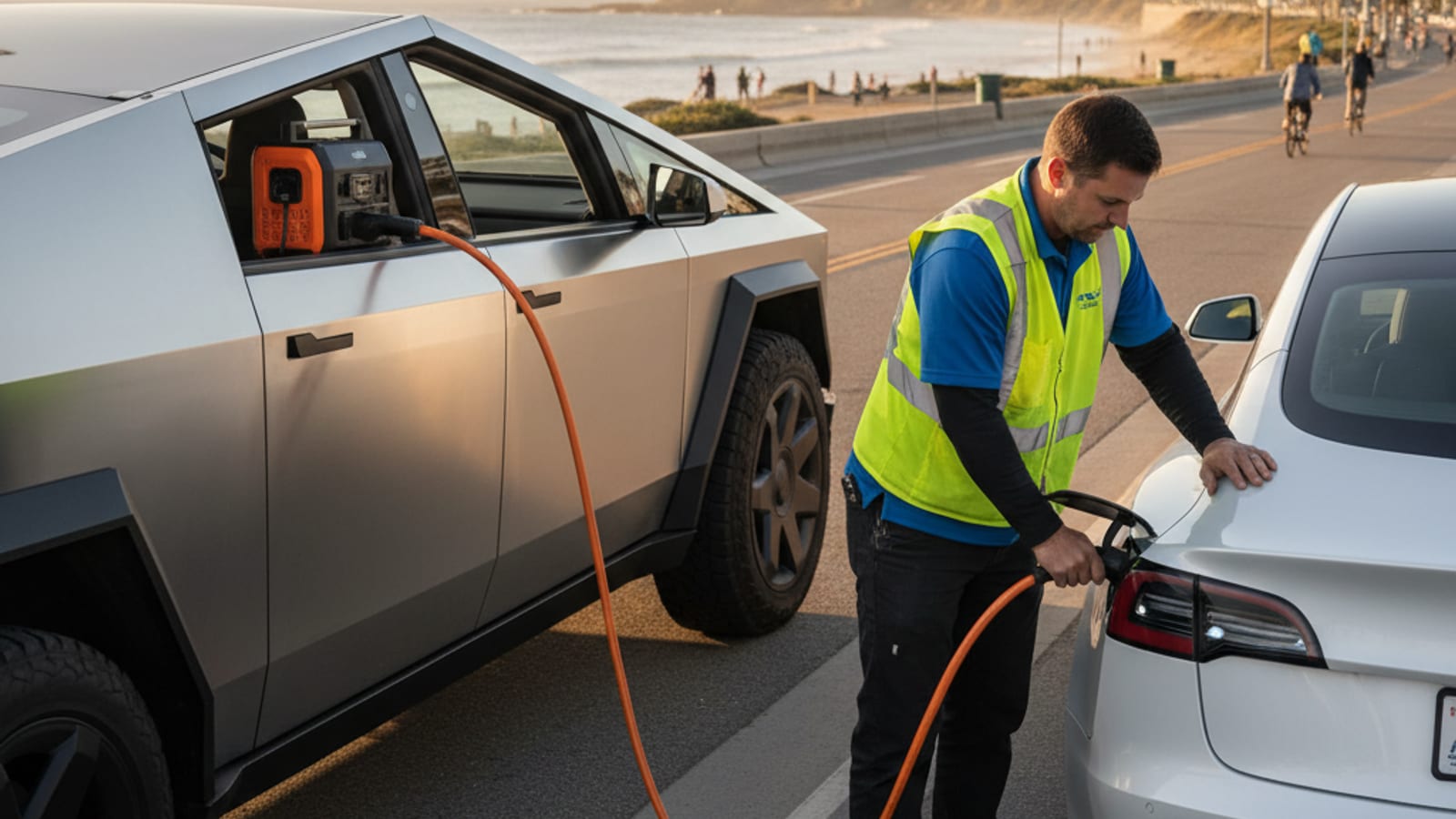
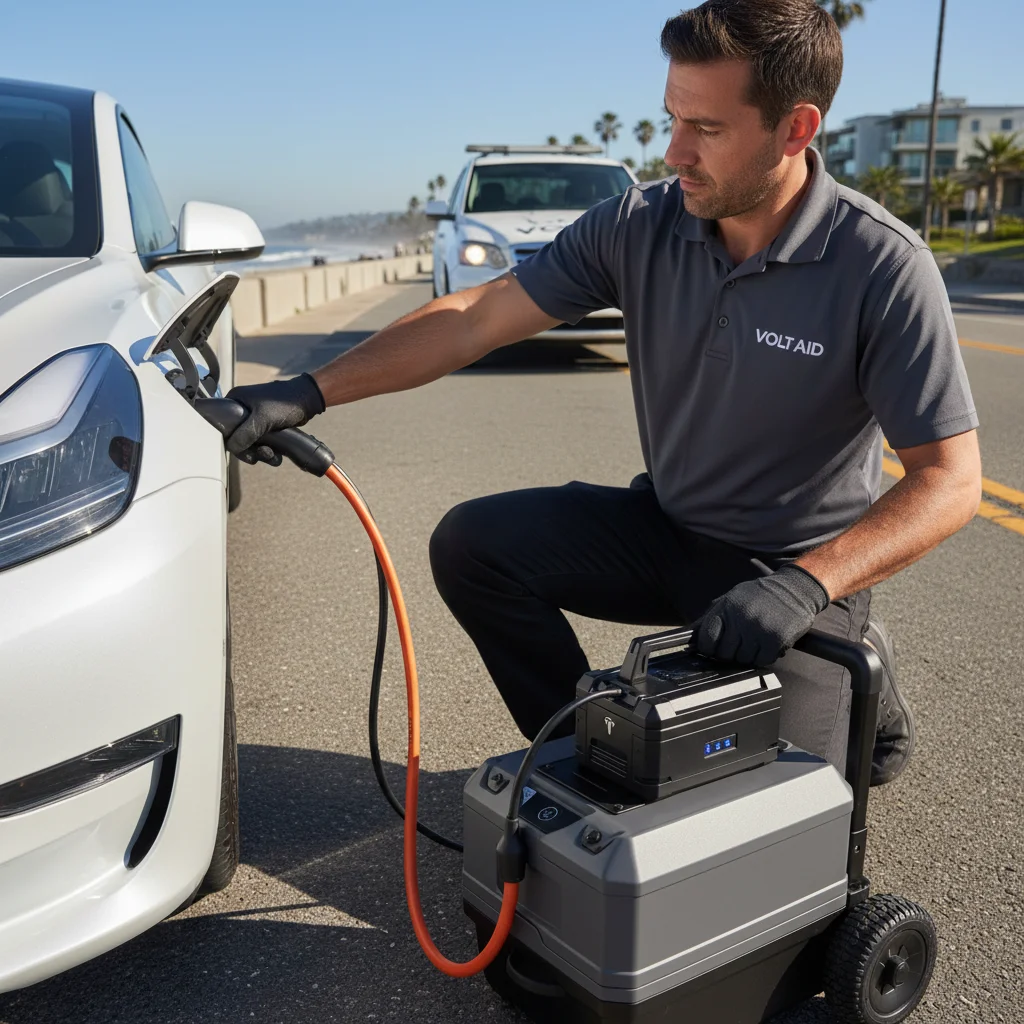
An empty traction pack is a miles problem. Heat, the climb, and the dwell used what you had. The car slowed or stopped with a depleted high-voltage battery. The fix is mobile EV charging. Operators we connect you with bring a 240-volt Level 2 source. Teslas take a native NACS plug. Other EVs take a CCS or J1772 adapter. Typical charging time is 15 to 30 minutes. You usually gain about 10 to 20 miles. That’s charger time. It isn’t when someone arrives.
A dead 12-volt is a wake problem. The small battery runs locks, lights, and screens. It also runs the computers that close the high-voltage contactors. When it’s dead, the pack can be full. The car still acts like a brick. Doors may not open. The charge port may not wake. Cold overnight soaks do this. They do it even in a Sagamore garage if the car sat. Teslas see a lot of these calls. Other brands see them too. The job is a jump or an on-site 12-volt replacement. That’s the Tesla 12-volt battery jump call. Towing a brick to a Supercharger doesn’t fix a 12-volt.
Tell the two apart before you wave at a flatbed. If you watched the range fall on US-36, it’s the pack. If the car sat and then went dark, it’s the 12-volt. Mixed cases happen. The operator checks on site. They quote before work starts. They bill you directly. Charge Pro DEN doesn’t set that price.
Cabin heat is a pack load too. A Marketplace sit with the cabin warm still spends energy. On the road, heat comes from the traction battery. That’s ordinary EV physics, not a Superior quirk.
Charge at the bumper before you assume a flatbed
A tow is right after a crash. It’s right for a bent wheel. It’s right when the car won’t take a charge. Many EVs need a flatbed so the motors don’t spin. Wrong towing can damage the drivetrain. Then you still need a stall that works. The Colorado Public Utilities Commission regulates towing carriers. Exact tow prices aren’t verified here. Ask before the hook goes on.
If the car is intact and the pack is empty, charging in place is the direct fix. You stay with the vehicle. Hazards stay on. You roll away under your own power. Home or a working public stall is the next stop. That’s EV roadside assistance as a referral. It isn’t a body shop.
Charge Pro DEN doesn’t hold a trade license. We don’t own a fleet, a yard, or parts. We don’t employ technicians. We match you with independent operators. The pros we connect you with are licensed and insured. They handle Tesla and every major EV brand.
Private-property tows have separate Colorado rules. The Towing Bill of Rights is HB22-1314. That’s a parking-lot statute. On US-36 you’re under disabled-vehicle law. Don’t mix the two.
No Colorado statute creates a special breakdown right for EVs. HOA charging access is CRS 38-33.3-106.8. Charging-space parking rules are CRS 42-4-1213. Neither is a shoulder law. On US-36 you’re a disabled vehicle. Same as a gas car.
Xcel at home, Level 2 on the commute
Weekdays in Superior are supposed to start from a wall connector. That’s the design of new Rock Creek stock. It’s the design of rebuilt Sagamore stock. RE-TOU is Xcel’s residential time-of-use rate name. Optimize Your Charge and Charging Perks are managed-charging names. None of that helps if last night’s session never ran. A tripped breaker and a seated-looking cord is a common morning. Then the US-36 merge happens anyway.
If the garage failed, a public stall is plan B only if you can reach it. Occupied stalls happen. Offline stalls happen. They aren’t proof a town lacks charging. This page won’t say that. Boulder’s Supercharger sites are in the NREL inventory. Use them if you can get there. If you can’t, the operator brings Level 2 to you.
Split-utility cities in the north metro change the rebate story street by street. Broomfield is one of those. Superior isn’t. Xcel is the electric utility here. Still confirm by address on a border street with Louisville or Broomfield. Wrong-utility advice wastes a morning.
Colorado’s metro isn’t one climate. Superior’s problem is high, windy ground on a hill commute. It isn’t a canyon town. It isn’t a plains airport run. Cabin heat plus US-36 westbound is the local math.
What to do when the pack is empty in Superior
Get out of the travel lane first. On US-36 Express Lanes, that’s the right-hand outside shoulder. On McCaslin, a Marketplace parking aisle beats a through lane. On Coalton, get fully off the pavement if you can. Hazards on. Occupants in a safe spot if the shoulder feels wrong. NHTSA’s general roadside guidance still applies.
Pin the location with more than “Superior.” Say US-36 eastbound or westbound. Say McCaslin. Say Marshall Road. Say Rock Creek, Original Town, Sagamore, or Calmante. Say SH-128 toward Flatirons Crossing. Operators route on the words you give them.
Separate pack-empty from 12-volt-dead. Say what the screens did. Say whether the car drove to the stop. Make and model matter for the plug. Tesla wants NACS. Most others want CCS or J1772.
Call a referral line when you need a charge at the car. The independent operator quotes before starting. They tell you their own timing. This page doesn’t.
Stay with the car if it’s safe. CDOT Safety Patrol may jump a 12-volt on listed segments in listed hours. It doesn’t publish an EV charge. Colorado State Patrol handles crashes. It also handles abandoned-vehicle calls. COtrip is for weather and traction postings.
If a tow is already rolling and you only need miles, say so. A charge in place can still be the shorter path. That’s true until the car is hooked. After it’s hooked, you’re in towing rules.
Don’t stand in a live Express Lane to watch the range. Don’t treat it like a gas-car jump until you know it’s the 12-volt. Don’t assume a courtesy patrol truck carries Level 2. Ask. Then call for a charge if they don’t.
After you’ve got enough miles to roll
The first job is to leave the shoulder. Then decide home versus a public stall. Home in Rock Creek or Sagamore is the Xcel wall connector. A Boulder Supercharger is an option if you’re still pointed west. Don’t sit in the Express Lane to think it over. Get to a parking aisle.
If the 12-volt was the failure, a jump isn’t always the end. Cold can kill the same battery again overnight. Replacement is a conversation with your shop. It’s also a conversation with the operator if they carry that job. This page doesn’t invent a life-in-months figure.
If the pack was empty, look at last night’s charge session. RE-TOU only helps if the session ran. A Marketplace dwell plus a westbound climb is a planning miss. It isn’t proof the car is defective.
Frequently asked questions
What EVs can a Superior roadside charge help
The operators we connect you with bring native NACS plus CCS and J1772 adapters. That’s Tesla, Rivian, Ford, Chevy, Hyundai, Kia, and the other common packs. The goal is enough range to roll. It isn’t a full battery.
Will the state’s freeway patrol charge an empty EV
CDOT Safety Patrol doesn’t describe EV charging on its published pages. It will jump a 12-volt and change a tire on covered segments. US-36 Express Lanes have courtesy-patrol presence. They also have that 8-foot outside shoulder. Treat the patrol truck as safety help. Bring Level 2 for an empty pack.
How much range does a mobile Level 2 stop add
Typical charging time is 15 to 30 minutes. Drivers usually see about 10 to 20 miles. Cold, cabin heat, and the car’s efficiency change that. That’s charging time only. It isn’t a drive-time or arrival claim.
When you need EV roadside assistance in Superior, call (720) 738-6950. We’ll connect you with an independent operator. They quote before they start. They bill you. We don’t.