An EV maintenance schedule by brand still matters on the Front Range. Cold, elevation, and hail decide what actually wears out. Tesla, Rivian, Ford, Hyundai, and Chevy all skip oil changes. They don’t skip tires, a healthy 12-volt, brake fluid, or filters. A January normal low around 18 degrees makes those jobs less optional.
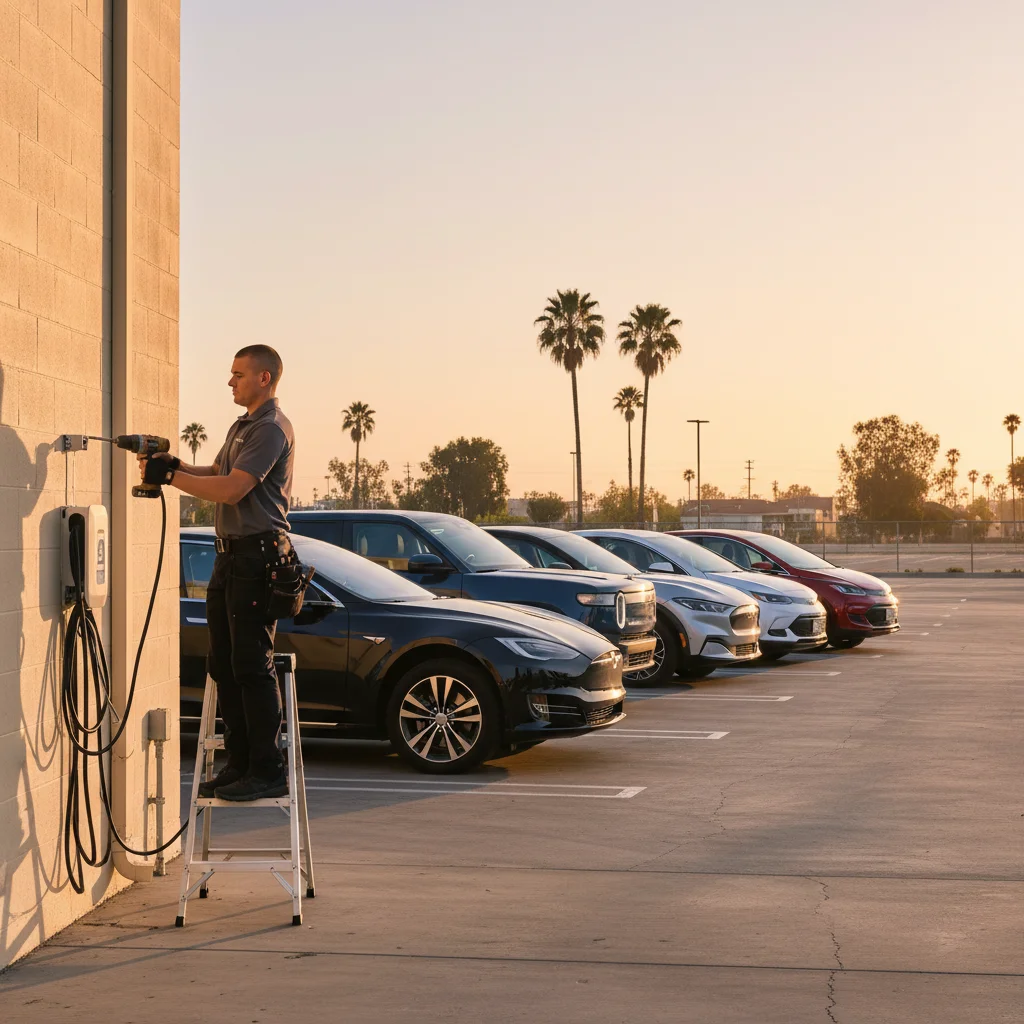
Cold, elevation, and hail change the work
Denver’s official elevation is 5,280 feet at the State Capitol. Boulder sits near 5,430, and Golden is about 5,675. Evergreen is near 7,200, Idaho Springs is 7,526, and Georgetown is 8,530. The Eisenhower-Johnson Memorial Tunnel west portal is 11,158 feet. CDOT operates that tunnel, and Loveland Pass is 11,990 feet. A commute that looks short on a map can still be a climb.
Descents can return a large share through regen. A Lucid Air GT used about 3 percent of its pack. That was a 77-mile descent from Loveland Pass. A Hyundai Ioniq 5 used about 10 percent on a 75-mile descent. Both published runs credited regen for that recovery. On ice, many drivers ease regen for traction. Friction brakes then do more work than a mild-climate owner expects. That’s why “brakes last forever” is a poor winter plan here.
January’s normal low is around 18 degrees on the plains. In January 2024, Denver fell from 47 to minus 19 in about 48 hours. Recurrent Auto studied more than 30,000 U.S. EVs in winter. Cars kept about 78 percent of max range at 32 degrees. At 20 degrees they kept about 70 percent on average. Heat-pump cars held about 10 points more at 32 degrees. An AAA dynamometer study found about 39 percent range loss at 20 degrees. Cabin heat and preconditioning draw from the same pack. A weak 12-volt can fail before the pack is empty.
Denver’s average annual snowfall sits in the low-to-mid 50s of inches. The Front Range sits in Hail Alley too. Hail is a body and sensor problem, not a range problem. After a cell, inspect cameras, radar, glass, and the charge-port door. Don’t wait for an alignment pull or a failed plug-in.
CDOT can impose the Passenger Vehicle Traction Law by signage. Drivers can confirm that status on COtrip.org. Under that law, AWD or 4WD can proceed. Cars with M+S or winter tires and at least 3/16-inch tread also qualify. Two-wheel-drive cars need chains or an approved traction device. In severe storms, the chain law can require a device on every vehicle. Tire work here is legal compliance, not only even wear. Details sit in Do Teslas have run-flats, and what about traction law.
There’s a broader EV maintenance Denver owners actually need overview. The brand lists below still come from each maker’s published intervals.
What every brand still shares
Tires take the most frequent attention on every EV. These cars are heavy, and instant torque scrubs rubber. Check pressure every month, then rotate on the maker’s interval. Underinflation costs range you already lost to cold. It also raises the odds of a shoulder stop on I-25 or I-70.
Every EV still has a small 12-volt battery. It wakes computers, locks, and contactors before the pack can work. If that small battery dies, a full pack won’t save you. The car won’t ready, and doors may not unlatch. A week in a cold lot at Denver International can do that. Peña Boulevard is the only road into that airport, and it’s city-maintained. The jump is for the 12-volt, not the pack. The pattern is in Tesla 12-volt failure in Denver cold: when it happens and why.
Brake pads often last longer because of regen. Brake fluid still absorbs moisture as months pass. Makers still want it tested or flushed on a calendar. Infrequent pad use plus snow spray can rust rotors. Inspect pads, rotors, and calipers when you rotate tires. Winter driving that reduces regen puts those parts back in play.
Replace the cabin filter on the brand interval. HVAC works harder when you precondition in the teens. A dirty filter makes that HVAC job worse.
Charge-port doors freeze, and snow melt sits in the inlet. Dry the charge port before you plug in. That’s driveway work rather than a dealer visit.
Colorado has no separate statute for a disabled EV. CRS 42-4-1202 treats you like any other disabled vehicle. Outside a business or residential district, stay off the travel lanes. You may stay on the shoulder if the car can’t move, with hazards on. CDOT Safety Patrol will jump a 12-volt and change a tire on covered freeway segments. That program publishes nothing about bringing a charge. Front Range metro hours are 6:00 to 9:30 a.m. and 2:30 to 7:00 p.m. on weekdays. Weekends run 10:00 a.m. to 7:00 p.m.
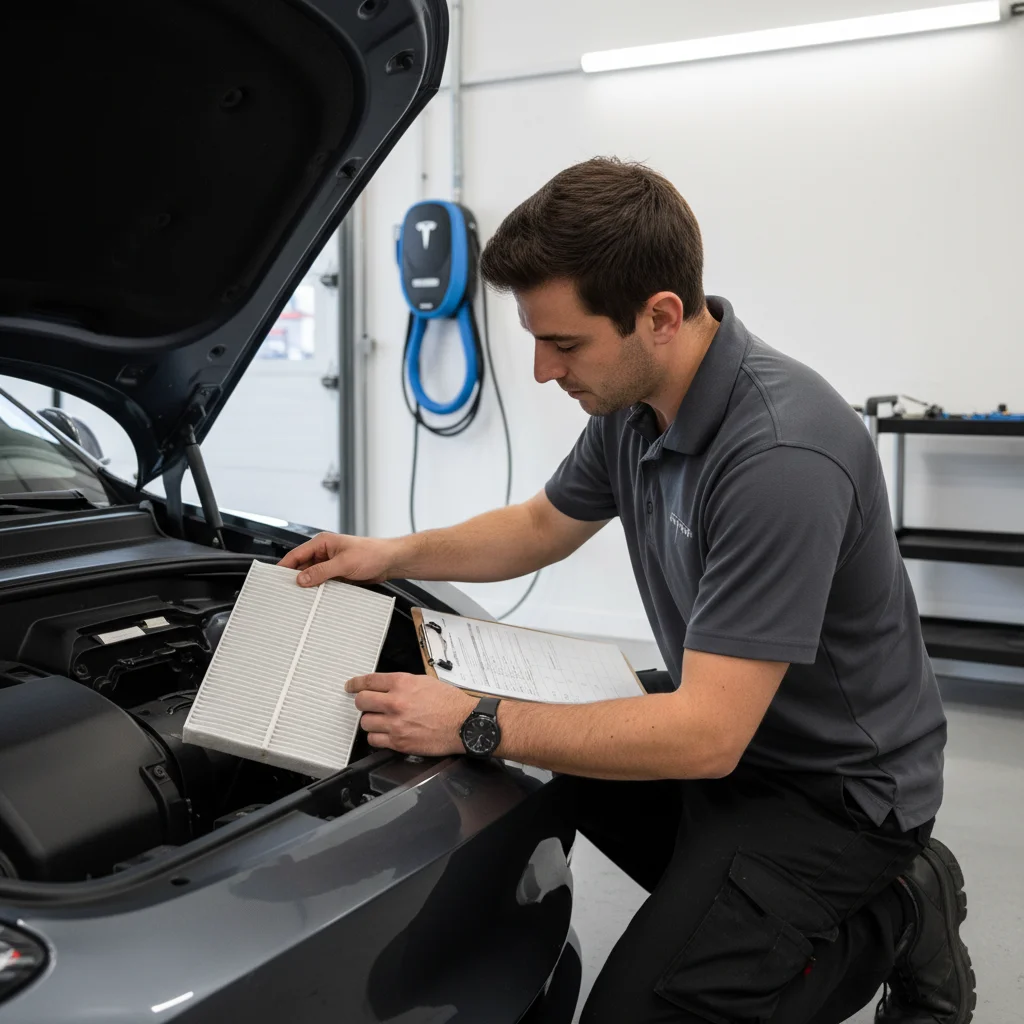
Hyundai Ioniq 5 and Chevy Bolt intervals
Hyundai and Chevy keep mileage-based lists. They’re easier to follow than Tesla’s screen alerts. They’re also light on winter notes. You still have to apply Front Range use yourself.
Hyundai Ioniq 5
Hyundai builds the Ioniq 5 schedule around 8,000-mile steps. Rotate tires every 8,000 miles. Inspect brakes, steering, and suspension every 16,000 miles. Replace the cabin air filter every 24,000 miles. Inspect battery coolant every 40,000 miles. Hyundai calls for the first coolant replacement at 120,000 miles. After that, repeat every 40,000 miles. Flush and replace brake fluid every two years.
If you climb toward Evergreen often, don’t skip that 16,000-mile chassis inspection. Regen on the way down is real. Ice can still make you use the pedal. Get an alignment check after hail or a hard hit on C-470.
Chevy Bolt EV and Bolt EUV
Chevy uses 7,500-mile steps. Rotate tires every 7,500 miles and run a multi-point inspection. Replace the cabin filter every 22,500 miles. Flush brake fluid every five years. At five years or 150,000 miles, drain and fill the coolant circuits. The Bolt has separate loops for the battery, power electronics, and cabin heater. That heater loop matters when January sits near 18 degrees. Don’t stretch a five-year brake-fluid interval if the car sits outside all week. Moisture and cold are a bad mix. Confirm the current interval in your glovebox manual.
Ford Mustang Mach-E and F-150 Lightning
Ford still feels like a gas-car schedule with half the items gone. The spine is a multi-point inspection every 10,000 miles. Ford also wants that visit at least once a year. That visit covers tire rotation and a brake check. Techs also inspect cooling hoses, half-shaft boots, steering, suspension, and ball joints.
Cabin filter replacement is listed at 20,000 miles. That’s longer than Rivian’s annual swap. If you precondition every winter morning, airflow can fall off sooner.
The F-150 Lightning’s AWD layout adds rear eAxle fluid at 150,000 miles. High-voltage battery coolant is the long job. Ford lists the first replacement at 100,000 miles. Later changes come every 50,000 miles. Lightning owners in Commerce City or Brighton still depend on a healthy 12-volt. A 100,000-mile coolant service won’t wake a truck that sat through a minus-19 morning. Test the 12-volt as the truck ages.
Rivian R1T and R1S
Rivian’s list is built for weight, air suspension, and drive units. That fits foothill roads better than a compact hatch list. Rotate tires every 7,000 miles. Check alignment every 14,000 miles, or sooner if wear looks uneven. After Hail Alley dings or a canyon pothole, don’t wait for 14,000. Air suspension leaks show up as a sagged corner in the morning. Rivian wants air-suspension parts inspected every 28,000 miles. The compressor filter is due at 56,000 miles.
Drive unit fluid is the item most other EVs never mention. Rivian lists it at 140,000 miles. It lubricates gears in the motor assemblies. Don’t skip it on a truck that climbs to Idaho Springs. Replace the cabin filter every year, or every 14,000 miles. Replace brake fluid every three years. If you take an R1T to Red Rocks and then toward Morrison, you’re using that suspension. Keep the inspection dates. Start with the 12-volt if it won’t ready after a freeze.
Tesla intervals without an annual stamp
Tesla dropped the old yearly service visit. It still publishes item-by-item intervals. Many alerts show on the screen. The screen won’t rotate your tires. It also won’t pass traction law for you.
Tesla wants tires rotated every 6,250 miles. Rotate sooner if any two tires differ by 2/32 inch of tread. That’s tighter than Ford’s 10,000-mile grouping. Instant torque and vehicle weight are the reasons.
Check brake-fluid health every two years. Replace the fluid if the test fails. Cabin filters are every two years. HEPA and carbon filters on newer Model S and Model X are every three years. The A/C desiccant bag is every three to six years by model. Model 3 and Model Y are on a four-year desiccant interval. A 2012 to 2020 Model S is on three years.
Tesla will often bundle a multi-point look when you’re already in for something else. That isn’t a substitute for monthly tire-pressure checks. Winter pack habits are in How to care for an EV battery through a Denver winter. Tesla’s own published range-loss figures could not be confirmed from Tesla’s site for this piece.
Your utility is part of the maintenance map
Overnight charging is how most metro EVs recover from cold-soak losses. The utility on your street isn’t the same across the metro. Xcel Energy covers the core and many Boulder County cities, plus Idaho Springs, Georgetown, and Empire. CORE Electric Cooperative covers the Douglas County south corridor. That includes Highlands Ranch, Parker, Castle Rock, and Castle Pines. COREV Charge is at capacity and closed to new applications, per CORE’s own page. United Power covers much of the north and northeast, including Brighton and Commerce City. In Thornton, Northglenn, Westminster, Arvada, Broomfield, and Erie, United Power and Xcel can split streets. Confirm the utility by address in those split cities. Longmont Power and Communications is Longmont’s municipal utility. Don’t call Xcel for an LPC rebate question.
Colorado crossed 200,000 registered EVs by October 2025, per the Colorado Energy Office. Battery-electric vehicles were 12.5 percent of new metro registrations year-to-date through June 2026. That’s roughly one in nine new cars, not one in three.
When the checklist didn’t keep you moving
Charge Pro DEN is a referral line. It doesn’t hold a shop license, own trucks, or perform these services. The pros we connect you with are licensed and insured. They quote you before they start, and they bill you directly.
If the 12-volt is dead, operators can jump or replace it on site. If the pack is empty, they can bring a 240-volt Level 2 source. Tesla uses a native NACS plug, and CCS or J1772 adapters cover other brands. That typically adds 10 to 20 miles of range. Figure 15 to 30 minutes of charging time, not travel time.
CDOT Safety Patrol still won’t charge the pack. If you’re on a shoulder under CRS 42-4-1202, keep the hazards on. Stay off the travel lane.
For a dead pack, start with EV roadside assistance. For a Tesla that won’t wake, Tesla 12-volt jump is the matching call.
Call (720) 738-6950 and we’ll connect you with a local operator.