You’ve left the show at Red Rocks Amphitheatre and the EV won’t wake. That’s the usual Morrison stall after a long lot sit. The traction pack may still hold miles. The small 12-volt that runs locks, computers, and contactors often doesn’t. You searched ev charging red rocks because you wanted a plug. Start with the battery that keeps the car awake.
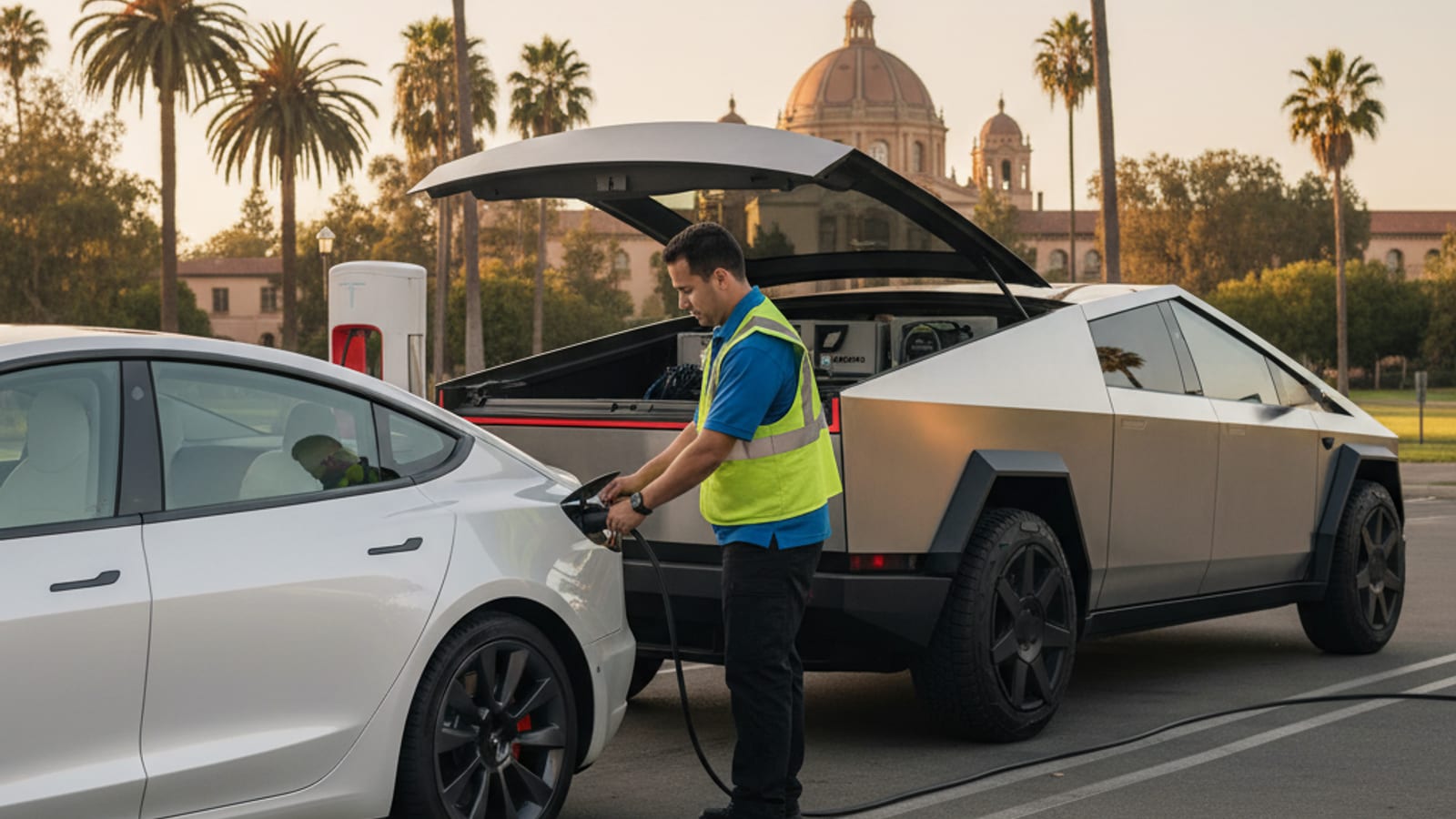
The car looks dead. The pack might still hold miles
A dark cabin after Red Rocks isn’t the same as zero range. Teslas and most other EVs keep a 12-volt battery. It runs lights, screens, and the contactors that connect the big pack. If that small battery’s flat, the car won’t ready. Handles may not present. The app may not connect. A public stall won’t help until those computers wake.
This is the usual Morrison pattern after a long sit. Red Rocks Park and Amphitheatre sits at the town’s edge, where the hogback meets the foothills. Cars sit for hours through a concert. Drivers return to a lower indicated charge, or to a car that won’t wake at all. That can happen on a hillside lot while thousands try to leave at once.
Charge Pro DEN is a referral line. We match stranded drivers with independent local operators. We don’t own trucks. We don’t run a shop. The operator quotes you before any work starts and bills you directly.
If you already know it’s the 12-volt, read Tesla 12-volt failure in Denver cold for how that failure usually shows up. For Morrison-specific roadside steps, see EV roadside assistance in Morrison when a Rivian dies.
Why a long Red Rocks sit drains a weak 12-volt
Morrison is tiny. The Census ACS count is 415 people. The town sits in Jefferson County at the mouth of Bear Creek Canyon. Historic Bear Creek Avenue is the old main street. SH-8 and SH-74 meet the C-470 launch here. US-285 runs nearby. The ground climbs west and south as soon as you leave the hogback.
None of that is a stall map. It’s why the sit is long. You park for the opener. You stay through the encore. Cabin electronics, alarms, and climate holds keep drawing the 12-volt while the car looks off. A weak cell that still started at home may not start after three hours in a lot.
January’s normal low around Denver sits near 18 degrees. July’s normal high sits near 88. Morrison isn’t the city core. It’s the mouth of the foothills. A cold spring show and a hot afternoon both tax that small battery. The January 2024 arctic blast dropped Denver from 47 degrees to minus 19 in about two days. A tired 12-volt doesn’t like that swing.
Most of Morrison’s housing is older. The ACS puts 91.2 percent of units as built before 1980. That doesn’t strand you at the venue. It does mean many local driveways weren’t built around overnight EV charging. If you live in town, confirm Xcel Energy still serves your address. Then ask whether the car truly slept at home before you drove west.
Accessories make it worse. A phone left on a cable. A hatch ajar with interior lights. Cabin climate left holding. Aftermarket cameras that never sleep. None of those empty the traction pack by themselves. They can flatten the 12-volt while you’re inside the amphitheatre.
How to tell an empty pack from a dead 12-volt
Stand still and sort the two systems. The traction pack moves the car. The 12-volt wakes the car. They fail in different ways.
Signs the 12-volt is the problem. The screens stay black. Door handles don’t present. The charge port won’t open. The app shows the car offline. You hear a click, or nothing, when you try to ready. Hazard lights may be dim or dead.
Signs the pack is actually low. The car did ready earlier. The display showed a low-mile number. You climbed from the lot toward Evergreen or idled in the exit queue. Climate and stereo still woke. You simply don’t have the miles to roll.
If you can still open the app and see a healthy state of charge, don’t assume you need a DC stall first. You may need a 12-volt jump or an on-site 12-volt replacement. Independent operators in this network jump or replace a dead 12-volt on site. They handle Tesla and every major EV brand.
If the car will ready and the number is truly low, that’s a charge problem. Then a mobile Level 2 charge or a public stall in a neighboring city is the next fork. Don’t mix the two calls. A tow yard won’t sort it for you in the lot.
Non-Tesla drivers see the same split. CCS and J1772 cars still have a 12-volt. A Rivian, an Ioniq 5, a Mach-E, or a Lyriq can sit through a show and refuse to wake for the same reason. The plug on the fender doesn’t matter until the small battery comes up.
What still works while you’re in the lot
Stay with the car if you can do it safely. Keep people out of the travel lanes as the post-show queue builds. Morrison’s lots dump onto a small town grid, then onto SH-8, C-470, and the canyon. A dark EV in a moving crowd is a hazard, not a charging puzzle.
If a public post is open in the lot you used, use it only after the car will accept a plug. A published stall count for the venue lots couldn’t be confirmed from the sources in this research. Check a live charging app on site. Don’t trust a remembered pin.
If the 12-volt is only weak, a jump from a matching 12-volt source can wake the computers. That isn’t a pack charge. It’s a small-battery jump. Use the manufacturer’s jump points. Don’t clip onto high-voltage orange cables. If you aren’t sure where the posts are, wait for a pro.
Once the car wakes, look at the indicated range before you join the exit line. A car that sat for hours may show less than you remember. Cabin heat or AC on the way in, plus the queue, plus the climb, all spend miles. Recurrent Auto’s winter study found EVs keep about 78 percent of max range at 32 degrees, and about 70 percent at 20 degrees, on average. Heat-pump cars held about 10 extra points at 32 degrees in that set. AAA’s 2026 dynamometer work reported about 39 percent range loss at 20 degrees. A Red Rocks night in the foothills can sit in that band.
If the car won’t unlock at all, you’re past a DIY jump. You need someone who can access the 12-volt and, if needed, replace it in place. That still isn’t a tow by default.
If you stall on C-470, SH-8, or the canyon road
You may leave the lot and die on the first corridor. C-470 sits at the mouth of town. SH-8 runs the local grid. SH-74 starts Bear Creek Canyon toward Evergreen. US-285 is close if you headed that way. Mount Falcon Park, Dinosaur Ridge, and the Bandimere-adjacent foothills sit in the same pocket. None of them change the law.
Historic Morrison along Bear Creek Avenue is only a few blocks. A car that dies on that street sits in a tiny business district. The venue lots and the town street aren’t the same problem. Stay out of the travel lane. Keep hazards on. Don’t block the post-show crawl through town.
Colorado treats a disabled EV like any other disabled car. There’s no EV carve-out in the breakdown statutes. That absence was confirmed in 2026.
CRS 42-4-1202 limits where you can stop. Outside a business or residential district, you may not stop on the paved main-traveled part of a highway. The exception is a vehicle so disabled it’s impossible to avoid stopping and to move it off the roadway. Hazards must be on under CRS 42-4-230. A violation is a class B traffic infraction.
Plain read: if the car can’t roll, get it as far onto the shoulder as it will go. Lights on. People away from the travel lanes. It’s lawful to be stuck there if the car truly couldn’t go farther.
Abandoned-vehicle rules are CRS 42-4-1803 to 1805. An officer decides reasonable grounds to treat a car as abandoned. The statute doesn’t set a fixed hour clock. Don’t assume you have a published grace period. If you must leave the car, you’re taking a risk the research can’t convert into hours.
For the canyon climb itself, out of charge on SH-74 toward Evergreen covers the next decision once you can move. Willow Springs sits nearby. Lakewood, Golden, Ken Caryl, and Littleton are the neighbors you roll toward if you head back to the metro instead of up the hill.
What CDOT Safety Patrol will do, and what it won’t
CDOT Safety Patrol covers the I-70 Mountain Corridor from Morrison to Vail. That matters if you reach I-70 after the show. Published mountain hours are 6:00 a.m. to 7:00 p.m. Friday through Sunday, and during significant weather. Front Range metro patrol hours are 6:00 to 9:30 a.m. and 2:30 to 7:00 p.m. weekdays, and 10:00 a.m. to 7:00 p.m. weekends. Those are operating windows, not a promise that a truck is coming.
The patrol will jump a 12-volt, change a flat, and handle minor mechanical help, debris, and incident support. CDOT’s own pages mention nothing about electric vehicles, EV charging, or a charging-specific service. That silence was confirmed on both the Safety Patrol page and the my car broke down page. The free state program won’t bring a charge to a stranded EV.
COtrip.org and the 511 line are the live sources for I-70 closures. They also post traction-law and chain-law status. CDOT can impose the Passenger Vehicle Traction Law or, in severe storms, the Passenger Vehicle Chain Law. Under traction law, AWD or 4WD, or M+S winter tires with at least 3/16-inch tread, can satisfy the passenger rule. Two-wheel-drive needs chains or an approved device. Chain law means every vehicle needs chains or a device. Activation is by highway signage and COtrip. A seasonal date window for Morrison to Dotsero couldn’t be confirmed as an agency-stated fact, so we won’t publish one. If you’re heading west after a winter show, check COtrip before you commit to the mountain.
Colorado State Patrol handles crashes, enforcement, and dispatch. It holds abandoned-vehicle removal authority under CRS 42-4-1803. Call them for a crash or a blocked lane. Don’t expect a Level 2 charge from a patrol truck.
What a mobile operator actually brings
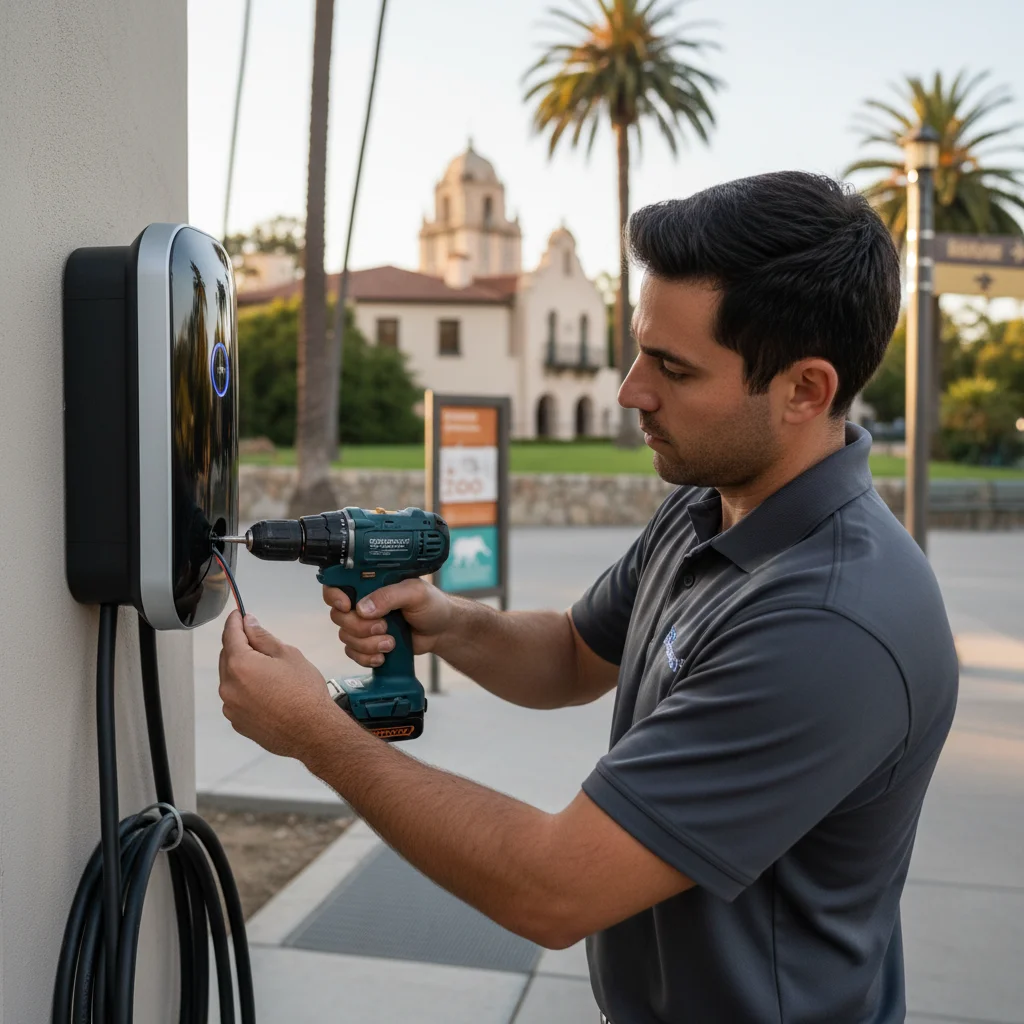
If the pack is low and the car will accept a plug, a mobile operator brings a 240-volt Level 2 source to the car. Native NACS for Teslas. A CCS or J1772 adapter for non-Tesla EVs. Typical charging time adds about 10 to 20 miles of range in 15 to 30 minutes of charging. That’s charging time on the cable. It isn’t an arrival time.
If the 12-volt is dead, the same class of operator can jump it or replace it on site. That’s often enough to leave Red Rocks without a flatbed. A tow is the wrong first tool when the car only needs a wake-up or a short top-off.
Charge Pro DEN doesn’t perform that work. We connect you with independent local mobile rescue operators. They quote before they start. They bill you directly. For the empty-pack version of this call, see out-of-charge recovery.
Level 2 is 240-volt AC, the same family as a dryer outlet. It’s the tool for a car that can sit still while miles come back. DC fast charging, sometimes called Level 3, pushes DC into the pack at a public stall. That’s the tool when the car can drive to a working post and you need a large top-off. Operators in this network bring Level 2 to you.
No Colorado statute addresses roadside EV charging. The car is a disabled vehicle under the same rules as a gas car. The difference is practical. A gas can isn’t a 12-volt. A tow doesn’t charge the pack.
After the car will roll: Lakewood, Golden, and the canyon
Once the computers are up, you can choose a direction. Morrison is the gateway, not a metro core. Historic Morrison along Bear Creek Avenue is a few blocks of town. The Red Rocks approach is the venue side. Willow Springs sits nearby. From there, drivers peel toward Lakewood, toward Golden, up SH-74 toward Evergreen, or onto C-470.
Tesla Superchargers are dense across the metro. The NREL pull shows three Supercharger sites in Lakewood. Idaho Springs has eight stalls and is the last Supercharger before the Eisenhower-Johnson Memorial Tunnel on the Denver side. Conifer has eight stalls on the US-285 side. Those are named sites from a 2026-09-18 inventory. They aren’t a map of every stall, and they aren’t a claim about the venue lots.
EVgo lists 24 Colorado sites in that same pull. Electrify America adds DC fast coverage across the metro. Connector types in North America are still CCS and NACS, with J1772 on many Level 2 posts. Newer non-Tesla EVs may have native NACS. Others need a CCS-to-NACS adapter for Superchargers that allow it. Teslas use a NACS-to-CCS adapter at non-Tesla DC stalls. Confirm your plug and adapter before you count on a specific post.
Don’t treat a named Supercharger as a guaranteed open stall after a packed show. Check the Tesla app or the network app when the car can wake. If the car still won’t wake, skip the app fight and treat it as a 12-volt.
Morrison’s city charging page is the local hub for this town.
Charge at home on Xcel before you drive to the venue
Morrison’s electric utility is Xcel Energy. That’s Public Service Company of Colorado. It isn’t CORE Electric Cooperative, and it isn’t United Power. If you live in town or in the 80465 or 80228 ZIP pocket, start the day from a home charge when you can.
Xcel publishes EV Accelerate At Home, EV Home Wiring Rebate, Optimize Your Charge, Charging Perks, the RE-TOU residential time-of-use rate, the Residential EV Rebate, and the Public Charging Acceleration Network. Those are program names. Rebate amounts couldn’t be confirmed in a form we can publish. Read the current terms on Xcel’s residential EV pages at co.my.xcelenergy.com/s/residential/ev-charging. Confirm your address is in Xcel territory first.
A full pack at home doesn’t protect a weak 12-volt. The 12-volt still sits under load in the lot. Home charging is how you avoid the empty-pack version of this night. The 12-volt still needs age, health, and a car that actually sleeps.
Colorado crossed 200,000 registered EVs by October 2025, per the Colorado Energy Office. Battery-electric vehicles were 12.5 percent of new Denver-metro registrations year-to-date through June 2026. That’s about one in nine new metro sales, not a flood. You’ll still share the Red Rocks lots with plenty of gas cars. You’ll also share the exit queue with other EVs whose 12-volts sat as long as yours.
Cold, heat, and the climb off the hogback
Range is a separate problem from a car that won’t wake. Once you’re moving, Morrison is a launch point. Evergreen sits near 7,200 feet. Golden sits near 5,675 feet. Denver’s official reference is 5,280 feet at the State Capitol. You feel that grade as soon as SH-74 enters Bear Creek Canyon.
Climbing spends energy. Descending returns a large share through regen. InsideEVs and related tests on the Loveland Pass descent showed a Lucid Air GT using about 3 percent of the pack over 77 miles downhill, and an Ioniq 5 about 10 percent over 75 miles, both crediting regen. Drivers still dial regen down on ice for traction. A wet or snowy canyon after a show isn’t a regen harvest.
If your car uses resistive cabin heat, budget more than a heat-pump car. Don’t treat the dash estimate as a promise after a multi-hour sit with the pack already cold. Average annual snowfall along the Front Range sits in the low-to-mid 50s of inches.
If traction law is active west of town, you need the right tires or chains before you climb. Check COtrip. Fine amounts are on CDOT’s traction-law page. We couldn’t publish a stable figure here, so confirm the current penalty with CDOT if you need it. The practical point is simpler. An EV that just woke from a 12-volt jump still has to meet the same traction rule as every other passenger vehicle.
Who quotes the work, and what moves the price
Charge Pro DEN doesn’t set prices. The independent operator who reaches you does. They quote before they start. They bill you directly.
What moves that quote is ordinary, not mysterious. How far the operator must run. Time of day. Whether you need a 12-volt jump, a 12-volt replacement, or a Level 2 top-off. How much range you need to reach a stall you can actually use, or to reach home. A hillside lot after a packed show is a slower scene than a quiet street in historic Morrison. None of that is a published rate card.
Ask for the quote first. If it isn’t workable, say so before the cable goes in.
Don’t assume Tesla roadside, AAA, or an insurer will bring a pack charge. Many programs jump a 12-volt or send a tow. Read your own policy, and ask before you wait on them. The local operator’s job is the charge or the 12-volt in place.
Frequently asked questions
Why won’t the EV wake after a Red Rocks show
A long sit in a Morrison lot often drains the 12-volt. The traction pack can still hold miles. Until that small battery comes up, screens, locks, and the charge port stay dead. Heat, cold, and cabin accessories speed that drain. A public stall can’t talk to a car that won’t wake.
Will CDOT Safety Patrol charge my EV near Morrison
No. CDOT Safety Patrol covers the I-70 Mountain Corridor from Morrison to Vail, with published mountain hours on weekends and during significant weather. It will jump a 12-volt and change a tire. Its pages don’t describe EV charging. Plan on an independent mobile operator for a Level 2 charge.
What if the pack is actually empty when I leave the venue
If the car will ready and the range is truly gone, you need energy in the pack. An independent operator can bring 240-volt Level 2 to the car, typically adding 10 to 20 miles in 15 to 30 minutes of charging. Named Supercharger sites exist in Lakewood and further along I-70 and US-285. Check a live app once the car is awake. Confirm the quote before anyone starts.
When you need a person, not another app
A Red Rocks night should end with the drive home, not a brick in the lot. If the EV won’t wake, treat the 12-volt first. If the pack is empty and the car will accept a plug, treat it as a charge in place. Charge Pro DEN will connect you with an independent local operator. Call (720) 738-6950 when you need that match. The operator quotes you before work starts.