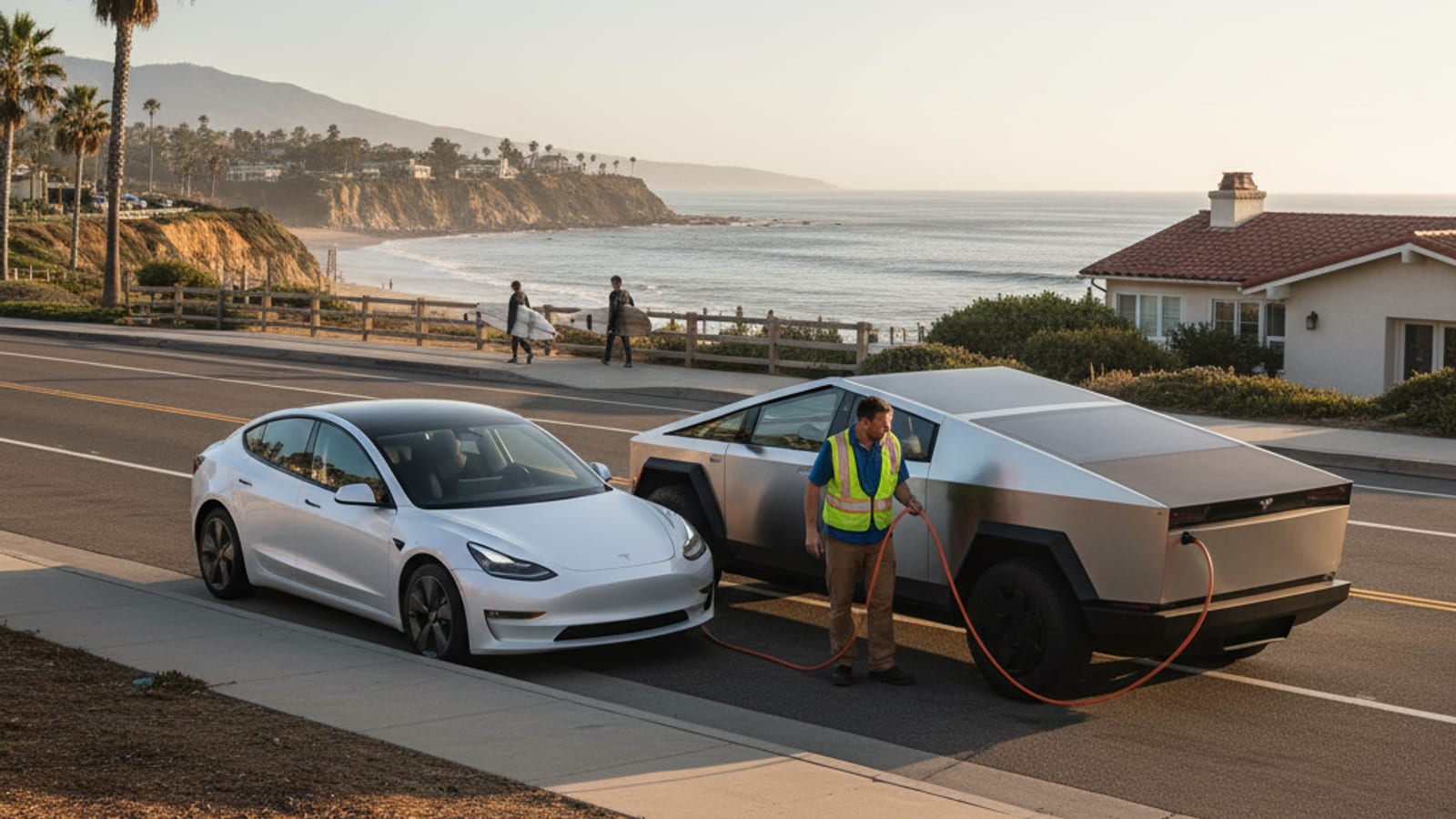
EV roadside assistance in Lafayette is a charge at the car. That’s the need on US-36 and US-287 when you’re short. A cold morning can erase the miles you counted on. Charge Pro DEN is a referral line, not a fleet. We connect you with independent operators who bring 240-volt Level 2 power to the bumper. They quote before they start. They bill you directly.
Lafayette sits in Boulder County on the high plains. Boulder is west. Erie and Broomfield sit toward the other edge. Census ACS counts 30,471 residents. The 2024 population estimate is 30,587. The town covers 9.231 square miles. That small map still holds two very different driving days. One is the US-287 spine through Old Town Lafayette. The other is the US-36 run toward Denver or Boulder.
Lafayette’s old core, new edges, and the hill
Historic Old Town Lafayette still gathers on Public Road. Apartments and older houses sit close to US-287. Census figures put 23.1 percent of local housing before 1980. A lot of that stock has no dedicated EV plug. Drivers in Indian Peaks, Beacon Hill, Centaur Village, and Lafayette Park often charge at home. The split shows up on weekday mornings. One household left with a full pack. The next left from a street stall already short.
US-287 is the north-south spine. It’s where a low charge turns into a call. SH-7, signed as Arapahoe or Baseline depending on the stretch, cuts east and west. South Boulder Road carries local trips toward Boulder. US-36 sits to the southwest and does the real range work. That turnpike is a shared commute with Louisville, Superior, and Boulder. Climbing toward Boulder on a cold morning costs energy. Cabin heat costs more. So does a stiff headwind on the plains between the Erie line and town.
Recurrent Auto’s winter study of more than 30,000 U.S. EVs is the range number to keep. At 32 degrees, EVs kept about 78 percent of max range on average. At 20 degrees, that fell to about 70 percent. Heat-pump cars held about 10 points more at 32 degrees. An AAA dynamometer study reported about 39 percent range loss at 20 degrees. Denver’s January normal low sits around 18 degrees, per NWS Boulder climate normals. Lafayette shares that Front Range winter. This isn’t a mild-weather commute.
The January 2024 arctic blast still sits in local memory. Denver dropped from 47 degrees to minus 19 in about 48 hours. A pack that looked fine the night before can wake short. A 12-volt battery that looked fine can refuse to boot the car. Those are different failures. They need different help.
What EV roadside help actually does here
Traditional roadside clubs were built around gas cars. Many will jump a 12-volt battery. Many will send a flatbed. Few bring a charge to an empty traction pack. Colorado has no statute that carves out a disabled EV. CRS 42-4-1202 treats your car like any other disabled vehicle. If you can’t move off the travel lanes, you may sit on the shoulder with hazards on. That’s the legal shape. It isn’t a charging plan.
CDOT Safety Patrol is free on the segments it covers. It’ll help with a flat, a 12-volt jump, debris, and similar stops. Its own pages say nothing about EV charging. Front Range coverage includes stretches of I-25, I-70 East, US-6, C-470, and I-225. US-36 isn’t on that published list. The US-36 Express Lanes were built with a minimum 8-foot outside shoulder. CDOT’s project FAQ also notes added courtesy-patrol presence. Move right if you stall in an express lane. Don’t sit in a travel lane waiting for a charger.
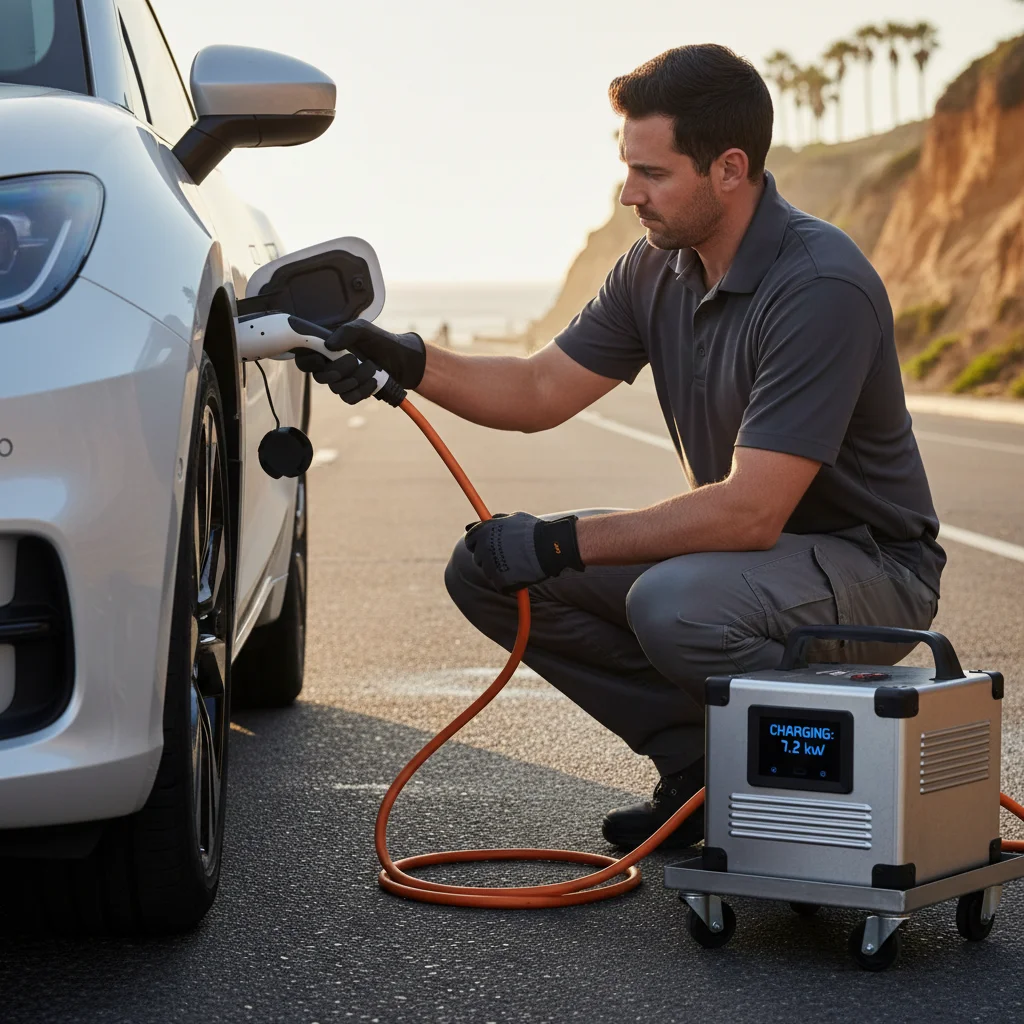
If you need miles, not a flatbed ride, you want mobile EV charging. The operators in this network bring a 240-volt Level 2 source. Teslas take a native NACS plug. Other EVs take a CCS or J1772 adapter. In 15 to 30 minutes of charging, they typically add 10 to 20 miles of range. That’s charging time. It isn’t an arrival time. The operator quotes before starting. You pay that operator.
A tow still has a place. A damaged car, a crash, or a pack that won’t accept charge may need a flatbed. Many EVs, especially AWD models, should ride with all four wheels up. Wheel-lift shortcuts can stress motors and regen hardware. If the car will take a charge, charging in place is usually the smaller move. You pick the next plug. You aren’t dropped at a bay that can’t charge you.
The pros we connect you with are licensed and insured. Charge Pro DEN isn’t. We don’t own a fleet. We don’t run a yard. We don’t employ the technician who plugs in. That’s the honest split. It matters when you’re comparing a club app to a local rescue.
Where Lafayette drivers actually stall
The call often starts on US-287. Someone left Old Town after errands on Public Road. The estimate looked fine in the lot. Heat and stop-and-go ate it before the next town. Waneka Lake and the Great Bark Dog Park are easy local loops. They’re also easy places to sit longer than you meant to. The Lafayette Bob L. Burger Recreation Center is the same pattern. A long dwell in the cold can flatten a 12-volt even when the pack isn’t empty.
Newer edges of town feel different. Indian Peaks and Beacon Hill driveways often have a plug. That doesn’t save a commute that started with a thin buffer. US-36 toward Denver still asks for extra miles. The hill into Boulder asks for more. Neighbors in Erie, Broomfield, and Longmont share pieces of the same weekday. Your ZIP might read 80026, 80027, or even 80020. City limits and the postal map aren’t the same drawing. The streets still feed the same two corridors.
Boulder has Supercharger sites in the current public inventory. Longmont does too. Name those as places you can plan around once you’re rolling. Don’t treat any lot, street, or stretch as empty of charging unless you’ve checked an app in the moment. PlugShare, your car’s nav, and a live stall list beat a guess from last month.
South Boulder Road is the slower Boulder run when US-36 is packed. It still costs heat and time. SH-7 toward the plains can feel flat and easy. Wind on that high-plains stretch is the hidden draw. If you’re crossing toward Erie after dark, leave a larger cushion than a summer evening would need.
Broomfield is its own city and county, carved out in 2001. It sits on Lafayette’s shoulder and shares US-36 logic. Louisville is the next name on the turnpike. Superior sits closer to the climb. You can stall on a Lafayette street and still be looking at another city’s map. Tell the operator the city on the sign, not only the ZIP on your phone.
Centaur Village and Lafayette Park trips look short on a map. Short trips in the cold still use a lot of energy per mile. The pack never really warms. People who only watch highway range get surprised by that pattern. A loop to Waneka Lake with cabin heat on is not a free errand in January.
Cold mornings, two batteries, and a false empty
A lot of “dead EV” calls aren’t an empty pack. Teslas and most other EVs keep a small 12-volt battery for computers, locks, and contactors. If that battery dies, the car can look bricked. Screens stay dark. Doors may not release. The traction pack can still hold tens of miles. Operators in this network can jump or replace that 12-volt on site. That’s a Tesla 12-volt jump when the pack was never the problem.
Cold is hard on both systems. The pack works less efficiently. Cabin heat draws from the same energy you wanted for US-36. The 12-volt sits overnight and loses strength. After the January 2024 blast, plenty of Front Range drivers learned that the hard way. A car that sat near Waneka Lake through a workday can show the same pattern on a milder freeze.
If the dash still talks and range is the problem, you need energy in the pack. That’s out-of-charge recovery, not a jump on the 12-volt posts. If nothing wakes, start with the 12-volt. Jumping the traction pack with jumper cables is the wrong picture. The 12-volt is the little battery. The pack is the big one under the floor.
Regen on the way down a hill can give energy back. Drivers still cut regen on ice for traction. A Lafayette morning with slick pavement on the turnpike is a poor time to count on a full recovery. Plan the buffer on the way out. Don’t spend it on the way in.
Watch the simple tells. Repeated low-voltage warnings. Locks that cycle slow. A charge port that won’t release after a freeze. A range number that fell hard after one night outside. None of those require a shop visit as the first step. They do require you to stop guessing which battery failed.
Shoulder steps before anyone rolls to you
Pull as far right as you can. Hazards on. CRS 42-4-1202 is the disabled-vehicle rule. You may not sit in the travel lanes if you can move. You may sit on the shoulder if the car can’t go farther. Keep people out of live lanes. If you’re in a US-36 express lane, use the outside shoulder. That shoulder was built at least eight feet wide.
Abandoned-vehicle rules in Colorado don’t run on a posted 24-hour clock. CRS 42-4-1803 leaves “abandoned” to officer judgment. Don’t assume you can wait a night on a freeway shoulder. Call for a charge or a tow while the car is still a disabled vehicle.
COtrip and the 511 line carry traction-law status when storms hit. Traction law and chain law activate by signage and that feed. They matter more if your day continues toward the I-70 mountain corridor. Lafayette itself is high plains. The same cold air still sits on US-287 at dawn.
CDOT Safety Patrol hours on the Front Range metro are limited. Weekdays run 6:00 to 9:30 a.m. and 2:30 to 7:00 p.m. Weekends run 10:00 a.m. to 7:00 p.m. Even when a patrol truck can reach you, it isn’t published as an EV charging service. A 12-volt jump may be in scope. A Level 2 rescue charge isn’t.
Colorado State Patrol handles crashes, enforcement, and abandoned-vehicle removal. If you’re on a live shoulder after dark, a patrol stop can still happen. Have your lights on. Stay off the pavement. Tell dispatch you’re waiting for a mobile charger if that’s the plan. There’s no Colorado EV breakdown statute to recite. The same highway rules as a gas car apply.
Xcel at home, and why the street stall still happens
Lafayette is Xcel Energy territory. That’s Public Service Company of Colorado, not CORE and not United Power. Longmont’s municipal utility doesn’t serve this city either. If you later want a home circuit, look up Xcel’s own EV pages. Named programs include EV Accelerate At Home and the EV Home Wiring Rebate. Xcel also lists Optimize Your Charge, Charging Perks, and the RE-TOU residential time-of-use rate. There’s a Residential EV Rebate too. Dollar amounts change. Confirm them with Xcel before you budget. Don’t copy a rebate figure from a blog.
Home charging still fails people. You forget the plug. A garage breaker trips. An apartment in the older core has no assigned stall. Pre-1980 buildings weren’t wired for a 240-volt EV circuit. A Level 1 overnight trickle can also leave you short when the morning is 18 degrees. None of that’s a character test. It’s how a city of this size actually charges.
Colorado’s EV registration picture is real, and it’s calmer than last year’s headlines. The Colorado Energy Office said the state crossed 200,000 registered EVs by October 2025. CADA’s Q2 2026 outlook has the metro figure. Battery-electric vehicles were about 12.5 percent of new Denver-metro registrations year-to-date through June 2026. That’s roughly one in nine new vehicles, not one in three. You’ll still see Teslas, Hyundais, and Fords on Public Road. You’ll also still find drivers who’ve never needed a roadside charge until this morning.
Public Level 2 stalls help when you’re parked on purpose. A Supercharger helps when you can still drive to one. Roadside Level 2 is the tool for a car that can’t make the next plug. Those three jobs get mixed up in club apps. If the wheels won’t take you to a stall, the stall doesn’t matter yet.
After the boost, spend those miles on purpose
The roadside charge is a bridge. Ten to twenty miles disappears fast with heat on high. Turn the cabin down if you can stand it. Drive steady. Don’t spend the whole boost proving a point on US-36. Pick a stall you can confirm as live. If your home plug in Indian Peaks is inside that window, go home. If you started from an Old Town apartment with no plug, you need a public stall. Confirm it actually works tonight.
If the 12-volt was the failure, charging the pack may not be required. A jump that holds is a different ending. If the 12-volt dies again after a jump, replacement on site is the next conversation with the operator. Don’t keep jumping a battery that’s already failed twice in the cold.
Boulder elevation sits around 5,430 feet. Denver’s official mark is 5,280 feet. The US-36 run between them isn’t a mountain pass. It still isn’t flat in the way a plains highway feels flat. Climbing toward Boulder costs energy you don’t see on a summer evening. Coming back, regen can return some of it. Ice changes that math because drivers cut regen for traction.
How a referral call works when you’re already stuck
Charge Pro DEN doesn’t own trucks. We don’t employ technicians. We don’t hold a trade license, and we don’t set the price. We connect you with an independent operator who can reach Lafayette and the US-36 / US-287 map. That operator tells you the quote before work starts. If you want EV roadside assistance as a category, that’s the bucket. It’s a charge, a 12-volt jump or replacement, Tesla, and every major EV brand.
Have your location ready. A mile marker on US-36 beats a vague “near Lafayette.” Public Road, a cross street on SH-7, or a lot name such as the rec center is enough. Say whether the car still wakes. Say whether the charge port opens. Say the brand. Non-Tesla cars need the CCS or J1772 path. Teslas take NACS. The operator brings the matching plug.
Don’t wait for zero if you still have a crawling margin and a safe pull-off. A car that can creep to a legal shoulder is easier to work on. A car in a live lane isn’t. If you’re already at zero, stay out of traffic and wait for the operator’s quote.
Charge Pro DEN doesn’t publish an arrival clock. We couldn’t verify one that would stay true across weather, US-36 traffic, and operator location. The useful promise is the work itself. A Level 2 boost. A 12-volt jump or replacement. A quote before anyone starts.
For a stall on the turnpike itself, what to do on US-36 walks the shoulder steps in more detail. Louisville sits on the same corridor. Their local write-up is EV roadside assistance in Louisville.
Frequently asked questions
How much range does a roadside charge add?
Operators bring a 240-volt Level 2 source to the car. In 15 to 30 minutes of charging, that typically adds 10 to 20 miles of range. Your car’s intake rate and cabin heat change the result. That window is charging time only. Nobody here publishes an arrival clock.
Can they charge a non-Tesla in Lafayette?
They can. Operators carry a native NACS plug for Teslas. They also carry CCS or J1772 adapters for other brands. Hyundai, Kia, Ford, Rivian, Chevy, BMW, and similar CCS cars are in that group. The operator confirms the plug when they quote you.
Does CDOT or a tow truck bring a charge?
CDOT Safety Patrol can jump a 12-volt and help with tires on the freeways it covers. Its published pages don’t offer EV charging. A tow moves the car. It doesn’t fill the pack unless you’re delivered to a working stall. For an empty traction battery on US-287 or US-36, you want a mobile Level 2 boost at the bumper.
If you want that referral from Lafayette, call (720) 738-6950. Tell the coordinator where you sit and whether the car still wakes. The operator who rolls is independent. They quote first. They charge the car, jump the 12-volt, or tell you if a flatbed is the honest next step.