A Front Range freeze can leave an EV charger stuck in the car overnight. Denver’s January normal low sits near 18 degrees. Melt runs into the port, then ice holds the latch. You press the handle button and get nothing. Don’t yank the connector from the housing. Stop the session if the car still answers, then use that year’s manual release. A weak 12-volt can also keep the solenoid shut.
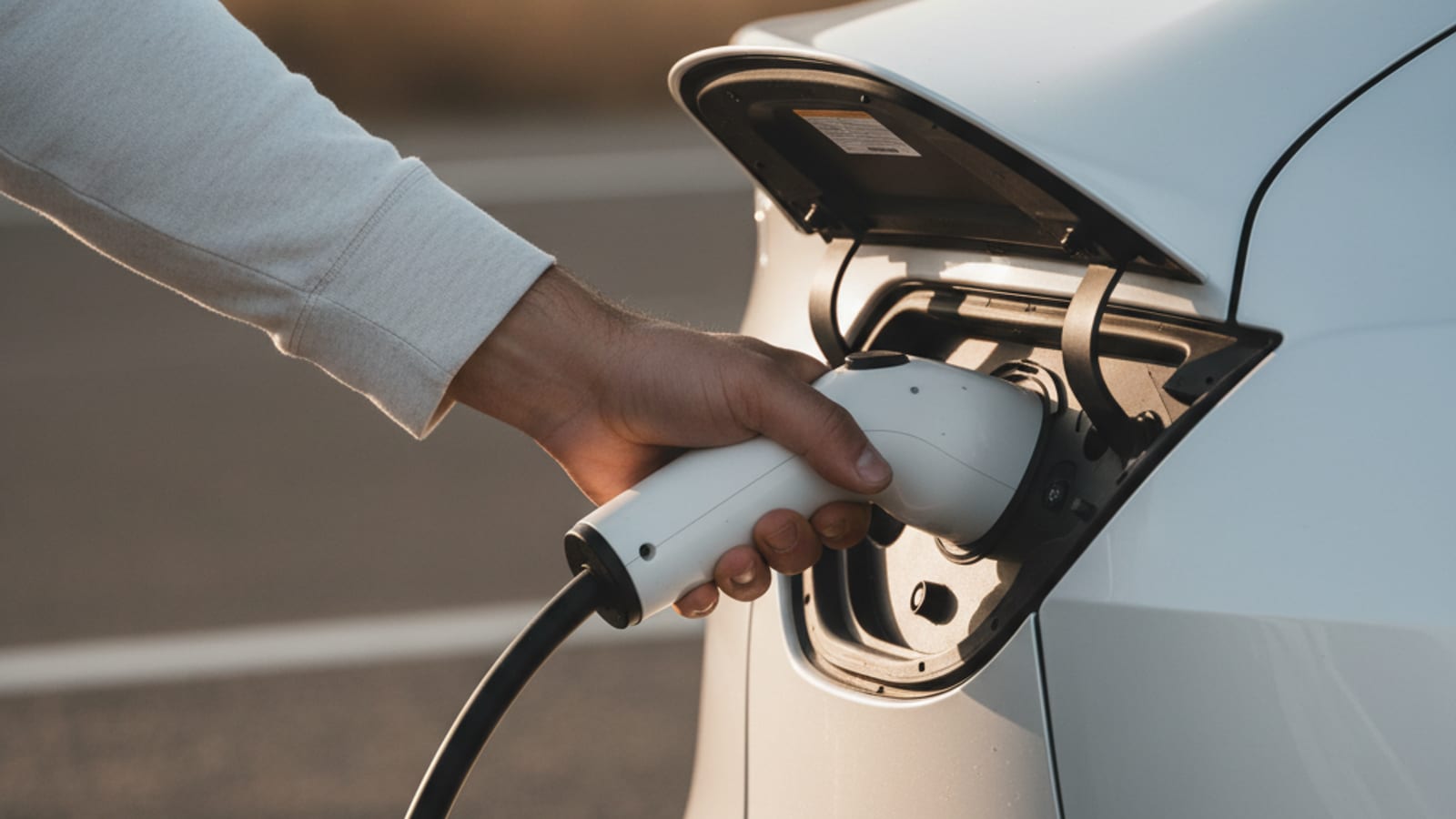
Cold soaks the port in a way a mild night never will
Snow around Denver runs in the low-to-mid 50s of inches a year. You plug in after work in Lakewood or Highlands Ranch. Overnight melt drips down the body. Dawn ice welds the connector to the locking lip.
Downtown Denver sits at 5,280 feet at the State Capitol. Evergreen sits around 7,200 feet, and nights run colder on that hill. Idaho Springs sits at 7,526 feet on I-70. The Idaho Springs Supercharger lists 8 stalls. That’s a real stall to occupy with a frozen handle.
The January 2024 arctic blast made this ugly. Denver fell from 47 degrees to minus 19. That drop took about 48 hours, January 16 and 17. A port that sat through that soak can still ice shut.
A long sit after a Red Rocks show in Morrison does the same work. The car cools on the lot, and melt refreezes in the inlet. The stall isn’t the failure, the latch is.
A home wall unit doesn’t change the ice. Castle Rock, Parker, and Highlands Ranch sit on CORE Electric Cooperative, not Xcel Energy. The stuck cable is still a car problem.
If the cable belongs to a public cabinet, call the number on the stall.
Three failures that feel like one stuck handle
The connector won’t slide, but the cause might be ice, power, or software.
Ice on the locking lip
The solenoid may have already retracted while ice still binds the connector. Gentle warmth helps, and flooding the port doesn’t. Water in the inlet becomes more ice by morning. After it frees, dry the housing. Snow melt in your charge port covers that cleanup.
Don’t use an open flame. Don’t chip at the pins with a key. Let the ice give, then pull straight.
A 12-volt that can’t move the lock
The latch uses a small solenoid, and it needs 12-volt power to retract. A weak 12-volt hears the release command and does nothing. Cold parking is hard on that small battery. A week in a DEN garage is a classic soak. Peña Boulevard is city-maintained, and it’s the only road into the airport. You fly, come back, and the port won’t let go.
If screens are dim or the app is offline, think 12-volt first. Jumping it often lets the solenoid work. See how to jump an EV 12-volt. CDOT Safety Patrol will jump a 12-volt on listed freeway segments, in published hours. Weekday windows are 6:00 to 9:30 a.m. and 2:30 to 7:00 p.m. Weekend hours run 10:00 a.m. to 7:00 p.m. Their pages say nothing about charging an EV or freeing a cable. A jump can still be the missing power.
A charge session the car never closed
The cabinet stopped, but the car still thinks current is flowing. The lock stays on for safety. On the screen, stop charging and wait for confirmation. Then press the handle button again.
A short reboot can clear a glitch. On a Tesla, hold both steering-wheel scroll wheels for about 10 seconds. On a Rivian, hold the cruise stalk down for about 10 seconds. On most others, power the car off and on at the button.
Older Tesla Mobile Connector handles can fail too. Try another cord if the button no longer moves the latch.
What to try before you peel any trim
Wake the car and open the driver’s door, then close it. A sleeping EV can ignore a release tap.
Stop the session from the screen or the app. Wait until charging shows as stopped.
Press the connector button and pull straight. Don’t twist hard. A small side-to-side wiggle is enough if ice is the bind.
If the car sits in a travel lane, get it to a legal shoulder. CRS 42-4-1202 is the disabled-vehicle rule. You may remain on the shoulder if the car truly couldn’t go farther. Keep hazards on. Colorado has no separate disabled-EV statute.
On E-470, pull to the shoulder and dial *470. They publish jump-starts and tire help. They don’t publish a charge-cable release.
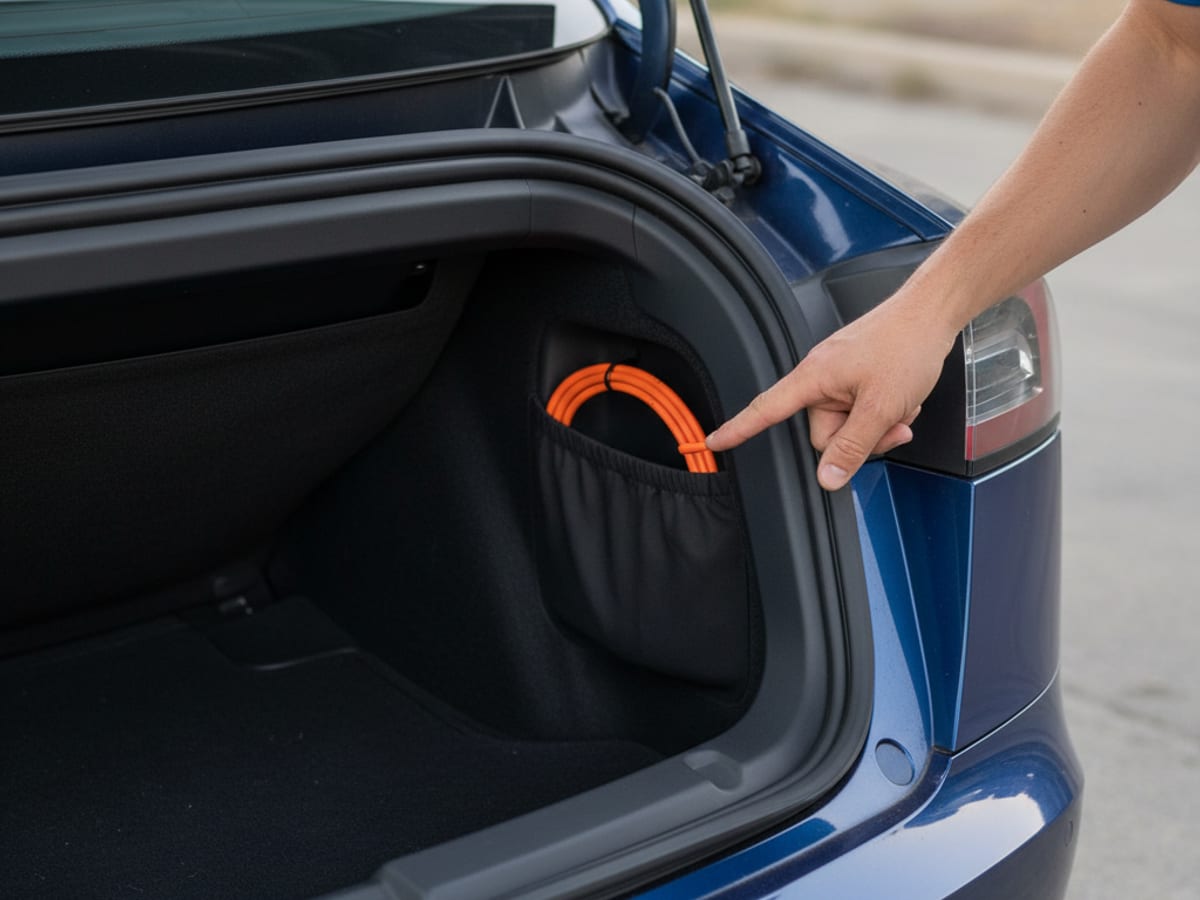
Manual releases, grouped by where they live
Makers know the electric lock can fail, so there’s a mechanical backup. Locations move by model year. Confirm yours in the owner’s manual before you peel trim.
Cargo-area pulls
Tesla Model 3 and Model Y hide it in the trunk. On the passenger inner wall, peel the carpeted trim. Behind a small access panel is a plastic tab on a cable. Pull that cable downward and hold it. Slide the charge connector out while you keep tension.
Tesla Model S and Model X use the rear hatch. Older cars hide a cable near the driver’s taillight trim. Pull it straight toward you. On 2021 and newer refresh cars, look in passenger trunk trim.
Hyundai Ioniq 5, Kia EV6, and EV9 put a button in the rear cargo area. It’s under a plastic cover on the driver’s sidewall. Press and hold it while you pull the connector. More on that family is in Hyundai Ioniq 5 charge port stuck in the freeze.
Chevrolet Bolt: the cord sits under the rear cargo floor, near the 12-volt area. Pull the cord as you pull the connector.
Polestar 2: look in the trunk near the driver’s tailgate hinge.
Volkswagen ID.4: lift the cargo cover. On the passenger side behind the C-pillar trim, find a labeled pull loop.
Rivian R1T and R1S keep the cord inside the cabin. Open the rear passenger door. Lift the rear seat bottom to reach a service panel. Pull the cord firmly. See Rivian charge port stuck for that truck and SUV.
A tab on the port itself
Ford put the release on the charge-port housing. Open the charge door. Near the top or bottom edge is a small triangular pull with an unlock icon. Pull the tab away from the port as you pull the connector. On an F-150 Lightning, FordPass can command a release if the truck still answers. For a frozen Mach-E, use Ford Mustang Mach-E charge port stuck.
Stop before you tear the latch
You held the release and the connector still won’t move. Stop pulling.
A seized solenoid that you rip out becomes a shop job. Leave the cable in the port. A last small wiggle while holding the release is the owner limit. Brute force isn’t.
If the car is fully dark, you may not reach a trunk pull at all. That’s 12-volt work first. The operators we connect you with jump or replace a dead 12-volt on site. They handle Tesla and every major EV brand. They quote before they start, and they bill you directly.
Charge Pro DEN is a referral line. We don’t own trucks or perform the work. The pros we connect you with are licensed and insured. We match stranded drivers with local mobile rescue operators across the Denver metro. Tesla owners can start on Tesla roadside rescue. Other brands sit on non-Tesla EV rescue.
If you’re occupying a Supercharger stall, stay with the car. That includes Denver, Lakewood, Highlands Ranch, and Castle Rock. Don’t leave a locked cable on a public post. We won’t invent a wait time for any of them.
Once the connector is free
Run a full charge session when you can. If it completes and releases, you likely had ice or a glitched session. If the lock fails again on a warm afternoon, the solenoid needs a shop.
If you jumped the 12-volt to free the cable, plan a 12-volt replacement. Cold will knock a dying unit down again.
Clear snow and melt from the inlet before the next plug-in. A wet port is how this night starts.
If you still can’t free it, call (720) 738-6950. We’ll connect you with an independent operator in the Denver metro. They quote the job before they touch the car. They don’t speak for Tesla, Ford, or CDOT.