Tesla Insurance can list roadside assistance on a policy. It still isn’t a 240-volt truck. If a Model Y hits zero on I-25 through Thornton, the app may offer help. Don’t treat that offer as a charger at the bumper. A Denver driver still needs someone who can bring 240 volts to the car. This page couldn’t confirm Tesla currently writes Tesla Insurance for Colorado garage addresses. Check the Tesla app and Tesla’s insurance site for your VIN. If roadside language is on your declarations, read what the truck is supposed to do.
Factory roadside and Tesla Insurance aren’t the same contract
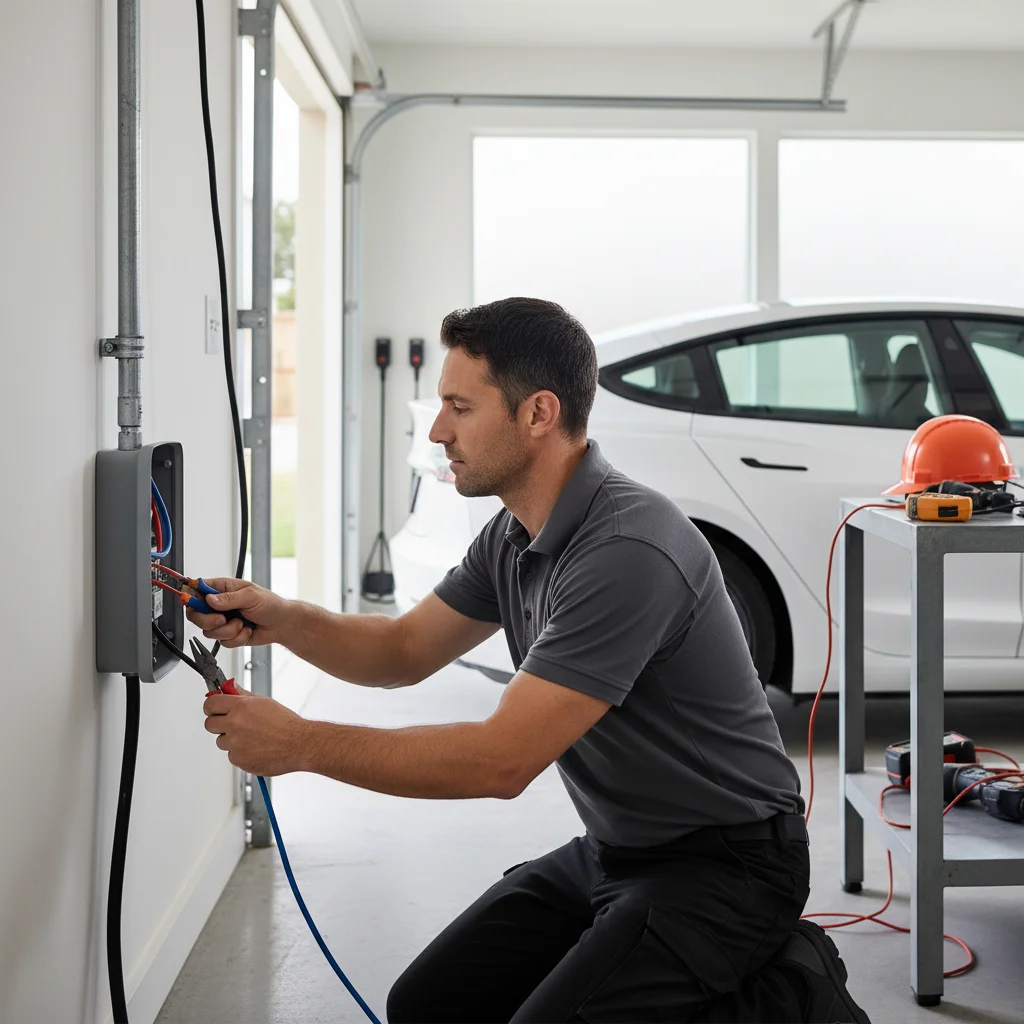
Factory roadside and Tesla Insurance roadside can look identical in the app. They’re different contracts. Tesla tells owners to request roadside through the Tesla app. Tesla also says out-of-range help may be available. That page says it isn’t financially covered. Availability can be restricted for safety or regulatory reasons. Those lines come from Tesla’s roadside support page. They don’t come from an insurance declarations PDF.
Tesla Insurance is branded auto coverage. Tesla sells it only in some states. A Denver, Aurora, or Boulder garage may or may not qualify. tesla.com insurance listings weren’t available to quote here. Open the app. See whether Tesla Insurance is offered on this car. If it isn’t, you don’t have an insurance roadside benefit. You still have factory roadside. You can still carry a club like AAA. You can still call a local operator.
Don’t assume you’re double-covered. One channel can expire. The other can exclude an empty pack. What Tesla roadside will and will not cover is the factory side of that fork.
Read the declarations. Don’t guess the miles
Some Tesla Insurance packets list towing, lockouts, and tire help. Some use generic auto language about energy or fuel delivery. This page couldn’t verify a Tesla Insurance 240-volt plug-in benefit. It couldn’t confirm a truck that charges you where you sit. If your PDF says charge delivery, call Tesla. Ask what the truck actually does. Ask whether they send energy or a flatbed. Ask the towing-mile limit on that page. Ask whether a second empty-pack call in the same month is covered. No public mileage cap is safe to quote here.
Charge Pro DEN doesn’t set those terms. It doesn’t file the claim. The independent operator quotes you before work starts. Then that operator bills you. Tesla Insurance, AAA, Allstate, or Geico may or may not reimburse that invoice later. That’s a claim between you and the carrier.
Cold here kills the 12-volt first
A surprising number of stalled Teslas still have traction energy. The small 12-volt battery is what’s dead. That battery wakes screens, locks, and the contactors that close the pack. Denver’s January normal low sits around 18 degrees. The all-time record is minus 29. In January 2024, Denver fell from 47 to minus 19 in about two days. A car that sat through that night may not be empty. It may not even unlock.
The same stall shows up after a long sit at Denver International. Peña Boulevard is the only road in. It’s an 11-plus-mile city-maintained freeway across open plains. A dark car in a cold DEN lot is often a jump. It often isn’t an empty pack. A long sit after a show at Red Rocks can do the same thing. The amphitheatre is in Morrison. The 12-volt is what quits in the cold. A Tesla Insurance tow to a Supercharger doesn’t fix a 12-volt lockout. A Tesla 12-volt battery jump at the car does. Tesla looks dead: empty pack or 12-volt is the split to run first.
State trucks jump a 12-volt. They don’t charge the pack
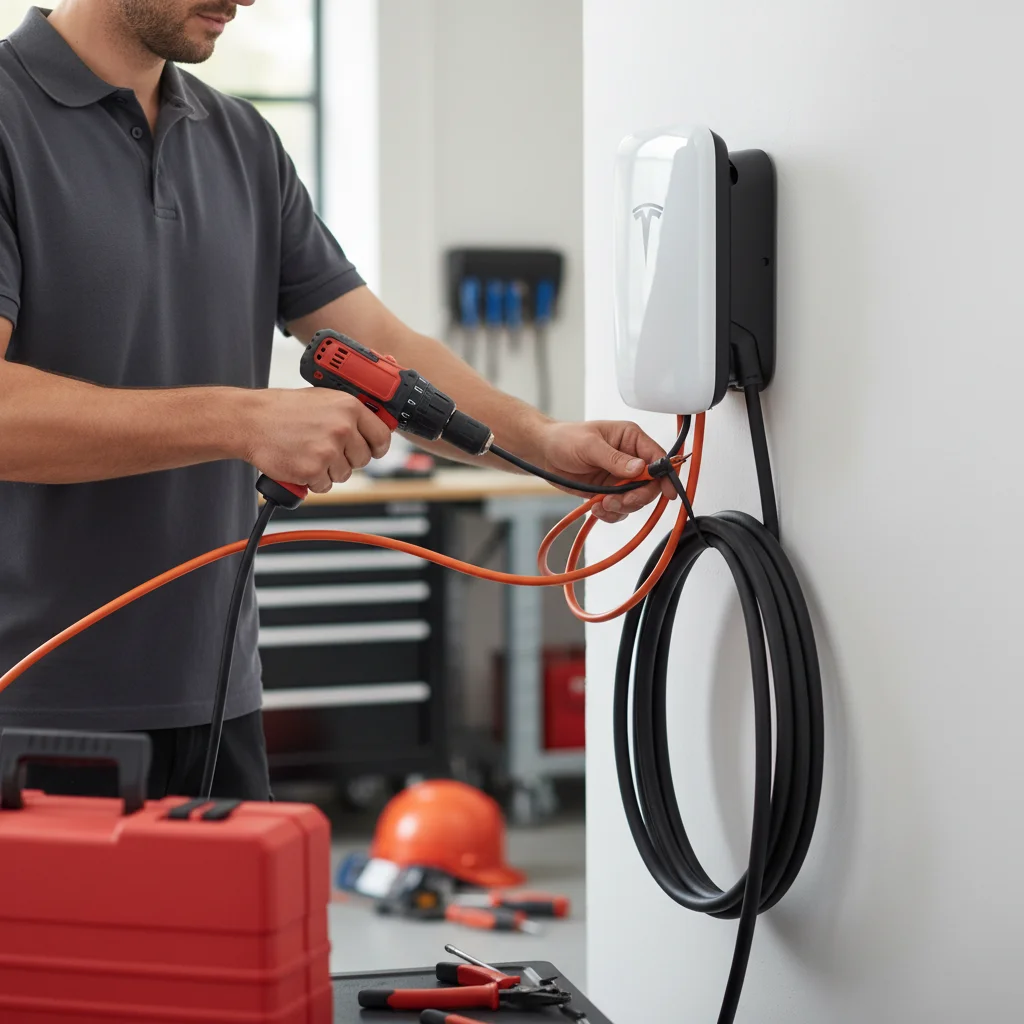
CDOT Safety Patrol is free on listed metro freeway segments. Coverage includes I-25 South from 120th Avenue to Arapahoe Road. It includes I-70 East from Wadsworth to Airport Boulevard. Portions of US-6, C-470, and I-225 are on the list. The I-70 Mountain Corridor is covered from Morrison to Vail. Front Range weekday hours are 6:00 to 9:30 a.m. and 2:30 to 7:00 p.m. Weekends run 10:00 a.m. to 7:00 p.m. The published menu is tires, 12-volt jumps, emergency fuel, and debris. CDOT’s Safety Patrol page, read September 18, 2026, mentions nothing about EV charging. The agency’s breakdown page is silent on it too.
E-470 drivers pull to the shoulder and dial *470. That truck handles jumps, tires, fluids, and debris. You can also dial *CSP (*277) for State Patrol. E-470 doesn’t publish an EV-specific charge. There’s no EV toll discount on E-470.
The I-25 North and US-36 Express Lanes have a designed outside shoulder. That shoulder is a minimum of 8 feet. If you stall there, move to the right, outside shoulder. Courtesy patrol presence is part of that design. It still isn’t a mobile EV charger.
A stalled Tesla follows CRS 42-4-1202, the disabled-vehicle statute. Sit on the shoulder if the car truly couldn’t go farther. Keep the hazards on. Colorado has no EV breakdown law. Abandoned-vehicle rules in CRS 42-4-1803 set no fixed hour clock. Don’t assume you have a day before a tow.
A Supercharger drop still isn’t 240 volts at the bumper
Tesla’s usual path for a zeroed pack is a tow to a charger. Superchargers sit across the metro. Park Meadows in Lone Tree has 10 stalls. Centennial has 12. Highlands Ranch and Castle Rock each have 16. Idaho Springs has 8 on the west I-70 climb. A hook into a queue still leaves you sitting. It doesn’t put miles in on I-25, C-470, or Peña.
Range also shrinks in this climate. Recurrent Auto found EVs keep about 78 percent of range at 32 degrees. They keep about 70 percent at 20 degrees, on average. AAA’s 2026 dynamometer study reported about 39 percent range loss at 20 degrees. Tesla doesn’t publish a Denver-specific range figure we could verify.
Elevation adds load on the climb. Denver sits at 5,280 feet. Golden sits near 5,675. Evergreen sits near 7,200. Idaho Springs sits at 7,526. Regen on the descent recovers a large share of the climb. Drivers still often cut regen on ice for traction.
Home charging doesn’t rescue a freeway stall
Your Tesla Insurance policy doesn’t care which utility serves the driveway. Your wall connector does. Xcel Energy covers Denver, Aurora, Lakewood, Boulder, and much of the core metro. CORE Electric Cooperative owns the south-metro Douglas corridor. That includes Highlands Ranch, Lone Tree, Parker, Castle Rock, and Castle Pines. United Power serves Brighton. It also splits streets with Xcel in Thornton, Westminster, Arvada, Broomfield, and Erie. Longmont Power and Communications is municipal. Confirm the utility by address in those split cities. None of those programs send a Level 2 source onto a shoulder.
Allstate roadside follows the same jump-or-tow pattern. See What Allstate roadside actually does when an EV won’t wake. AAA’s charge-or-tow question is the same fork. Read When your EV dies, does AAA bring a charge or only a tow. Tesla Insurance, when you have it, sits in that family.
A 240-volt operator is a different job
If the pack is empty, you need energy where you sit. Tesla roadside rescue is the referral path for that job. Charge Pro DEN is a referral line. It matches stranded EV drivers with independent local operators. It doesn’t own trucks. It doesn’t employ technicians. It doesn’t set prices. The operator quotes you before starting and bills you directly. The pros we connect you with are licensed and insured.
They bring a 240-volt Level 2 source to the car. Teslas take a native NACS plug. Other brands use a CCS or J1772 adapter. Typical charging adds 10 to 20 miles in 15 to 30 minutes of charging. That window is charging time, never an arrival time. They also jump or replace a dead 12-volt on site. They handle Tesla and every major EV brand.
Don’t cancel Tesla Insurance over this, if you have it. Collision, liability, and a covered tow still matter. Keep factory roadside in the app too. Use a local Level 2 operator when the pack is what’s empty.
Pull the declarations before you stall. Note whether Tesla Insurance is even offered for this zip. Note any towing-mile language and incident limits. Save Tesla roadside in the app. Save *470 if you use E-470. Save 511 for CDOT and COtrip. Then save a number that reaches a local mobile operator.
You’re already sitting with an empty pack or a dark 12-volt. Call (720) 738-6950. We’ll match you with an independent operator. That operator quotes an on-site charge or a 12-volt jump before starting. Charge Pro DEN doesn’t handle Tesla Insurance claims. It doesn’t promise when a truck arrives.