Your EV just quit on I-225 through Aurora’s east side. Get fully onto the right shoulder and switch the hazards on. CDOT Safety Patrol covers portions of this I-225 corridor. The free patrol will jump a 12-volt and change a tire. It doesn’t bring a charge to an empty pack.
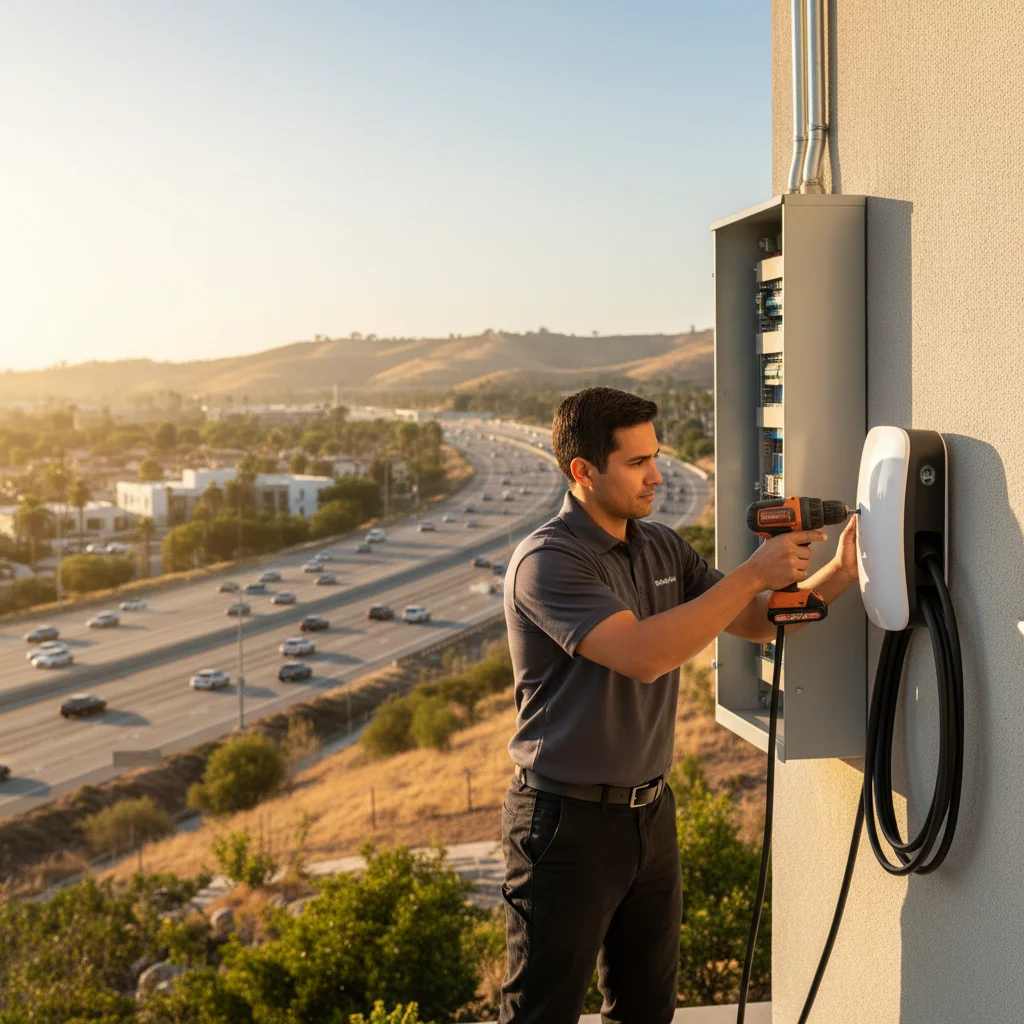
Safety Patrol covers I-225. It doesn’t charge the car
CDOT’s Division of Maintenance and Operations runs Safety Patrol. Help is free on the covered Front Range freeway segments. The published list is flat tires, jump-starts, and emergency fuel. It also includes minor mechanical help, debris removal, and incident support. CDOT lists portions of I-225 in that metro coverage. It also includes I-25 South from 120th Avenue to Arapahoe Road. I-70 East from Wadsworth to Airport Boulevard is on the list too. So are portions of US-6 and C-470.
The Front Range hours aren’t an all-day service. Weekdays are 6:00 to 9:30 a.m. and 2:30 to 7:00 p.m. Weekends are 10:00 a.m. to 7:00 p.m. The I-70 Mountain Corridor uses a different window. That mountain window is 6:00 a.m. to 7:00 p.m. It runs Friday through Sunday, and during significant weather. I-225 is an east-metro freeway, not that mountain segment. The metro clock is still the one that matters here.
Open CDOT’s Safety Patrol page and the “my car broke down” page. Neither page mentions electric vehicles or EV charging. That absence was confirmed on both pages on September 18, 2026. The state truck will jump a 12-volt and change a tire. It won’t deliver a charge to a dead traction pack.
A Tesla at zero percent isn’t a Civic out of gas. Emergency fuel is on the patrol menu, not a pack charge. If the dash still shows a few miles, don’t creep in the lane. Get to the shoulder while the car still rolls.
The shoulder rules that actually apply
Colorado has no statute for a disabled EV. The same disabled-vehicle rules cover you. CRS 42-4-1202 is the shoulder statute. You may not stop on the paved travel lanes of a highway outside a business or residential district. The exception is a vehicle so disabled you can’t avoid stopping. You also can’t move it off the roadway. Hazard lights are required under CRS 42-4-230. A violation is a class B traffic infraction.
If the car truly can’t go farther, the shoulder with hazards on is lawful. Waiting in a travel lane isn’t. Pull as far right as the pavement allows. Don’t assume the shoulder is wide. Hug the painted edge, a barrier, or the verge.
Exit from the passenger side when you’re on the right shoulder. The driver’s door puts you in live traffic. Stay behind the right rear corner. Don’t walk the shoulder toward an unknown plug.
Call 911 if you’re in a live lane, you’re hurt, or traffic is clipping the car. Colorado State Patrol handles enforcement, crash response, and dispatch. CSP also has abandoned-vehicle removal authority under CRS 42-4-1803 through 42-4-1805. Abandoned is an officer’s judgment on reasonable grounds. The statute sets no 24-hour clock and no 72-hour clock. Don’t invent a grace period. Report the stop and arrange a charge or an EV-safe tow.
Check COtrip.org or 511 for closures and weather. That’s CDOT’s live source.
The Colorado Towing Bill of Rights, HB22-1314, governs nonconsensual tows, not a rescue you asked for. They require 24-hour written notice before most private-property tows. The Colorado Public Utilities Commission regulates towing carriers. Exact tow-fee figures weren’t confirmed in the sources used for this page.
Two dead-car problems, one shoulder
From the seat, both failures feel like the car gave up. They’re different jobs.
The traction pack moves the wheels. At true zero, you aren’t limping to the next exit. A mobile operator brings a 240-volt Level 2 source to the bumper. Teslas take a native NACS plug. Other EVs take a CCS or J1772 adapter. Typical charging time adds 10 to 20 miles in 15 to 30 minutes of plug time. That number is time on the cable. It isn’t an arrival estimate. The operator quotes before starting. The operator bills you directly.
The 12-volt wakes the computers, locks, and contactors. Cold kills it even when the pack still holds energy. Denver’s January normal low is around 18 degrees. On January 16 and 17, 2024, Denver dropped from 47 to minus 19. That swing took about 48 hours. A car that sat overnight at the Anschutz Medical Campus can refuse to ready. So can a car that sat near Buckley Space Force Base. Plenty of indicated miles, no wake. That’s a jump or an on-site 12-volt replacement, not an empty pack.
If the screens are dark and the doors fight you, treat it as 12-volt first. During published hours, Safety Patrol can jump that system. After hours, a local operator can jump a Tesla 12-volt or replace it on site. If the car is awake and the number is zero, you need pack energy.
Winter range loss is documented. Recurrent Auto studied more than 30,000 U.S. EVs. At 32 degrees, cars kept about 78% of max range on average. At 20 degrees, about 70%. The best model in that set held about 88%. The worst held about 69%. Heat-pump vehicles held about 10 points more at 32 degrees. AAA’s 2026 dynamometer study reported about 39% range loss and 35.6% efficiency loss at 20 degrees. A buffer that felt fine in May is thin on a January I-225 run.
Regen on descents recovers a large share of climb energy. That’s mountain-corridor data, not an I-225 promise. I-225 is east-metro freeway, not a pass. Don’t count on a downhill make-up that this freeway doesn’t give you.
Aurora’s east side, utilities, and nearby roads
I-225 cuts Aurora’s east side. Aurora’s electric utility is Xcel Energy, the Public Service Company of Colorado. Home charging programs on this side use Xcel names such as EV Accelerate At Home and Optimize Your Charge. Rebate dollar amounts aren’t confirmed here. Check Xcel with your address before you plan around a credit.
Don’t call CORE Electric Cooperative for an Aurora driveway. CORE owns the south-metro Douglas corridor, including Parker and Castle Rock. United Power owns much of the north and northeast. It splits streets with Xcel in several north-metro cities. Longmont has its own municipal utility. A stranded I-225 driver who lives in Aurora is in Xcel territory at home. A driver who lives in Parker isn’t. Confirm the utility by address if your street is in a split city. Those split cities include Arvada, Westminster, Thornton, Northglenn, Broomfield, Commerce City, and Erie.
Verified east-side landmarks include the Anschutz Medical Campus and Buckley Space Force Base. Neither listing is a charger inventory. They’re places people sit in the cold, then rejoin I-225 with less margin than they think.
I-70 East from Wadsworth to Airport Boulevard is a Safety Patrol segment of its own. Peña Boulevard is the only road into Denver International. It’s city-maintained, not an interstate.
E-470 is the cashless eastern loop, run by the E-470 Public Highway Authority. Disabled drivers on E-470 dial *470 for that authority’s free help, or *CSP (*277) for State Patrol. E-470 lists flat tires, fluid top-offs, jump-starts, phone help, and debris removal. It doesn’t publish an EV-charge service. No EV-specific toll discount exists on E-470.
Public Supercharger sites are dense across the metro in the NREL pull read on September 18, 2026. Denver, Centennial, Highlands Ranch, and Lone Tree at Park Meadows all show up in that inventory. A stall count on a map isn’t a car that can drive there. If you’re already stopped on I-225, the useful question is whether energy can come to you.
Colorado crossed 200,000 registered EVs by October 2025, per the Colorado Energy Office. The Denver metro is the highest-EV-share region in the state. Battery-electric vehicles were 12.5% of new Denver-metro registrations year-to-date through June 2026. That’s about one in nine, down from 23.7% a year earlier. Plenty of those cars still use I-225. CDOT’s published breakdown pages haven’t added EV charging.
There’s no Colorado HOV or express-lane exemption for EVs in 2026.
How a referral charge works on this freeway
Charge Pro DEN is a referral line for the Denver metro. It matches stranded EV drivers with independent local mobile rescue operators. It performs no work and owns no trucks or equipment. It employs no technicians and sets no prices. It promises no arrival time and publishes no business hours. It holds no trade license.
The operators in that network bring the 240-volt Level 2 source described above. They jump or replace a dead 12-volt on site. They handle Tesla and every major EV brand. Mobile EV charging is the pack-energy call. Out-of-charge recovery is the same need when you’re truly at zero.
If you already left the freeway and died on Aurora surface streets, the same match still applies. EV roadside assistance in Aurora covers the I-70 East and airport-side version of this problem. If you reached the toll loop first, out of charge on E-470 explains *470. After the Safety Patrol window closes, Tesla roadside versus CDOT versus a local boost is the comparison. The Aurora charging city page indexes the rest of that place.
What to tell the operator
A usable location is the whole job at the start. “I-225 through Aurora, right shoulder” is the base. Add direction of travel. Add the last exit or cross street you remember. A phone pin is better than “somewhere on the east side.”
Give year, make, model, and color. Say Tesla or not, so they stage NACS or an adapter. Say whether the car still talks to you. A 2% car that’s awake isn’t a brick with a dead 12-volt.
Say whether Safety Patrol already stopped. Say whether CSP is on scene. Say if the shoulder is tight, on a curve, or against a wall.
The operator quotes before any work. You accept or you don’t. Charge Pro DEN doesn’t set that number.
If the pack is empty and a tow is the only remaining option, say so up front. A disabled EV often needs a flatbed and a specific tow mode. Confirm the method with the carrier. Don’t guess a price. Figures for tows weren’t verified for this page.
When the orange truck is off the clock
A Wednesday at 8:00 p.m. on I-225 is outside the published weekday Safety Patrol window. Tesla roadside, insurer roadside, and a local mobile operator are the remaining options. Tesla roadside sends a contractor. What’s covered depends on the plan you have, and a pack charge is the usual gap. Insurer roadside is often a jump or a tow. Ask them whether that person will charge the traction pack.
Traction law is posted on signs and on COtrip when CDOT activates it. Passenger Vehicle Traction Law means AWD or 4WD, or winter tires with enough tread. Two-wheel-drive needs chains or an approved traction device. Chain law is stricter in severe storms. Confirm the current rules on CDOT’s traction-law page and on COtrip.
No Colorado statute addresses mobile or roadside EV charging. Your stop is a disabled vehicle under the same code as a dead gas car. HOA charging-access and charging-space parking statutes don’t help you on I-225.
Frequently asked questions
Does CDOT Safety Patrol charge an empty EV on I-225?
No, it doesn’t. Safety Patrol’s published help on portions of I-225 is jumps, tires, emergency fuel, and similar aid. CDOT’s pages don’t mention EV charging. An empty pack needs a mobile Level 2 boost or an EV-safe tow.
Is it legal to sit on the I-225 shoulder until help arrives?
If the car is truly disabled and you can’t move it off the roadway, yes. Stay right, hazards on, under CRS 42-4-1202 and CRS 42-4-230. Call Colorado State Patrol if you’re in a lane. There’s no fixed abandoned-vehicle clock in CRS 42-4-1803.
What if the 12-volt died, not the traction pack?
During Front Range Safety Patrol hours, the state truck can jump a 12-volt. Outside those hours, a local operator can jump or replace it on site. A dark dash with remaining indicated range is this problem. A car that’s awake at zero percent is the pack.
If you’re on that shoulder now, call (720) 738-6950. Charge Pro DEN will connect you with a local operator. That operator quotes before starting, brings Level 2 energy or a 12-volt fix, and bills you directly.